The rejection of Omani diplomatic mediation by the Trump administration represents more than a personal preference for bilateral pressure; it marks a fundamental shift in the American strategic architecture within the Persian Gulf. By dismantling the "Oman Pipeline"—the long-standing backchannel between Washington and Tehran—the United States has effectively signaled a transition from a containment strategy based on diplomatic guardrails to a model of unmitigated escalation dominance. This shift assumes that the utility of a neutral intermediary is inversely proportional to the desired intensity of economic and military friction. When the objective moves from conflict management to systemic regime transformation, the "Oman variable" becomes a structural hindrance rather than a diplomatic asset.
The Tripartite Function of Omani Mediation
To understand the impact of the current American stance, one must categorize the specific functions Oman has historically performed. Since the 1970s, Muscat has operated as a "low-friction interface" in a high-tension region. In other developments, we also covered: War and Secrets The Distraction Myth and the Machiavellian Reality of Geopolitics.
- The De-escalation Valve: Providing a physical and political space where messages can be exchanged during kinetic crises without the domestic political cost of "direct negotiation."
- The Verification Buffer: Acting as a third-party witness to private commitments, reducing the "cheating" incentive in non-formalized agreements.
- The Institutional Memory: Maintaining a continuous line of communication that persists through changes in Western administrations and Iranian internal factional shifts.
The Trump administration’s refusal to utilize this infrastructure suggests a calculation that these three functions are currently counter-productive to the "Maximum Pressure" campaign. In a logic of absolute leverage, the existence of a de-escalation valve reduces the perceived threat of a total embargo. By closing the valve, the U.S. attempts to force Iran into a binary choice: total capitulation or total isolation.
The Cost Function of Disintermediation
The removal of a mediator increases the "Noise-to-Signal" ratio in regional geopolitics. In the absence of Muscat’s filtering mechanism, both Washington and Tehran are forced to interpret intent through public rhetoric and military posturing—two channels prone to catastrophic miscalculation. NBC News has provided coverage on this fascinating topic in great detail.
1. The Information Gap
A mediator verifies the "red lines" of each party. Without this, the U.S. relies on intelligence assessments that may overestimate or underestimate Iranian desperation. This creates a "Strategic Blind Spot" where the U.S. may inadvertently cross a threshold that triggers a regional kinetic response, believing it was merely applying economic pressure.
2. The Credibility Paradox
Maximum Pressure requires the opponent to believe that relief is possible if conditions are met. If the primary channel for discussing those conditions (Oman) is discredited, the target (Iran) perceives the pressure as existential rather than transactional. When an actor faces an existential threat, the cost of aggression drops to zero, as they have nothing left to lose.
Mapping the Shift Toward Kinetic Dominance
The argument that this rejection is a "pulse for war" requires a mechanical examination of how the administration has reallocated its resources. We observe a clear redirection of diplomatic energy away from neutral facilitators and toward a coalition of regional hawks, specifically the "B-Team" framework (referencing Bolton, bin Salman, bin Zayed, and Netanyahu).
This realignment changes the incentive structure for American foreign policy. A neutral mediator like Oman seeks a "Pareto Optimal" outcome where regional stability is maintained. Conversely, the regional coalition currently favored by the U.S. seeks a "Zero-Sum" outcome where Iranian influence is erased. By choosing the latter partners over the former mediator, the U.S. has structurally committed itself to a path where conflict is more likely than a negotiated settlement.
The Fragility of the Hegemonic Posture
The current strategy relies on the assumption of Iranian passivity under duress. However, historical data on Iranian regional behavior suggests a "Counter-Pressure" mechanism. When squeezed economically, Tehran traditionally exports instability to raise the global cost of that pressure.
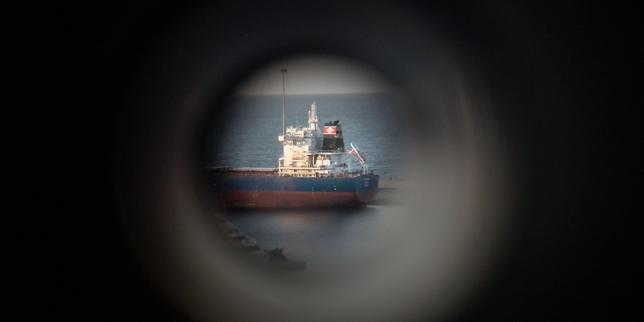
- Asymmetric Maritime Disruption: Targeting oil tankers in the Strait of Hormuz to spike global insurance premiums.
- Proxy Vertical Escalation: Activating networks in Yemen, Iraq, and Lebanon to force the U.S. to divert resources to theater protection.
- Nuclear Threshold Manipulation: Incremental breaches of the JCPOA to create a "time-sensitive" crisis for the international community.
The rejection of Oman means that when these counter-pressures occur, there is no established, trusted mechanism to "off-ramp" the escalation. The U.S. is betting that its superior conventional force will deter Iran from taking these steps, but this ignores the "Sunk Cost" logic of a regime that views economic collapse as a slow-motion death sentence.
Strategic Re-categorization of the Gulf States
The marginalization of Oman also forces a reorganization of the Gulf Cooperation Council (GCC). For decades, the GCC functioned with a degree of internal diversity, with Oman and Kuwait acting as the "diplomatic wing." The current U.S. policy demands total alignment. This creates a bottleneck where regional intelligence and nuanced local knowledge are sacrificed for ideological purity.
The risk of this monoculture is "Groupthink" in crisis management. If every regional partner is encouraging a hardline stance, the U.S. Executive Branch loses access to the dissenting viewpoints that are necessary for objective risk assessment. Oman’s value was never its agreement with American policy; its value was its ability to provide a "Red Team" perspective on how Tehran would react to specific American actions.
Logic of the Immediate Horizon
The administration’s trajectory indicates a belief that the JCPOA was a flawed document because it was born of Omani-style "compromise." The current goal is a "Comprehensive Treaty" that addresses not only nuclear capabilities but also ballistic missiles and regional influence.
However, the methodology used to achieve this—disintermediation and maximum friction—lacks a bridge to the negotiating table. To reach a new treaty, one must eventually talk. By poisoning the well of the most reliable talk-facilitator in the Middle East, the U.S. has created a scenario where a new deal can only happen after a significant kinetic event or the total internal collapse of the Iranian state.
The current posture is not a policy of "better negotiation" but a policy of "structural displacement." It seeks to remove the Iranian regime as a regional actor rather than modify its behavior. In this context, dismissing Oman is not a mistake; it is a prerequisite.
The strategic play for observers and stakeholders is to monitor the "Risk Premium" on regional energy exports. As the Omani channel remains dark, the probability of a "Black Swan" event in the Strait of Hormuz increases significantly. Investors and policy planners must account for the fact that the U.S. has removed its primary safety brake. The current trajectory points toward a forced confrontation by the end of the fiscal year, as the Iranian "resistance economy" hits its floor and the regime is forced to choose between domestic implosion and external aggression. The lack of a mediator ensures that this choice will be made in a vacuum of communication, making the most violent outcome the most statistically probable.