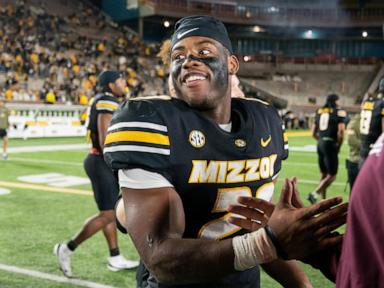
The shooting of Missouri running back Ahmad Hardy at an off-campus event represents a catastrophic failure in the risk mitigation protocols that govern modern collegiate athletic programs. While the immediate physiological status of the athlete—reported as "stable"—addresses the medical urgency, it fails to account for the systemic impact on the program's human capital and the broader implications for NCAA risk management. An athlete’s presence at high-density, unregulated public gatherings creates a direct collision between personal autonomy and the institutional investment represented by a Power Four scholarship. To understand the gravity of this event, one must deconstruct it through the lenses of physiological recovery cycles, institutional liability, and the structural fragility of high-stakes roster management.
The Triad of Trauma Recovery
The term "stable condition" is a clinical baseline, not a metric for athletic readiness. In the context of an elite collegiate running back, the recovery process is governed by three distinct physiological and psychological phases that dictate the timeline of return-to-play. For another view, check out: this related article.
- Hemodynamic and Tissue Stabilization: The initial 48 to 72 hours are critical for managing internal trauma, infection risk, and inflammation. Even non-lethal ballistic injuries involve significant kinetic energy transfer that causes "cavitation"—the displacement of tissue surrounding the bullet path. This disrupts muscle fibers and vascular integrity far beyond the immediate point of entry.
- Neuromuscular Re-integration: For a position defined by explosive lateral movement and high-impact contact, any disruption to the kinetic chain is high-risk. If the injury involves the lower extremities or the core, the mechanical output of the athlete is compromised. Rehabilitation is not merely about healing a wound; it is about recalibrating the proprioceptive feedback loops required to navigate a crowded backfield at game speed.
- Psychological Post-Traumatic Response: High-stress environments, such as a crowded stadium, can trigger hyper-vigilance in athletes who have survived gun violence. The cognitive load required to process playbooks and defensive schemes is significantly diminished when the brain's amygdala remains in a state of heightened threat detection.
Operational Vulnerability in Roster Architecture
Missouri’s football program, like its SEC counterparts, operates on a razor-thin margin of error regarding depth charts. The loss of a primary or secondary offensive contributor creates a "bottleneck effect" in play-calling and personnel packages. Hardy’s absence forces a redistribution of carries that increases the physical "wear-and-tear" tax on remaining backs, potentially leading to secondary overuse injuries across the roster.
The cost function of an injured scholarship athlete extends beyond the field. There is a sunk cost in terms of NIL (Name, Image, and Likeness) valuations and the opportunity cost of the roster spot. When a player is sidelined due to an off-campus incident, the program loses the ability to develop that talent during critical practice windows, creating a developmental lag that can persist for multiple seasons. This incident highlights the tension between the "student-athlete" designation and the reality of athletes as high-value assets within a multi-billion dollar entertainment industry. Further insight on this matter has been published by The Athletic.
The Geometry of Off-Campus Risk
Most collegiate athletic departments employ "Security and Conduct" silos, yet these often fail because they rely on reactive measures rather than spatial risk analysis. The concert environment where the shooting occurred represents a high-risk zone characterized by three variables:
- Density Anarchy: Large crowds inhibit rapid egress and complicate the efforts of security personnel to identify concealed weapons.
- External Variable Saturation: Unlike team-sanctioned events, public concerts involve uncontrolled populations where the athlete’s status as a public figure can make them a target for provocation or accidental involvement in escalating conflicts.
- Response Time Latency: In urban settings, the gap between a kinetic event and the arrival of advanced life support can determine the difference between "stable" and "critical."
Missouri’s internal protocols likely include "Life Skills" training, but the efficacy of such programs is questionable when they do not include active threat assessment training. The disconnect between a controlled campus environment and the volatility of local nightlife creates a "security vacuum" that athletes often fill with a false sense of invulnerability.
Institutional Liability and the NIL Era
The advent of NIL has shifted the power dynamic between the university and the player, but it has also complicated the legal landscape of athlete safety. If an athlete is injured at a promotional event tied to an NIL deal, the question of "duty of care" becomes blurred. While the university may not be legally responsible for an off-campus shooting, the reputational damage and the impact on recruiting are quantifiable.
High-profile incidents such as this act as a deterrent to boosters and corporate sponsors who seek "brand safety." A program perceived as having a "loose" culture or inadequate oversight of its players’ off-field activities faces a higher "risk premium" in the market. This creates a feedback loop: lower perceived safety leads to reduced donor confidence, which limits the resources available for the very support systems—mental health, private security, and concierge-style player management—that could prevent these incidents.
The Mechanism of Ballistic Trauma in Athletes
Ballistic injuries are fundamentally different from sports-related orthopedic injuries. A torn ACL is a predictable mechanical failure; a gunshot wound is an unpredictable biological intrusion. The path of a projectile through a human body is rarely linear. It can deflect off bone, creating secondary shrapnel, or cause "shockwave" damage to organs that appear unaffected by the initial entry.
For an elite athlete, the margin between "peak performance" and "unfit for play" is measured in millimeters. An injury that a civilian might recover from fully could end an athletic career if it results in even a 2% loss in explosive power or a 5-degree reduction in range of motion. The Missouri medical staff is now tasked with a "restorative optimization" mission, which is significantly more complex than standard trauma care.
Data-Driven Roster Contingency
The Mizzou coaching staff must now execute a "Next-Man-Up" protocol, which is a misnomer for complex workload redistribution. The following variables must be balanced:
- Snap Count Inflation: The remaining running backs must absorb Hardy's 15-20 touches per game. This increases their probability of injury by a factor correlated with their historical durability metrics.
- Playbook Contraction: If the backup personnel lack Hardy’s specific skill set—such as pass protection or "down-hill" power running—the offensive coordinator must remove specific segments of the playbook, making the team more predictable to defensive analysts.
- Recruiting Optics: Rival programs will use this incident to suggest to recruits that Missouri lacks the infrastructure to keep its players safe. The "shadow cost" of a single bullet can be the loss of a five-star recruit three years down the line.
Strategic Path Toward Institutional Hardening
The Missouri athletic department must move beyond the "thoughts and prayers" communication cycle and implement a rigorous, data-backed safety framework. This begins with a mandatory Geofencing Risk Assessment for all high-profile athletes. By identifying high-crime or high-volatility zones within the city, the program can provide athletes with real-time "red-zone" alerts, turning safety from a passive lecture into an active, tech-enabled awareness system.
Furthermore, the program must formalize "Crisis Continuity Plans." This involves the immediate deployment of a dual-track recovery team: one focused on the physical rehabilitation of the injured athlete, and a second "culture team" focused on the psychological stabilization of the locker room. The trauma of a teammate being shot is a centrifugal force; without deliberate institutional intervention, it can lead to a degradation of team cohesion and performance.
The focus must shift from Hardy’s "stable" status to the aggressive protection of the remaining roster. Missouri should immediately audit its player-security protocols, focusing on the hours between 10:00 PM and 4:00 AM on weekends. This is not about policing movement, but about providing the logistical support—such as secure transport and vetted "safe venues"—that acknowledges the reality of the athlete as a target. The program’s ability to win on Saturdays is now directly tied to its ability to manage the variables of Friday night. Implementation of a "Private-Public Security Partnership" (PPSP) with local law enforcement is the only logical step to bridge the gap between campus safety and the realities of an urban environment.