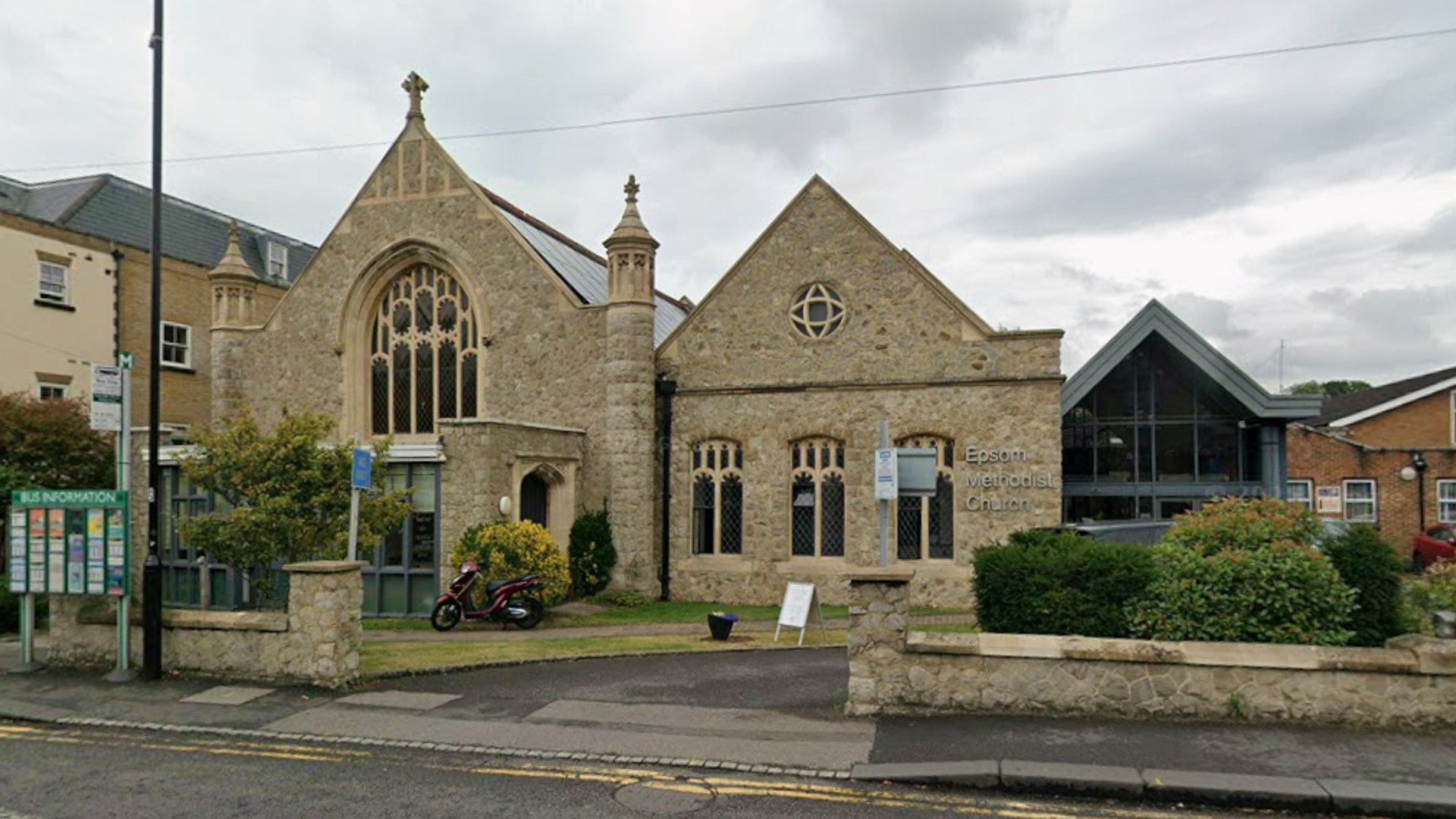
The occurrence of a multi-perpetrator sexual assault in a public or semi-public space—such as the grounds of a religious institution—represents a failure of environmental design, social monitoring, and rapid-response investigative protocols. To address the investigation of such an event, one must move beyond the surface-level reporting of the crime and analyze the intersection of spatial security architecture, forensic DNA degradation, and multi-suspect psychological dynamics. The immediate objective of law enforcement and community stakeholders is to convert a chaotic, high-trauma event into a structured data set capable of yielding a conviction.
The Triad of Environmental Failure
Public assaults do not happen in a vacuum. They occur when three specific variables align, creating what criminologists often refer to as a "crime opportunity."
- The Absence of Capable Guardianship: This includes not just the physical presence of security or police, but the lack of "natural surveillance." If the church grounds lacked sightlines from the street or neighboring buildings, it created a "blind spot" in the urban fabric.
- Motivated Offenders in a Group Context: Multi-perpetrator assaults (often categorized as "multiple perpetrator rape" or MPR) involve different psychological drivers than solo attacks. The presence of peers often leads to "deindividuation," where individual moral constraints are subsumed by group momentum.
- The Suitability of the Victim in a High-Vulnerability Zone: Location choice by offenders is rarely random. They seek areas that offer "prospect-refuge"—places where they can see who is coming but remain hidden from the view of the general public.
When an assault occurs "outside a church," it highlights a specific irony in urban planning: sacred or quiet spaces are often designed for privacy and reflection, which, after hours, translates directly into a lack of deterrent visibility.
Forensic Complexity in Multi-Perpetrator Scenarios
The investigative process for a multi-man assault is exponentially more complex than a single-suspect case. This complexity is driven by the Biological Mixture Problem.
In a standard assault, a forensic kit looks for a clear 1-to-1 match between the victim and a suspect. In a multi-perpetrator scenario, the crime scene and the victim’s person contain a "mixture" of DNA profiles.
The Stochastic Threshold and Mixture Interpretation
When multiple DNA profiles are present, especially in low quantities, analysts encounter the "stochastic threshold"—a point where the data becomes too "noisy" to distinguish between individuals. This creates a bottleneck in the justice system. If four men were involved, the lab must separate four distinct male profiles from the victim’s DNA. This requires Probabilistic Genotyping Software (like STRmix or TrueAllele).
Without high-resolution DNA recovery, the defense can argue "reasonable doubt" by suggesting that the presence of one man's DNA does not prove the presence or participation of another, or that the DNA was transferred via non-criminal contact.
Temporal Degradation Factors
The "Police Appeal" is a race against the clock for two reasons:
- Biological Half-life: DNA evidence on skin or clothing degrades due to UV exposure, moisture, and bacterial growth.
- Digital Overwrite: CCTV systems in the vicinity of the church likely operate on a 7-day or 14-day loop. Every hour that passes without a secured "digital perimeter" increases the risk of the most critical evidence being overwritten.
The Logic of the Police Appeal
When authorities issue an "appeal" for information, it is a strategic move to fill the Intelligence Gap created by a lack of immediate forensic hits. This is not a plea for help; it is a tactical data-gathering exercise.
Witness Categorization
Police are searching for three specific types of witnesses:
- The Frustrated Witness: Someone who saw something suspicious but dismissed it at the time. The appeal "validates" their suspicion, triggering the memory.
- The Digital Witness: Doorbell cameras, dashcams, and mobile phone pings. In a modern urban environment, no one moves through a city without leaving a digital "breadcrumb." The appeal defines the "time-window" (e.g., 2:00 AM to 4:00 AM) to narrow the data set.
- The Associate Witness: In group assaults, there is often a "marginal" member of the group—someone who felt uncomfortable or was a late arrival. This person is the most likely to "break" under the pressure of a public appeal, fearing that their silence will be interpreted as primary participation.
The Cost Function of Public Space Insecurity
The economic and social cost of a public sexual assault exceeds the immediate trauma to the victim. It creates a "Negative Externality" for the community.
- Property Devaluation: Persistent crime in the vicinity of community landmarks (churches, parks) lowers the perceived safety and value of the area.
- Resource Allocation Scarcity: A multi-suspect manhunt requires a massive diversion of "Detective Hours" from other cases. Each hour spent door-knocking or reviewing 500 hours of CCTV is an hour stolen from cold cases or active gang interventions.
- Institutional Trust Erosion: If an assault occurs at a church—an institution often seen as a pillar of safety—it creates a unique psychological rupture in the neighborhood. The "Safe Zone" becomes a "Danger Zone," leading to a decrease in community engagement.
Strategic Interventions for Urban Sacred Spaces
To prevent the recurrence of such events, the management of public and religious spaces must move toward a CPTED (Crime Prevention Through Environmental Design) framework.
Lighting and Luminance Levels
It is a common misconception that more light equals more safety. In reality, "glare" can create deeper shadows where attackers can hide. The strategy should be Uniformity of Light. By ensuring consistent, lower-level lighting across the church grounds, the human eye can adjust more effectively, eliminating the "black holes" that characterize unmonitored public spaces.
Territorial Reinforcement
The "outside of the church" is often a gray area—neither fully private nor fully public. Clearer demarcation of boundaries (fencing, signage, or change in pavement texture) signals to potential offenders that the area is being "claimed" and monitored. This increases the perceived risk of detection.
The Mechanics of Suspect Apprehension
The investigation will likely follow a "Centrifugal Pattern." It starts at the epicenter (the church) and moves outward in concentric circles.
- Cell Tower Dumps: Investigators will request data for every mobile device that connected to the nearest cell towers during the assault window. In a multi-perpetrator scenario, the "cluster" of devices moving together is a massive red flag.
- Social Media Geo-Fencing: Law enforcement can use warrants to see who was posting or active on apps like Snapchat or Instagram within a specific radius.
- Modus Operandi (MO) Correlation: Group rapes are often part of a pattern. Detectives will cross-reference the specifics of this assault with unsolved cases across neighboring jurisdictions to see if the "signature" (the way the offenders controlled the victim, the language used, the specific location type) matches.
The "appeal" is the final layer. It is used when the technical data (DNA, CCTV, Cell data) has not yet produced a definitive name. It turns the entire city into a sensor network.
Forensic Recommendation for Community Entities
Religious and community leaders must transition from a reactive stance to an operational one. The "Police Appeal" is a sign that the system is currently in a state of information deficit. To mitigate this, institutions must implement a "Closed Loop" security protocol:
- Integration of high-definition (4K) optical sensors at all ingress and egress points.
- Active vegetation management to maintain sightlines between 2 and 6 feet from the ground.
- Formalized "Safety Walks" conducted during the hours of darkness to identify vulnerabilities through the eyes of a potential offender.
The resolution of this case depends on the ability of the police to isolate a single variable—a face on a screen, a DNA profile in a database, or a name provided by a tipster—within a sea of urban noise. The speed of that isolation determines whether the perpetrators are removed from the population before they can iterate their "success" elsewhere.
The strategic play is the immediate hardening of the physical perimeter and the aggressive pursuit of digital forensics. Waiting for a witness to come forward is a passive strategy; the active strategy is the systematic narrowing of the suspect pool through data correlation. Any entity managing a public space must recognize that a lack of visible security is not "welcoming"—it is a liability that invites the most predatory elements of the social strata.