The debate over whether Taiwan is already independent is a ghost story told in the halls of the United Nations, where the logic of 1945 meets the cold reality of 2026. If you walk the streets of Taipei today, the answer isn’t found in a dusty legal brief but in the quiet hum of the world’s most advanced semiconductor fabs and the roar of F-16s patrolling the median line of the Taiwan Strait. Taiwan functions as a fully sovereign state with its own constitution, democratically elected president, and a military that answers to no one in Beijing. Yet, the international community maintains a polite, calculated fiction that its status is "undetermined."
This ambiguity is not a failure of diplomacy. It is a feature. For decades, it has prevented a catastrophic war between the United States and China. But as of May 2026, the floor is falling out from under this "status quo." Between the Trump-Xi summit in Beijing and a massive $250 billion migration of chip manufacturing to American soil, the "Silicon Shield" that once made Taiwan untouchable is showing hairline fractures. The question isn't whether Taiwan is independent—it's whether it can survive the transition from a global necessity to a geopolitical liability.
The Legal Ghost and the Living State
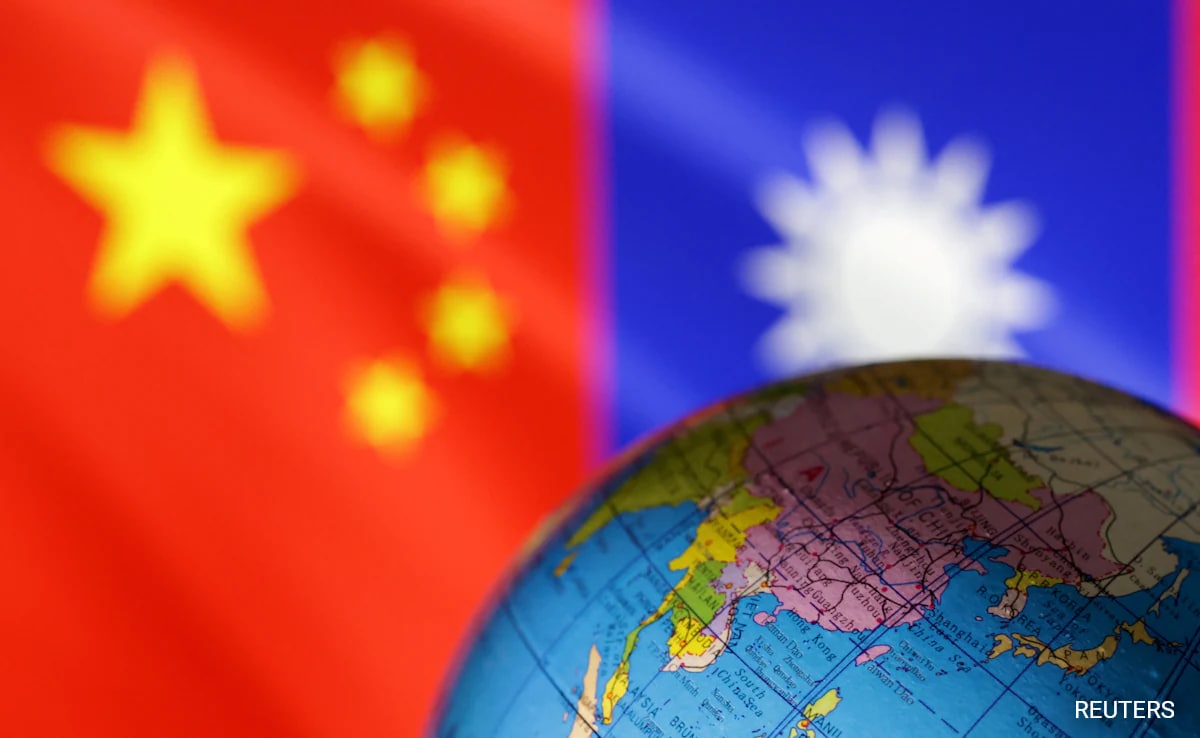
To understand why the world refuses to call Taiwan a country, you have to look at the "One China" policy, a masterpiece of linguistic gymnastics. China claims there is only one China and Taiwan is part of it. The United States "acknowledges" this position without necessarily accepting it. It is a stalemate that allows Taiwan to exist in a state of functional independence while being denied formal recognition.
The Republic of China (ROC), Taiwan's official name, maintains full diplomatic ties with only 12 states, including the Vatican. To the rest of the world, Taiwan is a "territory" or an "economic entity." This legal limbo has real-world consequences. Taiwan is barred from the World Health Organization and Interpol. When a global crisis hits, Taiwan is often the last to know and the first to be ignored, forced to rely on "unofficial" backchannels that move with the speed of a dial-up modem in a fiber-optic world.
Within Taiwan, the sentiment has shifted. Recent polling from early 2026 shows that over 63% of the population identifies exclusively as Taiwanese. The idea of "unification" has become a political third rail, especially after witnessing the dismantling of Hong Kong's autonomy. For the younger generation in Taipei, the debate over independence is a relic of their grandparents. They already have a passport, a currency, and a tax man. They are not waiting for a declaration; they are waiting for the world to stop pretending they don't exist.
The Erosion of the Silicon Shield
For years, Taiwan’s security rested on a foundation of silicon. The Taiwan Semiconductor Manufacturing Company (TSMC) produces over 90% of the world’s most advanced chips. If China invades, the global economy collapses. This is the Silicon Shield: the theory that Taiwan is too important to let fall.
But the shield is being hollowed out. Under intense pressure from Washington and the threat of 100% tariffs on chip imports, TSMC is effectively being "onshored" to the United States. In early 2026, reports surfaced that TSMC’s investment in Arizona has ballooned to $250 billion. The goal is to replicate the Hsinchu Science Park cluster in Phoenix.
- The American Objective: Self-sufficiency in advanced AI chips to ensure the U.S. military is never held hostage by a blockade of the Taiwan Strait.
- The Taiwanese Fear: Once the U.S. has what it needs on its own soil, the strategic urgency to defend Taiwan evaporates.
Critics in Taipei are already calling the company "America’s TSMC." If the most advanced 2-nanometer and 1.4-nanometer processes move to the desert, the "Silicon Shield" becomes a "Silicon Sieve." The leverage that once forced Washington to stare down Beijing is being exported, one crate of lithography equipment at a time.
Gray Zone Tactics and the War of Attrition
While the world watches for a D-Day-style invasion, Beijing is busy winning a war that has already started. This is the "gray zone"—actions that are aggressive enough to exhaust Taiwan’s resources but subtle enough to avoid triggering a U.S. military response.
In January 2026, a Chinese military drone violated Taiwan’s territorial airspace for the first time. It wasn't a mistake. It was a test. The People's Liberation Army (PLA) has erased the "median line," the unofficial buffer in the Strait that kept both sides apart for decades. Now, Chinese warships and fighter jets are a near-constant presence, forcing Taiwan to scramble its aging fleet.
It is a brutal math problem. Every time a Chinese jet flies toward Taipei, Taiwan must respond. This costs millions in fuel and maintenance. It wears down pilots and airframes. Beijing is betting that it can break Taiwan’s will and its budget without ever firing a shot. They are also using a "maritime gray zone fleet"—hundreds of civilian sand dredgers and fishing boats—to swarm Taiwan’s outlying islands like Matsu and Kinmen, overwhelming the local coast guard and creating a "new normal" of Chinese control.
The Trump Xi Grand Bargain
The most volatile variable in 2026 is the relationship between Donald Trump and Xi Jinping. Their recent summit in Beijing has sent shockwaves through Taipei. For years, the U.S. followed a policy of "strategic ambiguity"—never saying whether it would definitely defend Taiwan.
Now, there are whispers of a "Fourth Communiqué." Beijing wants a formal U.S. pledge to oppose Taiwanese independence and end all arms sales. In exchange, they might offer trade concessions or cooperation on other global conflicts. For a U.S. administration focused on "America First," the "undetermined status" of a small island 6,000 miles away is a high-value bargaining chip.
If Washington moves from "acknowledging" Beijing’s claim to "supporting" it, the legal fiction that protects Taiwan vanishes. Taiwan would find itself in a position where it is functionally independent but strategically orphaned.
The Sovereignty Paradox
The hard truth is that Taiwan is a country in every sense that matters to its citizens, but it is a "non-state" in every sense that matters to the global order. It is a vibrant democracy of 24 million people held hostage by 20th-century geopolitical geography.
Independence isn't something Taiwan needs to "declare." It is something they are currently living. The danger is that the world is becoming more comfortable with a future where Taiwan's survival is no longer a prerequisite for global stability. As the chip factories rise in Arizona and the PLA drones circle Taipei, the "undetermined status" of Taiwan is rapidly being determined by everyone except the people who live there.
The era of ambiguity is ending. Whether it ends with a seat at the table or a silent surrender depends on how much the world still values the democracy that sits behind the silicon.