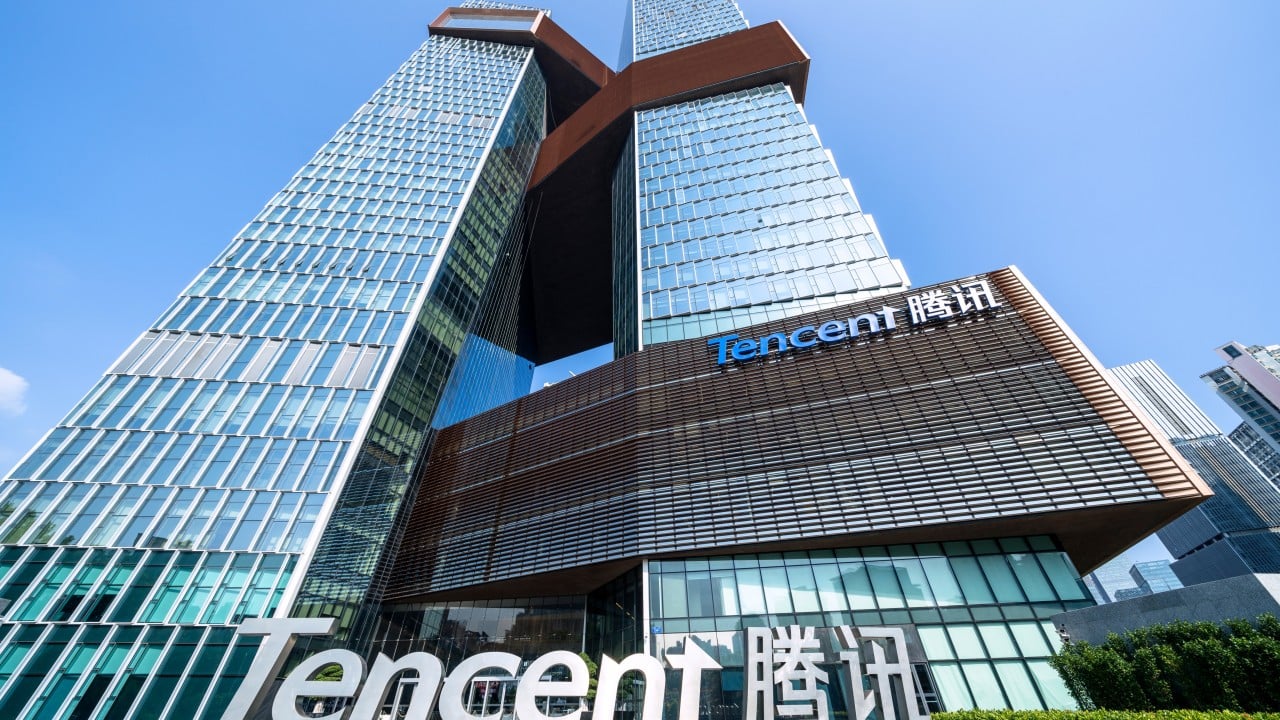
The press release cycle for Tencent’s Hunyuan model reads like a script written by a corporate committee terrified of becoming irrelevant. They’ve checked every box. They hired a former OpenAI researcher. They touted "billions of parameters." They promised a "flagship" experience. But if you peel back the expensive marketing veneer, you aren't looking at a breakthrough. You’re looking at an admission of defeat.
For years, Tencent dominated the Chinese digital life by building a walled garden so high nobody could see over it. WeChat became the air people breathe. But the LLM race has exposed a fundamental truth: being a platform monopolist doesn't make you a deep-tech innovator. While OpenAI was burning through GPUs to solve the core mysteries of transformer scaling, Tencent was busy optimizing ad revenue on short-form videos. Now, they are trying to buy back the time they wasted.
The Myth of the OpenAI Pedigree
The industry has a massive problem with "founder worship" and "pedigree bias." Every time a person who once sat in a room near Sam Altman starts a company or joins a competitor, the valuation jumps by a billion dollars. It’s the new alchemy.
Hiring a former OpenAI researcher is a tactical win for HR, not a strategic shift for the product. One researcher does not bring the proprietary weights, the specific training data mixtures, or the "vibe" of a culture that prioritizes existential risk over quarterly earnings. When a giant like Tencent lures away talent, they aren't buying innovation; they are buying a translation layer. They need someone to explain the papers everyone else has already read.
I’ve watched companies dump nine figures into "foundational" AI teams only to realize that top-tier talent from San Francisco suffocates inside the rigid, KPI-driven bureaucracy of a Shenzhen tech giant. Innovation requires the freedom to fail spectacularly. Tencent’s stock price won't allow for that.
More Parameters Do Not Equal More Intelligence
The competitor narrative obsesses over size. "Hunyuan is massive," they shout. This is the "Lazy Consensus." We have reached the point of diminishing returns for brute-force scaling.
Scaling a model to a hundred billion parameters is now a commodity skill. If you have the capital and the H100s, you can build a massive model. The real challenge—the one Tencent is sidestepping—is data quality and architectural efficiency.
Most Chinese LLMs suffer from the "Clean Data Paradox." Because the domestic internet is so heavily moderated and siloed, the corpus of high-quality, diverse training data is significantly thinner than the open web utilized by Llama 3 or GPT-4. To compensate, these models are often padded with translated English datasets, creating a linguistic uncanny valley where the AI thinks in English but speaks in Mandarin. It’s a simulation of intelligence, not a native understanding of the world.
Why WeChat is a Burden, Not an Advantage
The "people also ask" crowd wants to know: How will this change WeChat? The consensus says Hunyuan will make WeChat "smarter." I argue it will make WeChat bloated and unusable. Tencent’s urge to shove AI into every corner of their ecosystem—from search to customer service to content creation—is a defensive move to protect their moat.
- Feature Creep: Every AI-integrated "smart assistant" is another layer of friction between the user and the task.
- Computational Tax: Running flagship-level inference across a billion users is a financial nightmare.
- The Hallucination Liability: In a high-stakes social and financial ecosystem like WeChat, a 5% hallucination rate isn't a quirk; it’s a legal and social catastrophe.
Tencent isn't integrating AI to help you. They are integrating AI so you don't leave for a dedicated AI-native app. It’s a cage, not a tool.
The GPU Wall
Let’s talk about the hardware reality no one wants to mention in a glossy PR piece. China is under massive export restrictions. While Tencent might have stockpiled chips, those piles are finite.
$$Efficiency > Scale$$
A "flagship" model that requires massive compute to answer a simple query is a dead end in a restricted-hardware environment. The real winners of the next three years won't be the companies with the biggest models. They will be the ones who can squeeze GPT-4 performance out of hardware that costs 1/10th as much to run. Hunyuan looks like an old-school gas-guzzler being released in an era of skyrocketing fuel prices.
Stop Asking if it’s "As Good as GPT-4"
The benchmarking game is rigged. Everyone optimizes for MMLU and GSM8K scores. We’ve seen models that score in the 90th percentile on benchmarks but can't write a coherent three-paragraph email that doesn't sound like a robot had a stroke.
The question isn't whether Hunyuan can beat GPT-4 in a sanitized lab setting. The question is: Does it solve a problem that wasn't already solved two years ago? If the answer is "It does what GPT-4 does, but in Mandarin," then Tencent has failed. We don't need more clones. We need agents that can actually execute tasks within the messy, unformatted real world. Tencent has the best "real world" data in the world through WeChat Pay and Mini Programs, yet they are focusing on building a general-purpose chatbot. It is a massive waste of their unique institutional knowledge.
The Institutional Inertia Problem
I have consulted for firms that tried to pivot to "AI-first." The pattern is always the same. They hire the "Star," they buy the chips, and then the middle managers get ahold of the project. By the time the model is ready for public release, it has been nerfed by legal, sanitized by PR, and shackled by the monetization department.
Hunyuan isn't a moonshot. It’s a hedge. It’s Tencent telling their shareholders, "Look, we’re doing it too! Please don't sell our stock!"
True disruption comes from the edges, not from the center. It comes from the startup in a garage that doesn't have a multi-billion dollar gaming revenue stream to protect. Tencent is too rich to be truly dangerous in the AI space. They have too much to lose.
The Brutal Reality of the "Flagship" Label
Calling Hunyuan a "flagship" is a marketing trick to hide the fact that it is an iterative update. In the software world, "flagship" usually means "the version we’re finally willing to charge for."
If you want to actually win in the AI era, stop looking at what the giants are unveiling. Look at what they are hiding. They are hiding the fact that their core business models—advertising and transaction fees—are threatened by an AI that can automate the very tasks users currently spend hours doing on their platforms.
Tencent doesn't want an AI that is too good. They want an AI that keeps you inside WeChat for another ten minutes. That conflict of interest is why Hunyuan will never be the "OpenAI killer" the headlines claim it is.
Stop celebrating the arrival of another giant in the room. The room is already full, and the giants are just stepping on each other's toes while the floor starts to give way. The real innovation is happening in the basements where people are building small, specialized, and fiercely efficient models that don't need a "former OpenAI researcher" to validate their existence.
Tencent didn't unveil a future; they unveiled a monument to the way things used to be done.
Buy the chips. Hire the names. Build the model. Fall behind anyway.