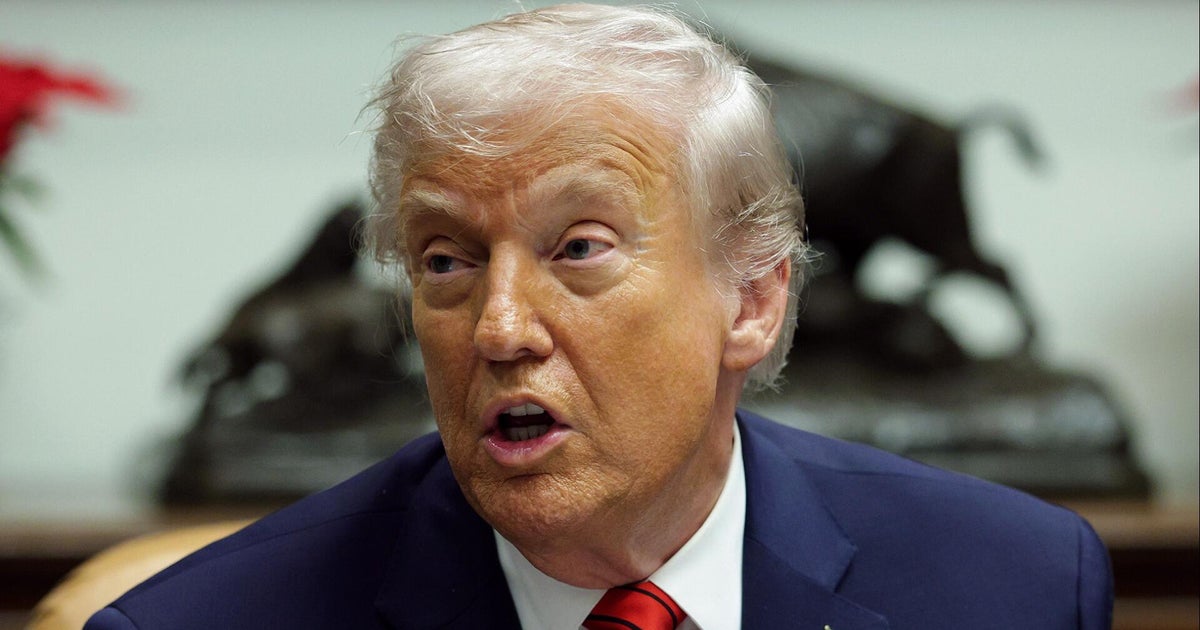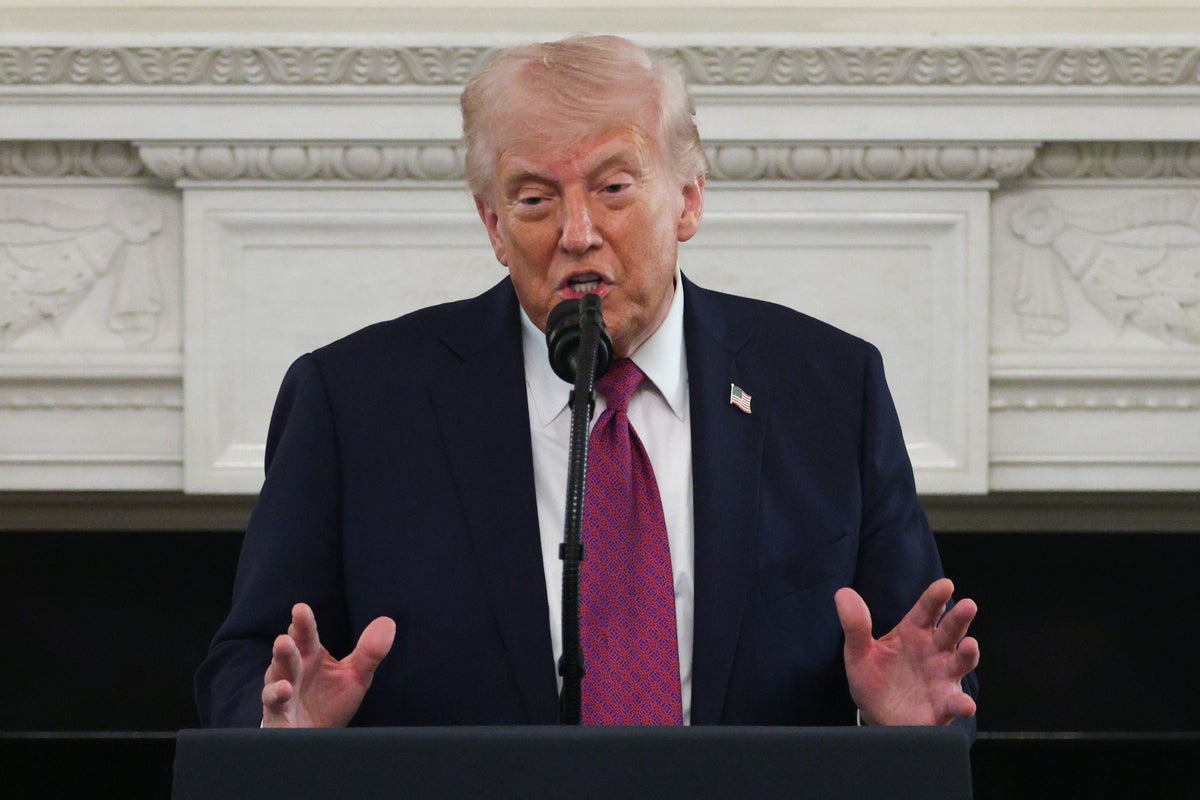
The media is currently hyperventilating over a JPEG. Specifically, an AI-generated image of Donald Trump portrayed as a messianic figure, followed closely by his public reading of a Bible passage. The "lazy consensus" among the punditry is that this is a "political stunt" or, worse, a sign of a candidate losing his grip on reality. They call it blasphemy. They call it desperate. They call it a contradiction.
They are wrong. They are missing the entire architecture of modern political communication.
What the critics see as a clumsy overlap of sacrilege and Scripture is actually a sophisticated masterclass in Hyper-Reality Marketing. By dismissing these moves as "stunts," the opposition fails to realize they are the ones being played. We aren't watching a man try to be a preacher; we are watching a brand architect collapse the distance between the physical and the digital to create a new kind of political iconography.
The Myth of the Sacred Image
Let’s dismantle the first fallacy: the idea that "AI Jesus" images hurt Trump with his base. Critics assume that religious voters are a monolith of rigid traditionalists who recoil at the sight of digital manipulation. I’ve spent two decades watching how subcultures consume media, and here is the truth: The MAGA movement has already moved past the need for "authentic" photography.
In a world where every corporate headshot is airbrushed and every war zone photo is filtered, the "AI-ness" of the image is the point. It is a visual signal of Technological Populism. By using AI to generate these images, Trump isn't claiming to literally be a deity; he is reclaiming the power to define his own mythology without the permission of a Getty Images photographer or a New York Times editor.
The image is a vibe. The Bible reading is the anchor.
When he reads the Word, he isn't auditioning for the priesthood. He is performing a Civil Religion Ritual. In the United States, the Bible isn't just a book of faith; it's a cultural constitution. By pairing high-tech AI imagery with the oldest text in the West, he is bridging the gap between a digital future and a traditional past. It’s a "pincer movement" on the American psyche.
Why The Blasphemy Charge Fails
Critics love to shout "Blasphemy!" because they think it will peel away the Evangelical vote. This is a fundamental misunderstanding of Symbolic Association.
Voters in this demographic aren't looking at an AI image and thinking, "This man claims to be the Christ." They are looking at it and thinking, "The world hates this man as much as it hates my values, so I will see him through the lens of a protector." The image serves as a mirror for their own feelings of persecution.
When a critic calls the image "offensive," they aren't talking to the voter; they are talking to themselves. To the supporter, the critic's outrage is the validation. If the "Liberal Elite" hates the image, the image must contain a truth. It is a self-reinforcing loop.
The Logistics of the Digital Icon
We need to talk about the technical shift in political branding. Traditionally, a campaign would spend $50,000 on a high-end photo shoot to make a candidate look "presidential." Today, you can prompt a Midjourney or DALL-E instance to generate 100 variations of a candidate in five minutes.
This isn't just cheaper; it's more effective because it allows for Iterative Iconography.
- Mass Production: You can flood the zone with imagery that fits every niche of the base.
- Deniability: If an image goes too far, it was "just a meme" or "supporter-generated."
- Speed: You can react to a news cycle with a custom visual in seconds.
The "AI Trump" isn't a mistake. It's a prototype of how all political figures will operate by 2028. We are entering the era of the Synthesized Candidate, where the physical body of the politician is merely a vessel for an infinitely malleable digital avatar.
The Bible as a Defensive Shield
Why read the Bible a week after the AI image? It’s a classic Contrast Play.
If you only have the AI image, you look like a digital cult leader. If you only have the Bible reading, you look like a standard GOP retread from 1994. When you do both, you create a "cognitive dissonance" that the media can't help but cover. The media's obsession with the "hypocrisy" provides the candidate with millions of dollars in earned media.
Every time a news anchor spends five minutes explaining why the Bible reading was "insincere," they are broadcasting the candidate's name and face to people who don't care about "sincerity"—they care about presence. In the attention economy, a "political stunt" that gets 100 million views is simply called "winning."
The "People Also Ask" Fallacy
People often ask: "Does Trump actually know the Bible?"
This is the wrong question. It assumes that political efficacy is tied to theological literacy. It isn't. The real question is: "Does his audience feel represented by his defense of the Bible?"
The answer is a resounding yes. In a secularizing culture, the act of holding the Book is more important than the act of interpreting it. It is a signifier of tribal belonging. When critics mock his reading, they aren't mocking his lack of knowledge; they are perceived as mocking the Book itself. This is the trap.
Stop Looking for Consistency
The biggest mistake industry insiders make is looking for logical consistency in a post-logical media environment. We are no longer in the era of the "Policy Paper." We are in the era of the Aesthetic Narrative.
The AI image and the Bible reading aren't contradictory. They are two different tracks on the same album. One track is for the internet-native "Edge-lords" and meme warriors who want to see the status quo burned down. The other track is for the grandmother in Iowa who wants to feel like the world isn't leaving her faith behind.
If you try to "fact-check" an AI image or "critique" the sincerity of a prayer, you have already lost. You are bringing a spreadsheet to a knife fight.
The Future of the Synthetic Icon
I’ve seen campaigns burn through millions trying to "humanize" their candidates. They want them to look relatable, to eat at diners, to pet dogs. It’s a waste of money.
The future isn't relatability; it's Transcendence.
Voters don't want a candidate who is just like them. They want a candidate who is a projection of their strongest desires and fears. AI allows for that projection to become visual. It allows the candidate to become a literal legend while they are still alive.
The critics call it a "political stunt." I call it the first successful deployment of a post-human campaign strategy.
The media can keep laughing at the "glitches" in the AI or the "stumbles" in the reading. While they are busy being "correct," the digital icon is becoming permanent. The "stunt" isn't a distraction from the campaign; the "stunt" is the campaign.
If you're waiting for a return to "normal" political discourse, you're waiting for a train that left the station in 2016 and has since been replaced by a supersonic jet fueled by algorithms and outrage.
Shut up and watch the screen. The reality you’re looking for doesn't exist anymore.