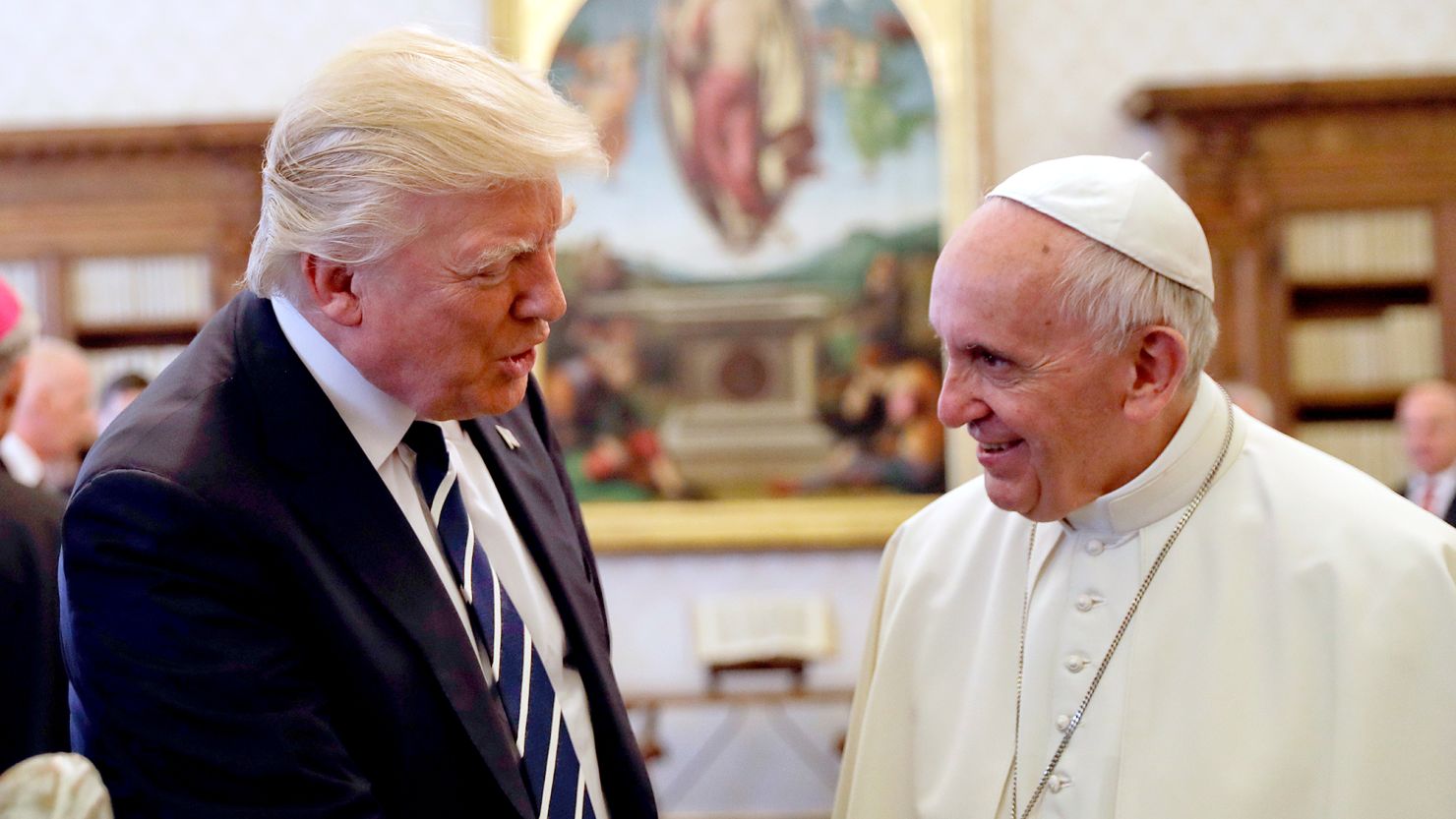
The distance between Washington and the Vatican has never felt wider. In a series of escalating exchanges, U.S. President Donald Trump has made his stance clear: Pope Leo XIV needs to stop acting like a politician and start acknowledging that Iran is a "global threat." This isn't just a minor disagreement over diplomacy. It's a fundamental clash between a president who views the world through the lens of "nasty" realities and a pontiff who sees the "delusion of omnipotence" as the true danger to humanity.
Trump’s recent rhetoric hasn't just been sharp; it’s been personal. After threatening that an entire Iranian civilization could "die tonight" if the Strait of Hormuz wasn't reopened, the President found himself under the moral microscope of the Holy See. When the Pope called those threats "unacceptable," Trump didn't back down. He doubled down, claiming the American-born Pope is "weak on nuclear weapons" and doesn't understand the "real world" where over 42,000 protesters have been killed by the Iranian regime.
The Clash of Two Worldviews
At the heart of this rift is a disagreement about what actually keeps the world safe. For the Trump administration, safety comes from overwhelming military strength and the willingness to use it. For the Vatican, safety is found in the "roar of bombs" ceasing.
Trump has been vocal about his frustration. He’s told reporters that the Pope can say what he likes, but he must understand the "nasty world" we live in. From Trump's perspective, the Vatican’s calls for dialogue and "fraternity" are naive in the face of a regime that he argues is a central hub for global instability. He’s essentially telling the Pope to stay in his lane—focus on the church and leave the "tough" foreign policy to the leaders with the nuclear buttons.
But Pope Leo XIV isn't staying in a lane. He’s been moving his diplomatic weight around like a heavyweight. He’s spent his recent African tour calling out "tyrants" who ravage the world. While he hasn't named Trump directly in every sermon, the subtext is loud. He’s arguing that those who "manipulate religion and the very name of God for military gain" are dragging the sacred into "darkness and filth."
Why This Fight is Different This Time
We’ve seen presidents and popes disagree before, but this feels like the Middle Ages all over again. Historians are pointing out that we haven't seen this level of public vitriol between a Western leader and the Vatican in centuries. It's not just about policy; it's about legitimacy.
- The "American Counterweight" Theory: Trump has gone as far as to suggest that Leo XIV was only installed by the Catholic Church as a political counterweight to his own presidency.
- The Christ Imagery: Tensions hit a fever pitch when Trump posted an AI-generated image of himself that many saw as a depiction of him as Jesus Christ, shortly after a 330-word tirade against the Pope.
- The Nuclear Question: Trump has explicitly accused the Pope of being "OK" with Iran having a nuclear weapon. The Vatican, however, has a long-standing record of advocating for total nuclear disarmament, signing treaties that ban them entirely.
The Real World Stakes in Iran
While the two leaders trade barbs, the situation on the ground in the Middle East remains a powder keg. Trump’s "maximum pressure" 2.0 involves a literal threat to civilian infrastructure—power stations, bridges, and the very grid that keeps a nation running. He argues this is the only language Tehran understands.
The Pope’s counter-argument is human. He’s focusing on the "innocent: children, the elderly, the sick." He views the destruction of civilian infrastructure not as a strategic move, but as a violation of international law and a moral failure. He’s even called on citizens worldwide to bypass their leaders and demand peace directly.
Moving Beyond the Rhetoric
If you're trying to make sense of this, don't look at it as a religious debate. It’s a power struggle. Trump is trying to maintain a coalition of "strength" that includes Israel and a hardline stance against Iranian expansion. The Pope is trying to lead a global "moral voice" that views the U.S. and Israeli military actions as part of the problem, not the solution.
Honestly, there’s no middle ground here. You can’t compromise between "total annihilation" and "total disarmament."
If you want to stay informed on how this impacts global stability, keep an eye on these specific indicators:
- The Strait of Hormuz: Any move to close this shipping lane will likely trigger the "civilization" threat Trump warned about.
- Vatican Diplomacy: Watch for the Pope’s upcoming visits to "neutral" or "non-aligned" countries like Algeria, where he's expected to continue his "peace through dialogue" offensive.
- U.S. Catholic Response: The U.S. Conference of Catholic Bishops is already "disheartened." If American Catholics start moving away from Trump over his "blasphemous" imagery or attacks on the Pope, his political strategy might have to shift.
The Vatican has lived through countless empires and presidents. Trump is betting that in the "real world," the one with the biggest military wins. The Pope is betting that the moral high ground is the only thing that lasts. Both are dug in, and neither looks ready to blink.