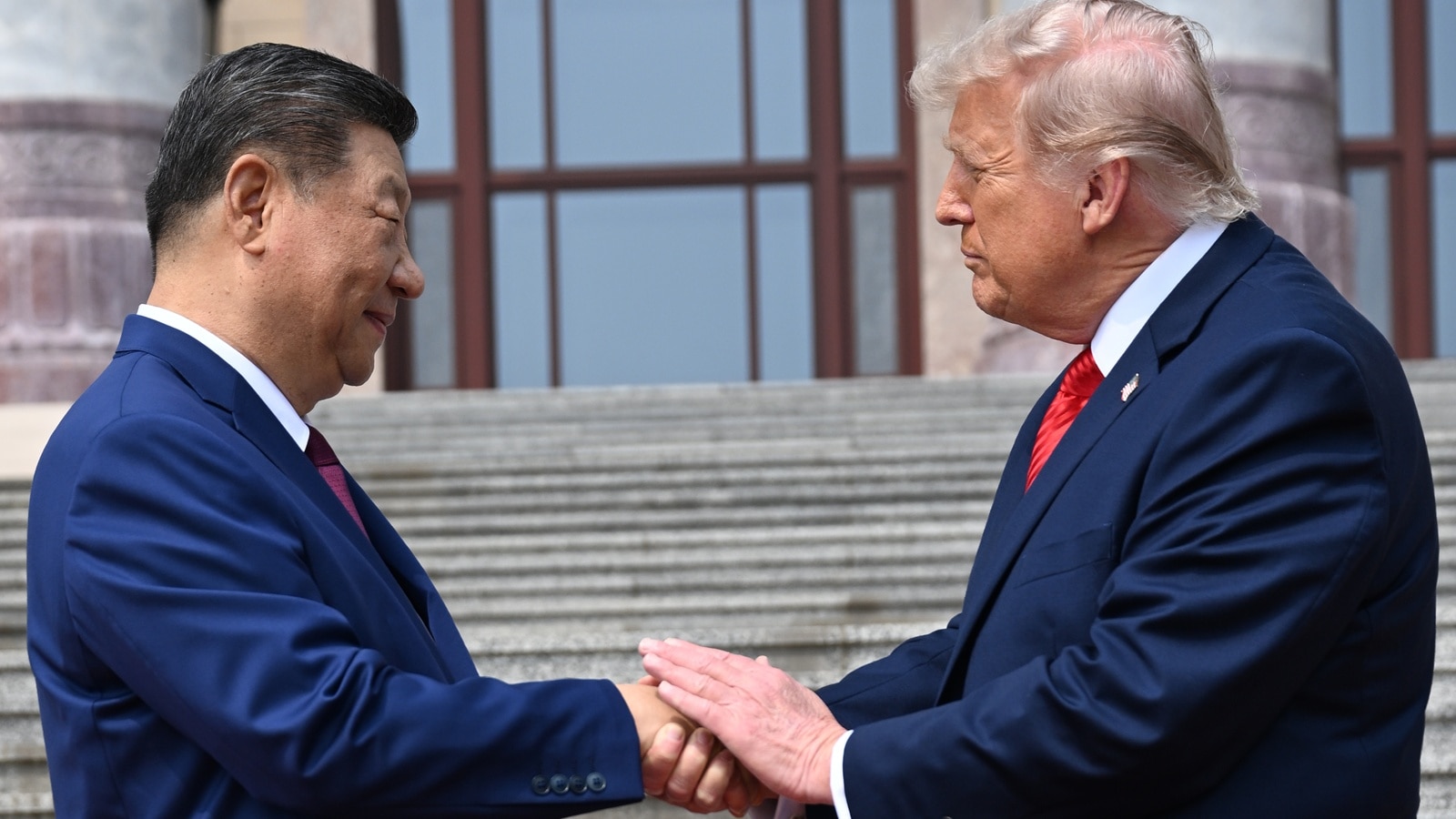
Donald Trump and Xi Jinping just gave the world a masterclass in high-stakes optics. After two and a half hours of closed-door talks in Beijing, Trump didn't just walk away with a handshake; he walked away with a date. On September 24, the White House will roll out the red carpet for the Chinese President. This isn't just a reciprocal visit. It's a calculated attempt to signal a "bonhomie" that feels jarringly different from the trade-war rhetoric of the last few years.
If you're wondering why these two are suddenly acting like old friends, look at the room. Sitting at the state banquet weren't just diplomats, but the titans of American tech: Elon Musk, Jensen Huang, and Tim Cook. This meeting wasn't just about diplomacy. It was a massive corporate networking event with nuclear-armed stakes. For an alternative perspective, check out: this related article.
The September 24 Summit and the New Trade Reality
The invitation for September 24 is the biggest takeaway from this Beijing trip. It’s clear Trump wants to bring the "deal-making" energy back to Washington. But don't let the smiles at the Great Hall of the People fool you. The relationship is still incredibly fragile. The two leaders discussed everything from oil prices to the flow of fentanyl, but the underlying tension regarding Taiwan hasn't gone anywhere.
Xi was blunt. He told Trump that "Taiwan independence" and peace are like "fire and water." He’s basically saying that if the U.S. fumbles the Taiwan issue, the whole relationship goes up in smoke. Trump, in his typical fashion, dodged the specifics when reporters pressed him on arms sales, simply saying they'd "have that discussion." Further coverage on this matter has been published by The New York Times.
What’s actually changed is the economic leverage. China’s trade surplus hit $1.1 trillion last year despite U.S. tariffs. Meanwhile, the U.S. Supreme Court recently clipped Trump’s wings by striking down some of his emergency tariffs. Trump needs a win he can show to voters—specifically, a win that involves China buying more American soy, corn, and Boeing jets.
Energy Security and the Iran Factor
One of the more surprising points of agreement was the Strait of Hormuz. With the U.S.-Israel conflict with Iran simmering, global energy markets are on edge. Both leaders agreed the Strait must stay open. It turns out that when it comes to keeping the oil flowing, the world's two biggest consumers can actually find common ground.
- Market Access: Trump is pushing for American banks and tech firms to have a wider path into China.
- Energy Flows: China wants more U.S. oil, and Trump is more than happy to sell it to them.
- Fentanyl: There's a renewed commitment to halting the precursors used to make the drugs killing Americans.
It's a classic "transactional" relationship. I’ve seen this play out before: Trump praises the "great leader" in public while his administration hammers out the fine print on export controls in the background. It's a "good cop, bad cop" routine where Trump plays both roles.
Why the Billionaires Were There
You don't bring the CEOs of Tesla, Nvidia, and Apple to a dinner just for the Peking duck. These companies are in a bind. Nvidia wants to sell advanced AI chips to China, but the U.S. government keeps tightening the screws. Apple is trying to diversify its supply chain away from China but still needs those Chinese consumers.
These tech giants are the real bridge between the two nations. When Xi tells these CEOs that "China's door will only open wider," he’s speaking directly to Wall Street. He knows that if he keeps the American corporate elite happy, they’ll lobby Washington to take it easy on the sanctions. It's a smart play, and honestly, it seems to be working.
What Happens Between Now and September
Don't expect the next few months to be all sunshine. This "bonhomie" is a temporary ceasefire. We’re going to see a lot of posturing as both sides prepare for the White House summit. Trump will likely tout new "multi-billion dollar" purchase agreements, while Beijing will continue to modernize its military and pressure Taiwan.
The reality is that these two countries are locked in a structural rivalry that a single dinner can’t fix. But for now, the "big deal" is back on the table. If you're an investor or a business owner, the "September 24" date is the most important mark on your calendar. Watch for shifts in tariff rhetoric and semiconductor export rules over the summer. That's where the real story will be written.
The best move right now is to keep a close eye on the U.S. Trade Representative's upcoming decisions this July. They’ll be setting the "bridge" tariffs that will likely serve as the opening gambit for the September talks. If those numbers go up, the "bonhomie" might be shorter than a Beijing sunset.