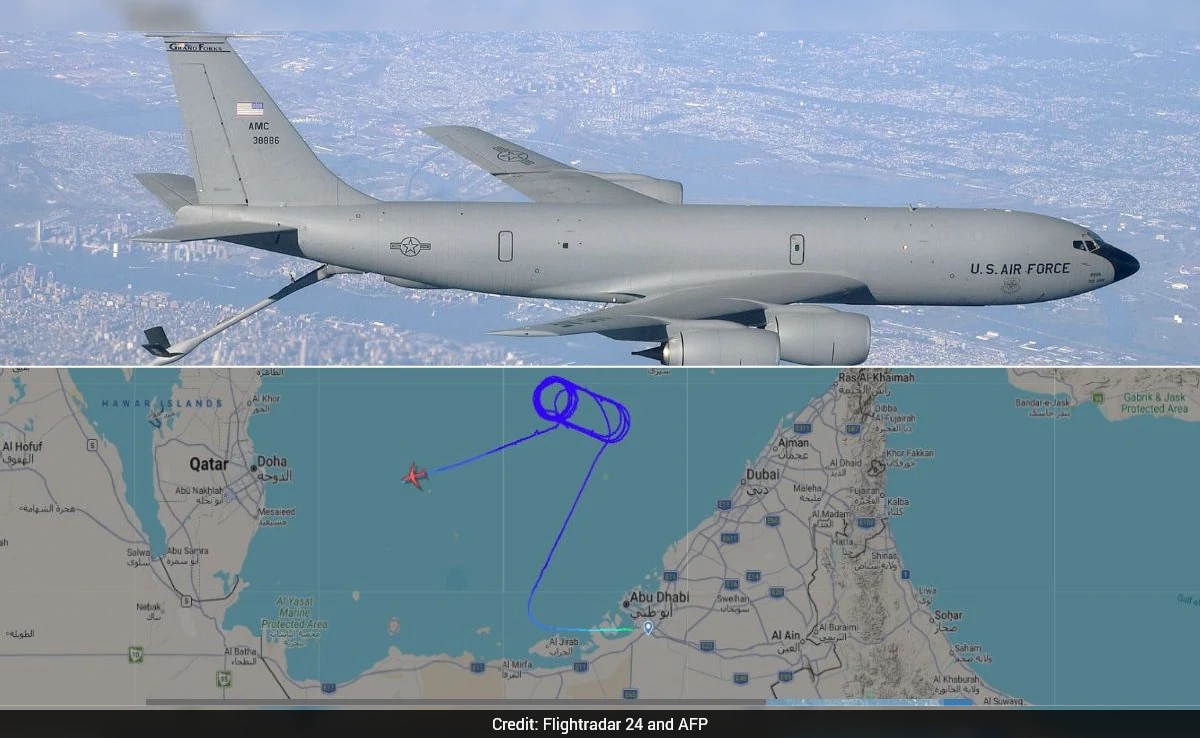
A US Air Force KC-135 Stratotanker—often called a flying gas station—just sent ripples of anxiety through flight tracking communities across the globe. It happened over the desert heat of Qatar. One minute the aircraft was cruising on a routine mission. The next, it signaled a "7700" emergency code and seemingly vanished from civilian tracking screens.
Panic spreads fast on social media. People see a disappearing icon and assume the worst. They think "missing" means "crashed." Usually, it just means "low altitude."
Military aviation is inherently risky, but these massive tankers are the backbone of global operations. When one of them hits the panic button, everyone from Pentagon analysts to hobbyist spotters holds their breath. This specific incident involving a KC-135 near Al Udeid Air Base highlights exactly how thin the margin for error is in the crowded airspace of the Middle East.
Why a Flying Gas Station Transmitting an Emergency Matters
The KC-135 Stratotanker isn't some nimble fighter jet. It’s a massive, four-engine beast filled with thousands of gallons of highly flammable jet fuel. Its job is to refuel other planes mid-air. It’s a flying bomb in the best of times.
When a pilot squawks 7700, they're telling every air traffic controller in the vicinity that they have an urgent problem. It could be an engine failure. It could be a fire. It could be a sudden loss of cabin pressure. In this case, the sudden "disappearance" from flight tracking sites like FlightRadar24 or ADS-B Exchange happened because the plane likely descended below the coverage area of civilian receivers.
You've got to understand how these tracking systems work. They rely on line-of-sight. If a plane drops low to prepare for an emergency landing or to manage a technical glitch, it "disappears" from your phone screen. It hasn't vanished into a void. It's just out of sight.
The Al Udeid Connection and Regional Pressure
Qatar’s Al Udeid Air Base is the central hub for US air operations in the region. It’s busy. It’s hot. The environment is brutal on airframes that, in many cases, are older than the parents of the people flying them. The KC-135 fleet is legendary for its longevity, but these planes are ancient. Most were built between 1954 and 1965.
Think about that. We’re asking sixty-year-old hardware to perform high-stakes refueling missions in 110-degree heat. Metal fatigue is real. Hydraulics fail. Seals leak.
When this tanker declared an emergency, it wasn't just a local issue. Every other mission in the area—fighters on patrol, transport planes, reconnaissance drones—suddenly lost their "gas station." The logistics of a tanker emergency are a nightmare. You don't just lose one plane; you potentially strand ten others that don't have the fuel to get home without a mid-air top-off.
Common Misconceptions About Missing Military Aircraft
People love a mystery. They see a gap in the data and fill it with conspiracies. Let’s clear some of that up.
First, "missing" on a tracking app doesn't mean the US military doesn't know where the plane is. Military radar is lightyears ahead of the hobbyist kits used for public tracking. Even if the transponder is off or the plane is low, the Air Force knows its location.
Second, the "emergency" code 7700 is a tool, not a death sentence. Pilots use it to get priority. It clears the path. It tells the tower, "Get everyone else out of my way, I’m coming in hot."
Third, Qatar is a friendly but complex airspace. There’s a lot of commercial traffic from Qatar Airways and other regional giants. A military emergency in that corridor is a massive logistical headache for civilian controllers who have to divert multi-million dollar commercial flights to make room for a leaking Stratotanker.
The Reality of Mid Air Refueling Risks
Mid-air refueling is one of the most dangerous routine things the military does. You’re flying two massive aircraft feet apart at hundreds of miles per hour. One wrong twitch of the "boom"—the long pipe used to transfer fuel—and you've got a catastrophic collision.
If the emergency was related to the refueling boom itself, the pilots would have to break contact immediately. If the boom gets stuck in the "down" position, the aerodynamics of the plane change completely. It becomes much harder to fly and creates massive drag.
I’ve seen cases where a boom wouldn't retract, and the pilot had to fly a very slow, very precarious path back to the runway, hoping the extra stress didn't rip the tail section apart. It’s high-drama flying that rarely makes the evening news unless something goes horribly wrong.
What Happens After the Squawk
Once the 7700 code is hit, a clock starts. Back at Al Udeid, emergency crews—firefighters, medics, mechanics—race to the runway. They don't know if the plane is landing with a small electrical fire or a total hydraulic failure.
The pilots are likely running through checklists that are dozens of pages long. They’re dumping fuel if they're too heavy to land safely. They’re calculating wind speeds and runway lengths. It's a controlled chaos that military aviators train for every single day.
Maintenance crews will now spend weeks crawling through every inch of that KC-135. They’ll look for the "why." Was it a bird strike? Was it an aged part finally giving up? The US Air Force keeps these planes flying through sheer willpower and obsessive maintenance, but the age of the fleet is an inescapable factor.
Why This Specific Incident Felt Different
The timing was the issue. With regional tensions constantly fluctuating, any military "emergency" near the Persian Gulf gets extra scrutiny. People wonder if it was electronic warfare or some kind of interference.
While that’s possible, it’s rarely the case. Most "emergencies" are boring mechanical failures. A pump stops working. An indicator light flickers. But when that happens on a flying gas station over a sensitive geopolitical zone, "boring" becomes "international news."
The fact that the aircraft eventually restored its presence or landed safely (as most do) doesn't diminish the risk. Every time one of these aging tankers takes off, it’s a testament to the crews keeping them in the air.
If you're tracking these flights, don't assume a signal drop is a disaster. Look for the "squawk" history. Look for the altitude trends. Usually, you’re just watching a very skilled pilot handle a very old machine’s bad day.
Next time you see a 7700 pop up over the Middle East, check the altitude data before hitting the panic button on social media. Most of the time, the "disappearing" act is just a descent into the safety of a high-tech runway. Keep an eye on regional aviation feeds for the tail number. Often, that same plane will be back in the air within 48 hours, patched up and ready to pass gas to the next flight of hungry F-16s.