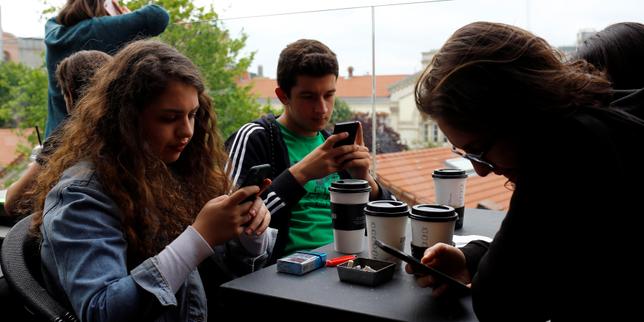
Turkey decided to pull the plug. By banning everyone under 15 from social media, Ankara thinks it just saved the youth. They believe they’ve built a digital fortress. They haven't. They’ve built a ladder.
The consensus view—the one your average "safety expert" or policy wonk will parrot—is that restricting access reduces harm. They point to mental health statistics and predatory behavior as if a legal wall is a physical barrier. It isn’t. History proves that when you treat a basic utility like a contraband substance, you don't stop the behavior. You just move it to the dark corners where nobody is watching.
The Identity Black Market
Let’s talk about the first casualty: truth. When you mandate that a 14-year-old cannot exist online, you don't get a 14-year-old who goes outside to play with a hoop and a stick. You get a 14-year-old who learns how to forge a digital identity before they learn how to drive a car.
VPN usage in Turkey is already among the highest in the world. This law is the greatest marketing campaign for encrypted proxy services in history. I’ve watched governments try to throttle platforms for years; the result is always a more tech-literate, more subversive population. By the time these kids turn 15, they won't just be social media users. They will be experts in bypassing state-level firewalls.
The policy creates a massive incentive for "identity-as-a-service." If a child needs a verified account, they will find a way to get one. This usually involves using a parent's ID—which grants the child access to an adult-unfiltered version of the internet—or turning to third-party "account brokers." Congratulations, Turkey. You’ve just pushed your children directly into the arms of the very predators you claim to be fighting.
Protection is Not a Policy
The competitor's narrative suggests this is a "bold move for mental health." It’s actually a white flag. It’s an admission that the state and the education system have failed to teach digital literacy.
Instead of teaching a child how to navigate the choppy waters of the internet, the government is trying to dry up the ocean. It’s a biological impossibility in 2026. Social interaction is no longer "on" or "off." It is the fabric of modern existence. Removing a teenager from that fabric doesn't make them "pure." It makes them a social pariah among their global peers.
Imagine a scenario where a Turkish 14-year-old is a world-class digital artist or a competitive gamer. Under this law, their career is over before it begins. They cannot build a brand. They cannot network. They cannot participate in the global economy. Meanwhile, their peers in Estonia or Singapore are building equity. This isn't protection. It's an economic handicap.
The Algorithm Doesn't Care About Your Law
Social media platforms are built on engagement loops. These loops are addictive, yes. But they are also the primary way information is disseminated. By banning the youth, you aren't removing the influence of the algorithm; you are just ensuring that when they finally do join at 15, they are hit with a flood of pent-up, unregulated content without the gradual "training wheels" of supervised access.
We’ve seen this play out in various forms of prohibition throughout the 20th century. Total bans create a "rebound effect." When the restriction is lifted, the usage is more intensive, more reckless, and more dangerous.
The Oversight Myth
The law assumes parents will be the primary enforcers. This is the biggest joke of all. Most parents are less tech-savvy than their children. I’ve seen this in corporate security environments: the weakest link is always the human element. A child doesn't need to hack a mainframe to get on TikTok; they just need to wait for their dad to leave his phone on the kitchen table for five minutes.
By making the activity illegal, you've removed the parent's ability to monitor it openly. If a child is bullied or harassed on a "secret" account, they won't go to their parents for help. Why? Because admitting they were harassed means admitting they broke the law. The law has effectively silenced the victims it was designed to protect.
The Real Winner: The Surveillance State
Let’s look at the "nuance" the mainstream media missed. This isn't about the kids. It’s about verification.
To enforce a ban based on age, you need a 100% reliable way to verify every user's identity. This means biometrics, government-linked IDs, and constant tracking. Turkey isn't just banning kids; it’s building the infrastructure for a total end to digital anonymity for everyone.
To "protect the children," every adult must now hand over their digital keys to the state. It’s the ultimate Trojan Horse. If you want to use a social network in a post-ban Turkey, you must prove who you are. This gives the government a direct line to every comment, every like, and every share, tied directly to a national ID number.
Why the "Expert" Advice Fails
Standard advice says: "Talk to your kids about screen time."
My advice: Teach them how to break the ban safely.
If you are a parent in a country with these draconian restrictions, your job is no longer "enforcer." Your job is "intelligence officer." If you don't teach your child how to use these tools responsibly—even if it means bending the rules—the internet will teach them for you. And the internet is a much harsher teacher.
- Adopt a "Shadow Account" Strategy: Instead of a total ban, create a shared family account. Use it together. Demystify the "forbidden fruit" status of the app.
- Focus on Output, Not Input: The harm of social media comes from passive consumption. Turn the ban on its head by encouraging the child to use the tools for creation (video editing, coding, graphic design) rather than scrolling.
- Hardware-Level Control: Don't rely on the app's "kid mode." It’s garbage. Use network-level DNS filtering. You control the pipe, not the platform.
The Great Disconnect
The Turkish government is playing a 20th-century game in a 21st-century world. They think borders still exist on the internet. They think a "law" can stop a signal.
This ban will fail. Not because the intentions are bad, but because the methodology is obsolete. You cannot legislate away the evolution of human communication. All you can do is decide whether your youth will enter the digital world as educated citizens or as black-market outlaws.
Turkey just chose the outlaws.
Stop trying to shield children from the world they are destined to inherit. Start arming them with the discernment to survive it. A child who knows how to spot a bot is safer than a child who is told the bot doesn't exist.
The "forbidden" label is the most powerful psychological trigger known to man. Ankara didn't just ban social media; they made it the most exciting, rebellious thing a teenager can do.
Good luck stopping them.