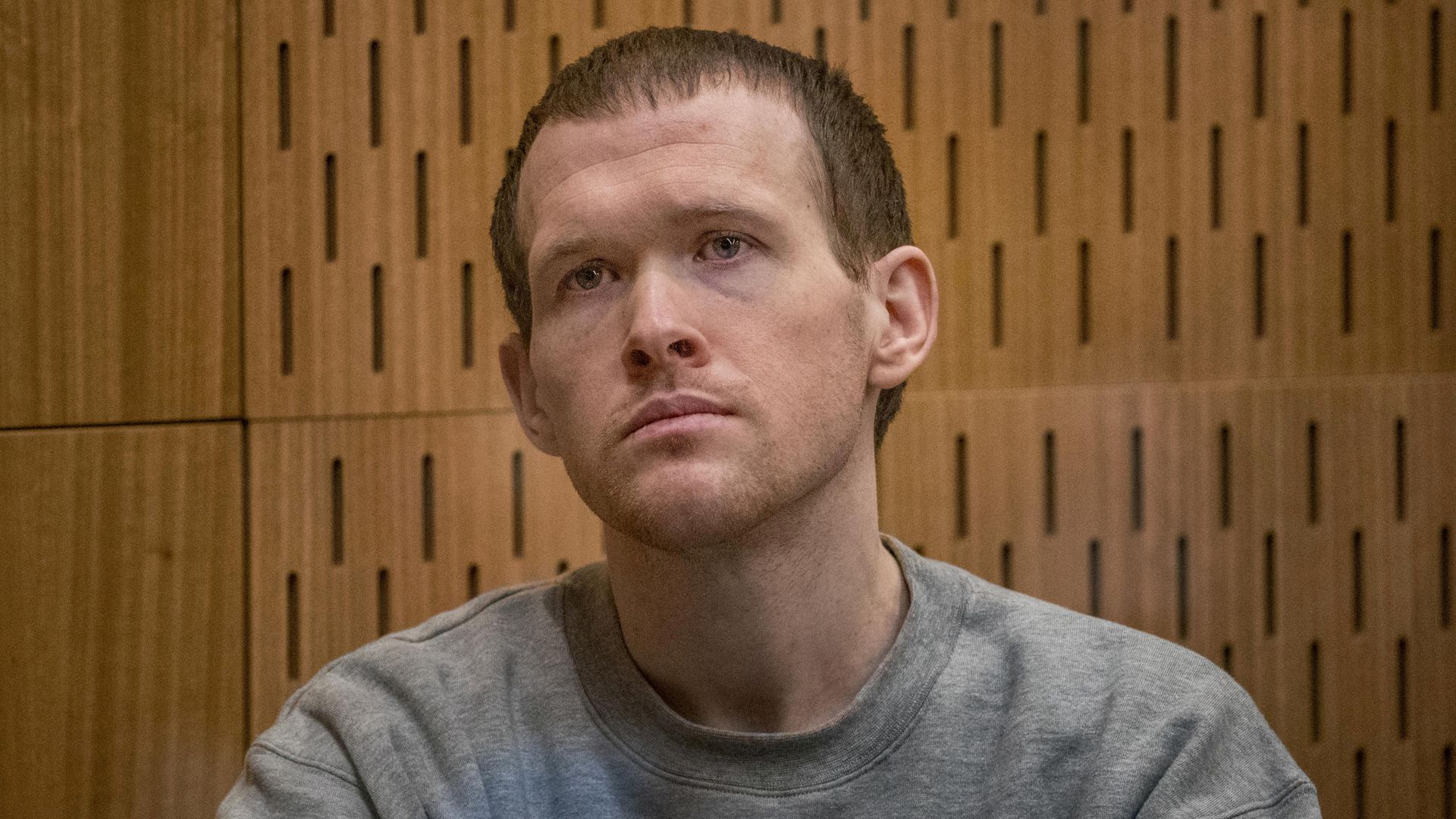
The heavy doors of a courtroom often carry a sound unlike any other. It is a dull, definitive thud—the sound of a chapter closing, or sometimes, a life being measured against the weight of its own actions. In the case of the man who brought terror to the Al Noor Mosque and Linwood Islamic Centre, that sound has become a permanent echo.
For a moment, the world watched to see if the legal system would bend. The gunman, currently serving life without parole for the 2019 Christchurch massacre, attempted to claw back his 2020 guilty plea. He claimed he was under duress. He claimed the conditions of his confinement had warped his ability to choose. He wanted a trial. He wanted to reopen the wounds of a nation that had barely begun to form scars.
The Court of Appeal looked at the evidence and the history of that dark Friday. They saw something different. They saw a man who had made a calculated, informed decision to admit to 51 counts of murder, 40 counts of attempted murder, and a charge of engaging in a terrorist act. The decision to uphold that plea isn't just a legal technicality. It is a testament to the idea that some choices, once made in the light of day, are written in stone.
Justice is often viewed as a balance scale, but in reality, it functions more like an anchor. It provides stability when the waves of grief and outrage threaten to pull a society under.
The gunman’s legal team argued that his stay in maximum security, under the "Prisoners of Extreme Risk Directorate," created a psychological environment where a fair choice was impossible. Think of it like being underwater. The pressure builds. The air gets thin. You might say anything just to reach the surface. This was the narrative they tried to weave—a story of a man coerced by the very walls around him.
But the law requires more than just a feeling of pressure. It requires proof that the will was actually broken.
When the gunman stood in that court in 2020, he didn't look like a man broken by his environment. He looked like a man who understood exactly what he was doing. He was represented by seasoned legal counsel. He had been given time to reflect. Most importantly, his plea was a public acknowledgement of the horror he had documented and broadcasted himself. The court noted that there was no "miscarriage of justice" in holding him to his word.
Imagine the alternative.
If a guilty plea for the most heinous crimes in a country’s history could be discarded years later based on the discomfort of a prison cell, the entire foundation of the legal system would begin to crumble. A plea is a contract with the state and with the victims. It says: I did this, and I accept the consequences so that the healing can begin. To break that contract is to tell the survivors that their peace is temporary.
The survivors of Christchurch have lived through a nightmare that most of us can only grasp in fragments. They saw the worst of humanity and responded with the best of it. They showed grace in the face of absolute malice. For them, the legal finality of this case is more than a news headline. It is the assurance that they will not be forced back into a witness box. They will not have to watch the footage again. They will not have to listen to a defense attempt to justify the unjustifiable.
One woman, who lost her husband that day, spoke once about the weight of waiting. She described it as a leaden blanket that never quite lets you breathe. Every appeal, every legal maneuver, every headline featuring the gunman's name adds another layer to that blanket. By rejecting the bid to overturn the plea, the court has started to lift that weight.
The legal system is frequently criticized for being slow, cold, and detached. There is a reason for that detachment. It exists to prevent the passions of the moment from dictating the outcome of a life. But in this instance, the cold logic of the law aligned perfectly with the human need for closure. The judges didn't need to be emotional; they only needed to be firm. They looked at the transcripts, the medical reports, and the timing of the appeals. They found a man who had changed his mind, not a man who had been denied justice.
Regret is not the same as duress.
A person can wake up in a concrete room and realize the gravity of a life sentence. They can feel the walls closing in and wish they had fought longer, or harder, or differently. But the law does not exist to soothe the regret of the guilty. It exists to protect the integrity of the process. The process worked. The man was afforded every right, every protection, and every opportunity to speak. He chose to plead guilty.
New Zealand changed on March 15, 2019. The country lost its sense of being a safe harbor, tucked away from the extremist violence that plagued other parts of the world. But in the years since, it has found a different kind of strength. It is the strength of a community that refuses to be divided by a manifesto of hate.
The gunman’s attempt to overturn his plea was a final attempt to exert power over the people he hurt. It was a bid for attention, a way to force his name back into the mouths of the public. By shutting that door, the Court of Appeal has effectively silenced him. He remains where he belongs—not as a protagonist in a legal drama, but as a prisoner serving a sentence that reflects the magnitude of his cruelty.
There is a quiet dignity in the way a society moves forward after a tragedy. It isn't found in the loud protests or the televised debates. It's found in the small moments. It’s in the mosque doors that stay open. It’s in the neighbors who still bring food to families they didn't know five years ago. And it is in a courtroom where a judge’s ruling ensures that the truth remains the truth.
The ink on that guilty plea has been dry for a long time. Now, the seal is finally set. The victims can look toward the horizon without fearing a sudden storm from the past. The legal arguments have been exhausted. The narratives have been tested. What remains is the silence of a cell and the enduring resilience of a people who chose love when they were given every reason to choose hate.
The sun sets over the Southern Alps, casting long shadows across a city that has seen too much pain and found too much courage. The legal battle is over. The man who tried to break a nation is now just a footnote in the story of how that nation stood up.
The gavel has fallen for the last time.