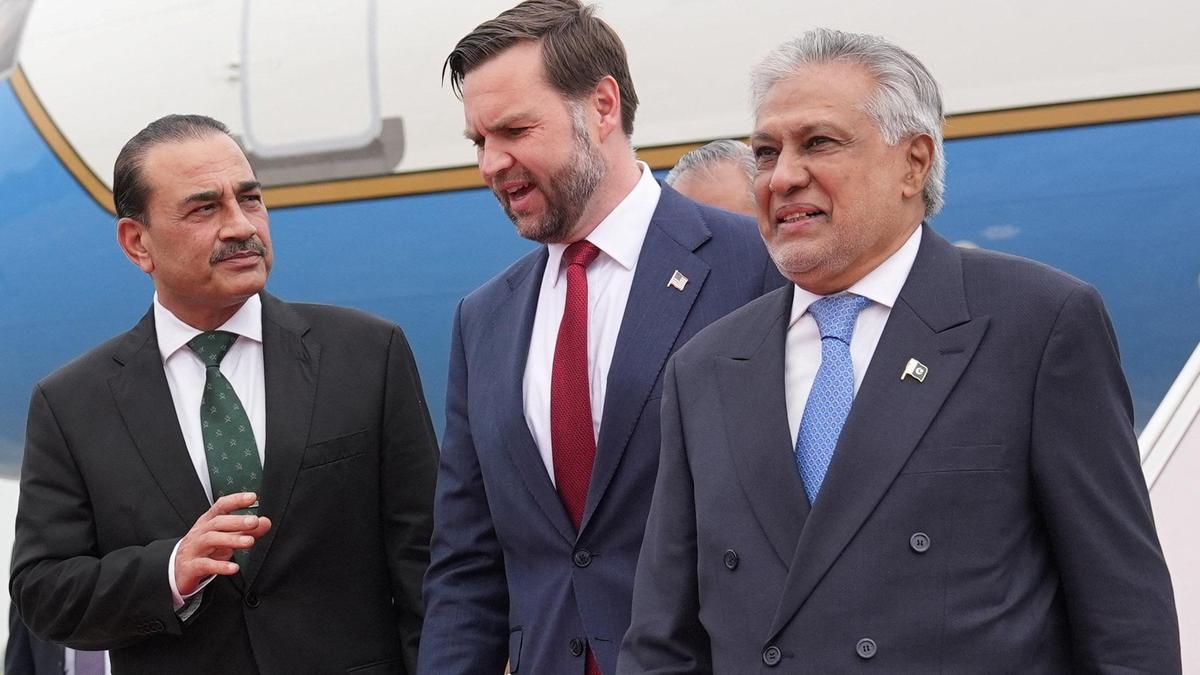
Vice President J.D. Vance’s arrival at Nur Khan Airbase this morning signals a desperate pivot in American foreign policy. The objective is clear but the execution is fraught with historical baggage. He is in Islamabad to broker a trilateral understanding between the United States, Pakistan, and Iran. This isn't a courtesy call. It is a high-stakes attempt to prevent a regional conflagration that threatens to choke the Strait of Hormuz and destabilize the nuclear-armed corridor of South Asia.
The administration is betting on Pakistan’s unique position as a mediator. Islamabad has long maintained a delicate balancing act, sharing a thousand-kilometer border with Iran while remaining a critical, if often mercurial, security partner for Washington. Vance’s presence suggests that traditional diplomatic channels have dried up. By putting the Vice President on the ground, the White House is signaling that the era of "strategic patience" with Tehran has ended, replaced by an urgent need for a physical buffer.
The Silicon Silk Road and the Iranian Question
While the headlines focus on "peace talks," the underlying tension is rooted in infrastructure and energy. Iran has been aggressively pursuing the completion of the Peace Pipeline, a project designed to deliver natural gas to a power-starved Pakistani economy. Washington has spent a decade blocking this through the threat of sanctions. Now, Vance is carrying a different ledger.
The carrot being dived is a massive investment in Pakistan's domestic tech infrastructure and a series of green energy grants. The goal is to make the Iranian gas project irrelevant. If Vance can convince the Pakistani leadership that American investment outweighs the immediate relief of Iranian fuel, he cuts off a vital financial lifeline for Tehran.
This isn't just about pipes in the sand. It’s about data. A significant portion of the talks involves the submarine cables that land in Karachi and Gwadar. These cables are the nervous system of the global economy. Iran’s growing capability in cyber-warfare and its proximity to these landing points make the U.S. deeply nervous. Vance is likely presenting intelligence that suggests Iranian proxies are looking to exploit these physical vulnerabilities as a way to bypass traditional sanctions.
The Drone Paradox on the Baluchistan Border
One cannot discuss the Iran-Pakistan-US triangle without addressing the borderlands of Baluchistan. This rugged, lawless expanse is the staging ground for several insurgent groups. For years, Tehran and Islamabad have traded accusations of harboring "terrorist elements."
Vance brings a new element to this friction. Recent shifts in military technology have made border monitoring a cheap and lethal game. The U.S. is offering a "shared situational awareness" program. This is a polite way of saying the U.S. wants to install a permanent surveillance net along the Iran-Pakistan border.
If Pakistan agrees, they effectively become the eyes and ears of the U.S. military on Iran’s eastern flank. The risks for Islamabad are immense. If they accept the tech, they risk a direct security breach with a neighbor that has shown a willingness to fire missiles across the border at the slightest provocation. If they refuse, they lose out on the military modernization packages Vance is dangling.
Why Pakistan is the Only Exit Ramp Left
The State Department’s reliance on Islamabad is a return to Cold War-era pragmatism. With Saudi-Iran relations in a state of perpetual "cold peace" and Turkey focused on its own northern borders, Pakistan is the only state with the geographical proximity and the military heft to act as a credible intermediary.
The Pakistani military establishment, often referred to as "The Establishment," views this as a moment of maximum leverage. They are managing a collapsing currency and a volatile domestic political scene. For them, Vance is a walking checkbook. They aren't interested in the ideological nuances of U.S.-Iran relations; they are interested in the survival of the state.
The Nuclear Shadow in the Room
There is a subtext to these talks that no official will admit on camera. Iran’s nuclear breakout time is now measured in weeks, not months. Pakistan is the only Islamic nation with a proven nuclear arsenal. The psychological weight of this fact sits heavy on the table.
Washington fears a scenario where a desperate Iran, pushed to the brink by sanctions and internal unrest, looks to Pakistan for technical cooperation. While the two nations have a complicated history, the "Islamic Bomb" remains a powerful rhetorical tool in the region. Vance’s primary, unstated mission is to ensure that the firewall between Pakistan’s nuclear program and Iran’s ambitions remains absolute.
The Internal Friction of the Vance Doctrine
Vance represents a specific brand of American realism. He is less concerned with the "rules-based international order" and more concerned with tangible outcomes. This approach resonates with the Pakistani leadership, who have grown weary of lectures on democratic values from Western envoys.
However, this realism has a dark side. By engaging so directly with Pakistan to squeeze Iran, the U.S. risks alienating India. New Delhi views any American "security cooperation" with Islamabad as a direct threat to its own regional hegemony. Vance has to walk a tightrope. He needs to empower Pakistan enough to deter Iran, but not so much that he sparks a new arms race on the subcontinent.
The talks are expected to move to a secluded location in the Margalla Hills for the final rounds of negotiation. This is where the real deals are made—away from the cameras and the choreographed handshakes. The items on the table are specific. They include the release of dual-national prisoners, the establishment of a "de-confliction" hotline between the U.S. Navy and the IRGC, and a clear set of red lines regarding the shipment of ballistic missiles to proxy groups.
The Economic Reality of the Indus
Pakistan's debt to China is the silent third party in these negotiations. Every dollar the U.S. promises is a dollar that could potentially go toward paying off CPEC (China-Pakistan Economic Corridor) loans. The U.S. is essentially trying to buy back influence that it ceded to Beijing over the last two decades.
If Vance fails, the alternative is a solidified "Resistance Axis" that stretches from Beirut to Islamabad. This would create a land bridge of anti-Western sentiment and military cooperation that could exclude the U.S. from the region for a generation. The stakes for the Vice President aren't just about a regional peace treaty; they are about the viability of American power in an increasingly multipolar world.
The Cost of Failure
If Vance leaves Islamabad without a signed memorandum of understanding, the regional temperature will spike immediately. Iran will likely interpret a failed mission as a green light to accelerate its regional ambitions. Pakistan, left without the promised American financial cushion, will have no choice but to lean harder into its energy deals with Tehran and its financial dependence on Beijing.
The "Peace Talks" are a misnomer. This is a containment strategy disguised as diplomacy. The U.S. is trying to build a wall out of a country that is currently struggling to keep its own lights on.
Investors are watching the KSE 100 index in Karachi for signs of confidence. A bump in the market suggests the military has secured the funding they need. A dip suggests the U.S. demands were too high. In the streets of Rawalpindi, the arrival of the motorcade wasn't met with protests or cheers, but with a weary curiosity. The people here have seen American envoys come and go, promising a new dawn while the region continues to simmer in an old heat.
The specific "how" of this diplomacy rests on a series of technical transfers. The U.S. is prepared to offer advanced satellite imagery access to the Pakistani Frontier Corps. This would allow them to monitor the movement of militants with a precision they have never possessed. In exchange, the U.S. wants real-time access to the data streams coming out of the Iranian port of Chabahar.
This is the new diplomacy. It isn't about grand speeches or idealistic treaties. It is a cold exchange of data, sensors, and sovereign debt. Vance is the architect of this shift, moving the U.S. away from the role of a regional policeman and toward the role of a high-tech broker.
The success of this trip will not be measured by the length of the joint communiqué, but by the absence of missile tests in the months to follow. Every hour Vance spends behind closed doors is an hour bought against a wider conflict. The Indus River has seen empires rise and fall based on their ability to control the mountain passes to the west. Now, the battlefield is digital and the currency is gas, but the fundamental struggle for the heart of the world remains unchanged.
Stop looking for a peace treaty and start looking for the technical specifications of the next border surveillance contract.