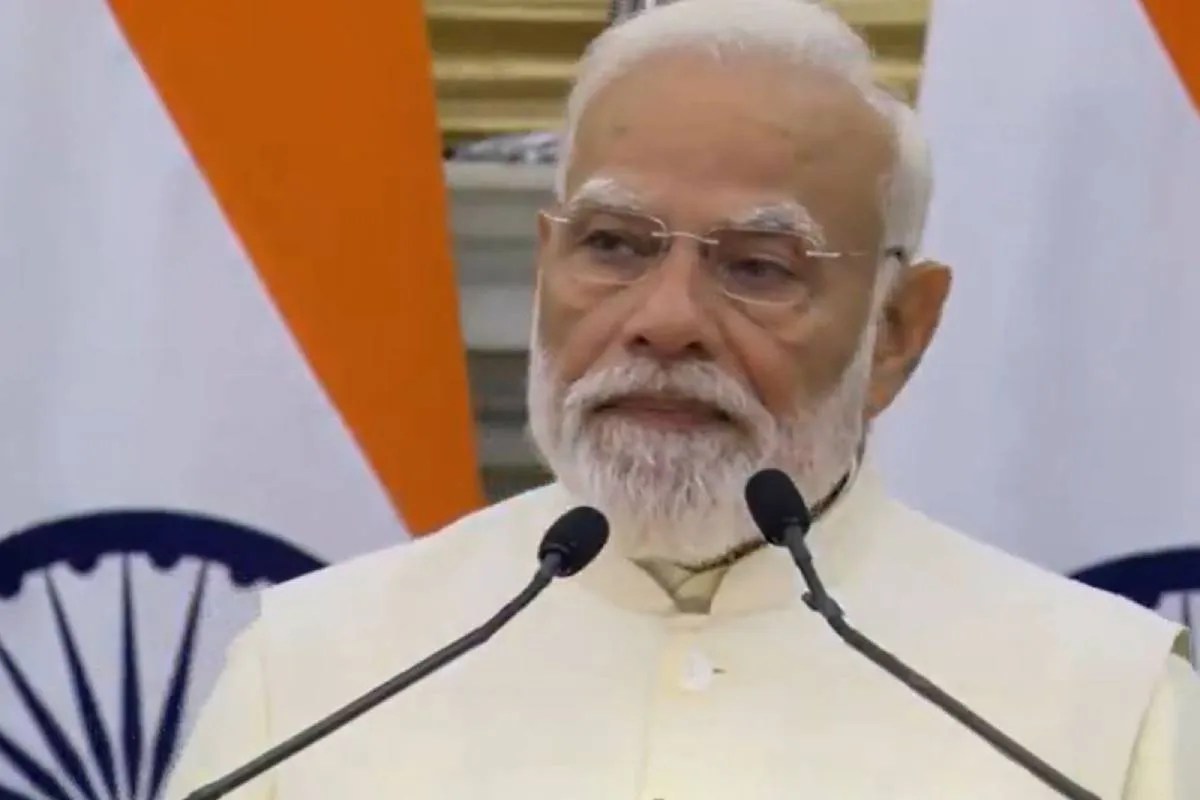
The headlines are screaming about a "diplomatic masterstroke." Analysts are busy typing up flowery prose about the India-Vietnam Comprehensive Strategic Partnership as the ultimate "China killer." They want you to believe that a few bilateral agreements and a shared border anxiety are enough to shift the tectonic plates of global manufacturing.
They are lying to you. Or worse, they are lazy.
The mainstream narrative suggests that India and Vietnam are joining forces to create a seamless alternative to the Chinese supply chain. It’s a comfortable story. It makes for great press releases. But if you actually look at the industrial plumbing of both nations, you realize this isn't a partnership built for dominance. It’s a frantic scramble for leftovers.
The "China Plus One" strategy is a trap for those who don't understand scale. You cannot replace a hyper-integrated, state-subsidized, $18 trillion economy by duct-taping two disparate, developing markets together.
The Logistics Delusion
Geopolitics is the hobby of intellectuals; logistics is the religion of billionaires.
When PM Modi and the Vietnamese leadership sign MoUs on "digital transformation" and "supply chain resilience," they ignore the physical reality of the ground. India’s logistics cost sits at roughly 13-14% of its GDP. Vietnam, despite its proximity to sea lanes, is struggling with an energy grid that flickers the moment a heatwave hits or a factory turns on a new assembly line.
China’s advantage isn't just cheap labor—that's a 1990s myth. Their advantage is integration. In Shenzhen, you can source a screw, a motherboard, a screen, and a casing within a five-mile radius. In the India-Vietnam "partnership," you’re looking at a fragmented mess where components have to cross the South China Sea, navigate bureaucratic nightmares at Chennai ports, and deal with inconsistent regulatory frameworks.
Stop asking "how can we counter China?" and start asking "why is our infrastructure still a decade behind theirs?" If you think a diplomatic handshake fixes a deep-seated port inefficiency, you’ve never run a factory.
Vietnam is Not a Partner—It’s a Competitor
Here is the truth the "experts" won't tell you: India and Vietnam are fighting for the exact same slice of the pie.
Both nations are chasing low-to-mid-tier electronics assembly. Both are desperate for Apple’s attention. Both are trying to lure semiconductor giants with massive subsidies. To suggest they are "hand in hand" is like saying two drowning men are collaborating because they’re both splashing in the same pool.
I’ve seen companies move production from China to Vietnam only to realize that the labor pool in Ho Chi Minh City is already tapped out. Wages are rising. Land prices are skyrocketing. So, they look at India. But then they hit the "India Tax"—a combination of complex land acquisition laws and the sheer unpredictability of state-level politics.
By framing this as a "Joint Front against China," we ignore the reality that Vietnam’s economy is actually deeply integrated with China’s. Vietnam imports the vast majority of its raw materials and intermediate goods from Chinese factories to assemble products for the West.
Vietnam isn't escaping China; it’s acting as China’s front porch.
If India joins this loop, it’s not "defeating" the dragon. It’s just becoming another room in the dragon’s house.
The Semiconductor Fantasy
The latest buzzword is "semiconductor cooperation." Everyone wants a fab. Everyone thinks they can be the next Taiwan.
Let's be brutally honest. A semiconductor ecosystem requires a level of water and power stability that neither India nor Vietnam has mastered at scale. A single power flicker can ruin a batch of wafers worth millions. In 2023, Vietnam faced rolling blackouts that hit Samsung and Foxconn facilities. India is still trying to figure out the "SOP" for a multi-billion dollar semiconductor incentive scheme that has seen more pivots than a ballet dancer.
To build a real "counter-China" tech corridor, you don't need more MoUs. You need:
- Total deregulation of the labor market.
- 24/7 uninterrupted industrial power grids (not "average" power).
- A unified customs interface that doesn't require a bribe or a week-long wait.
Until then, the India-Vietnam pact is just a PR shield for CEOs who need to tell their board members they have a "de-risking" plan.
The Defense Diplomacy Distraction
The competitor article loves talking about the "BrahMos" missile deals and naval cooperation. Sure, selling defense hardware to Vietnam is a great way for India to flex its muscles. It makes for a scary headline in the Global Times.
But defense exports aren't an economic strategy. They are a geopolitical poke in the eye. While we are busy celebrating the sale of a few patrol boats, China is building the "New Silk Road" through infrastructure debt and digital standards. They are winning the 21st century with fiber optic cables and 5G towers, not just destroyers.
We are playing a game of Risk; they are playing a game of Monopoly.
Why Your Strategy is Flawed
If you are a business leader looking at this "New Era" of India-Vietnam relations, stop looking at the flags and start looking at the freight.
Most people ask: "Should I move my factory to India or Vietnam?"
The right question is: "Can I survive the transition when both countries still rely on China for the underlying components?"
The "Contrarian Truth" is that there is no "China Plus One." There is only "China Plus a bunch of fragmented, competing hubs that are too scared to actually integrate."
I’ve watched firms blow $50 million moving assembly lines to Southeast Asia only to find that their Tier 2 and Tier 3 suppliers are still stuck in Guangzhou. They ended up paying more for logistics, more for middle-management, and more for "facilitation fees."
The Hard Truth for Policy Makers
Stop trying to "announce" greatness. India doesn't need to be a "diplomatic heavyweight" in Hanoi. It needs to be a logistical heavyweight in Mundra, Nhava Sheva, and Dahej.
Vietnam doesn't need "strategic support" from Delhi. It needs to stop being an assembly plant for Chinese parts and start developing its own IP.
Until these two nations stop competing for the same low-margin assembly jobs and start creating a high-value manufacturing bloc that actually shares technology—not just smiles for the cameras—the status quo remains.
China isn't worried about this announcement. They’ve seen it before. They know that as long as the "allies" are fighting over the same crumbs, the baker is still in Beijing.
Go ahead, celebrate the announcement. Post it on LinkedIn. Talk about the "tectonic shift." But when the quarterly reports come in and the "China Plus One" costs are 20% higher than expected with 10% lower efficiency, don't say nobody warned you.
The real "masterstroke" isn't a treaty. It’s a 0.0% failure rate on a power grid and a port that clears a container in four hours. Everything else is just noise.
Build the port. Fix the grid. Or get out of the way.