The sun over the Zimbabwean bush doesn’t just shine. It presses. It is a heavy, golden weight that settles into the red dust and the thickets of mopane trees, creating a silence so profound you can hear the heartbeat of the land. For decades, Gregg Lenz lived for that silence. He was a man who had built a life on the sharp edges of the world, a self-made millionaire from Pennsylvania who found the quietude of a boardroom hollow compared to the adrenaline of the hunt.
He wasn't a novice. Lenz was a seasoned hand in the high-stakes world of big-game hunting, a pursuit that demands a specific kind of internal calibration. You have to be comfortable with the paradox of loving the wild while seeking to conquer its most formidable inhabitants. He had tracked the great predators and the massive grazers across continents. But the African elephant is a different category of existence entirely. It is a creature of memory, family, and a terrifying, silent power.
On a Tuesday that began like any other expedition in the Chete Safari Area, the air held that familiar mix of woodsmoke and dry earth. Lenz was sixty-four years old. He was a man who understood the physics of a rifle and the psychology of the stalk. Yet, in the labyrinth of the bush, the math of survival can change in a heartbeat.
The Physics of an Unstoppable Force
Consider the sheer scale of the encounter. An adult bull elephant can weigh upwards of six tons. That is twelve thousand pounds of muscle, bone, and ancient instinct. When a creature of that magnitude moves, it doesn't just walk; it displaces the very atmosphere around it. Hunters often speak of the "silent charge." It is a terrifying phenomenon where a mountain of gray flesh moves through dense brush with the grace of a ghost, only becoming visible when it is too late to recalculate.
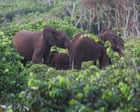
Lenz and his party were tracking a herd. In the lexicon of the hunt, this is the "pursuit phase," a time of intense focus where every snapped twig sounds like a gunshot. They were looking for a trophy, a specific bull that met the criteria of age and size. But the herd had its own criteria. They were protecting their own.
The reports from the scene describe a sudden, chaotic shift. A group of elephants, triggered by a primal need to defend their space, turned. They didn't flee. They surged. In the frantic seconds that followed, the hunters became the hunted. The line between the observer and the participant dissolved.
Lenz was caught in the path of a female. In the hierarchy of the herd, the matriarchs and the mothers are the most volatile. They do not operate on the logic of the sportsman; they operate on the logic of the bloodline. She hit him with the force of a falling building.
The Invisible Stakes of the Safari
Why does a man with every comfort at home choose to stand in the path of a six-ton mammal? To understand the tragedy of Gregg Lenz, you have to understand the culture of the modern big-game hunter. It is a world governed by "The Grand Slam" and the "Big Five." It is a quest for a tangible connection to a primal past, a way to feel alive by flirting with the end of life.
Critics call it blood sport. Proponents call it conservation through commerce, arguing that the massive fees paid by hunters like Lenz—often tens of thousands of dollars—fund the rangers who protect these very habitats from illegal poachers. It is a messy, complicated ecosystem where morality is often traded for a permit.
Lenz wasn't just a tourist with a gun. He was a member of the Safari Club International, a community that views hunting as a heritage. To them, the risk is the point. If there were no danger, there would be no glory. But the danger is not a metaphor. It is a physical reality that occupies space and time.
The Anatomy of a Second
When an elephant charges, the world shrinks to a single point of focus. Your peripheral vision vanishes. The sound of the brush breaking is like a rhythmic drumbeat. You have a rifle, a piece of precision engineering designed to stop life at a distance. But at close range, against a charging elephant, a rifle feels like a toothpick.
The impact was catastrophic. Lenz was crushed under the weight of the animal, a blunt-force trauma that the human frame is simply not built to withstand. His companions could only watch as the natural world asserted its dominance in the most violent way possible. There was no time for a heroic stand. There was only the crushing reality of gravity and muscle.
He died shortly after the encounter. The millionaire hunter, a man used to being in control of his environment, his business, and his destiny, was reclaimed by the very wilderness he sought to master.
The Memory of the Herd
There is a haunting footnote to stories like this. Scientists who study elephant behavior have long noted their capacity for grief and their long-term memories. They recognize the bones of their dead. They communicate across miles using infrasound, a low-frequency rumble that humans can't hear but can feel in their chests.
When a herd reacts with such violence, it is often a "corrected" behavior—a response to past traumas, perhaps from poachers or previous encounters with humans. To the elephant, Lenz wasn't an individual with a story or a family in Pennsylvania. He was a threat. He was a scent that didn't belong. He was a disruption in the ancient flow of the herd.
The tragedy of the situation lies in the collision of two different types of "sovereignty." There is the human sovereignty of the hunter, backed by legal permits and high-powered optics. And there is the biological sovereignty of the elephant, backed by millions of years of evolution and a fierce, collective will to survive.
The Dust Settles
The news of Lenz’s death rippled through the hunting community and the halls of social media. To some, he was a martyr for a dying way of life. To others, his death was a grim irony, a "poetic justice" delivered by a nature that had finally had enough. But both of these views strip away the human element.
A family lost a father and a husband. A man who spent his life building a legacy saw it end in a frantic scramble in a remote corner of Zimbabwe. The "cold facts" of the news report—the location, the time of death, the species involved—fail to capture the sheer, terrifying loneliness of that final moment.
The African bush remains. The mopane trees will continue to grow, and the red dust will settle over the tracks where the encounter took place. The elephants will move on, their massive forms disappearing into the shadows of the scrubland, carrying with them the memory of the day the silence was broken.
The hunt is over. The trophies are left behind. In the end, the land always takes back what it is owed.



