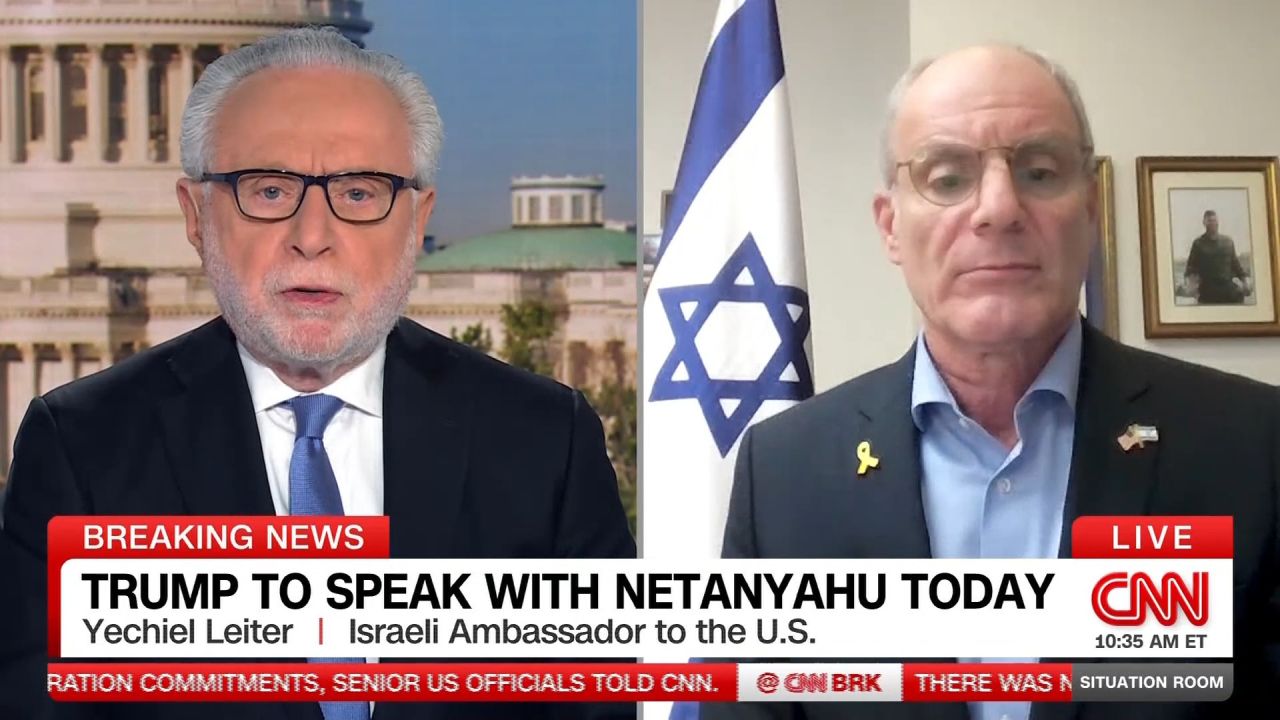
Yechiel Leiter isn't your typical career diplomat. He didn't climb the ranks of the Foreign Ministry by making polite small talk at cocktail parties. He's a Scranton-born rabbi, a former settler leader, and a man who lost his son to the war in Gaza. Now, he's the guy sitting across from American officials in Washington, leading the charge on a potential settlement with Lebanon. If you want to understand where Israel is heading in 2026, you have to look at the man Benjamin Netanyahu handpicked to represent him in the U.S. capital.
Leiter took over as Ambassador to the United States in early 2025, replacing Michael Herzog. The shift was more than just a change in personnel; it was a loud statement of intent. Herzog was seen as a moderate, a professional military man who could bridge the gap with the Biden administration. Leiter? He's a true believer. He's an ideologue who believes in the biblical right of the Jewish people to the land, and he’s spent decades turning that belief into policy.
The Scrantonian who became a Settler Titan
Before he was a diplomat, Yechiel Leiter was an American kid from Pennsylvania. He made aliyah at 18, traded his U.S. citizenship for an Israeli one, and jumped headfirst into the most contentious parts of Israeli society. He didn't just move to Israel; he moved to Hebron.
In the 1980s, Leiter was a central figure in the Jewish community of Hebron, serving as its chairman. This wasn't a job for the faint of heart. Hebron is a flashpoint of the Israeli-Palestinian conflict, and Leiter was right in the middle of it. He’s been linked to the radical Kach party in his youth—a fact his critics never let him forget. While he's moved into the mainstream Likud circles since then, those early years shaped his uncompromising worldview.
He isn't just a man of action, though. He’s got the academic chops to back it up. We’re talking about a PhD in political philosophy from the University of Haifa. He’s written books on John Locke and the Hebrew Bible. He knows how to frame the Israeli cause in the language of Western political thought, which makes him a formidable presence in Washington. He isn't just arguing for security; he’s arguing for a specific vision of justice.
Leading the Lebanon Talks with a No Ceasefire Policy
Right now, Leiter is the point man for talks involving the Lebanese government. But don't mistake "talks" for a softened stance. Just recently, Leiter made it clear that Israel isn't interested in discussing a ceasefire with Hezbollah. He views the group as a "terrorist organization" that remains the primary obstacle to any real peace.
This creates a fascinating, albeit tense, dynamic in D.C. The Trump administration and the Lebanese government have pushed for a "pause" in hostilities before formal negotiations begin. Leiter has essentially said no. His position is that Israel will talk to the Lebanese state, but it won't stop hitting Hezbollah until its security goals are met. It’s a high-stakes game of chicken.
For Leiter, this isn't just about strategy. It's personal. His son, Major Moshe Yedidia Leiter, was killed in Gaza in late 2023. When you hear him speak about the "War of Independence" that Israel is currently fighting, you're hearing a man who has paid the ultimate price for his convictions. That kind of lived experience gives him a level of moral authority that is hard to ignore, even for those who disagree with his politics.
The Bridge to the Trump White House
It’s no secret that Netanyahu waited for a change in the White House to appoint Leiter. He’s the perfect fit for the current American administration. He speaks the same language as the Republican base—deeply religious, unapologetically nationalist, and skeptical of international institutions that he feels are biased against Israel.
Leiter has openly called the return of Donald Trump to the White House a "true friend" of the Jewish people. He’s looking to build a regional strategy against Iran that goes beyond simple containment. He wants to dismantle the "ring of fire" that Iran has built around Israel, and he thinks he has the partners in Washington to do it.
But he’s also smart enough to know that American politics is a pendulum. He’s been vocal about the "stain" of extremist settler violence in the West Bank. Why? Because he knows it’s costing Israel friends, particularly among Democrats. He’s an ideologue, but he isn't blind. He understands that if Israel loses bipartisan support, it loses its most important strategic asset.
What to watch for in the coming months
Keep your eyes on the State Department meetings. Leiter is pushing for a reality where the Lebanese government—not Hezbollah—is the sole authority in southern Lebanon. It’s a tall order, bordering on the impossible given Lebanon’s internal politics.
If you're following these developments, here’s how to stay ahead of the curve:
- Monitor the "Pause" Requests: If Israel continues to reject a temporary ceasefire while Leiter attends meetings in D.C., expect tensions to rise even with a friendly U.S. administration.
- Watch the Iran-U.S. Talks: Leiter has noted that whatever happens in the U.S.-Iran talks in places like Islamabad doesn't apply to Lebanon. He’s keeping those theaters separate.
- Track the Bipartisan Outreach: Watch for Leiter’s meetings with centrist Democrats. His ability to frame the Lebanon conflict as a struggle for state sovereignty rather than a religious war will be key to his success.
Yechiel Leiter is exactly the ambassador Netanyahu wanted for this moment. He’s tough, he’s articulate, and he’s deeply committed to a "total victory" mindset. Whether that leads to a stable peace with Lebanon or an even wider regional conflict is the question that will define his tenure. Honestly, he’s probably fine with either, as long as he believes Israel comes out stronger on the other side.