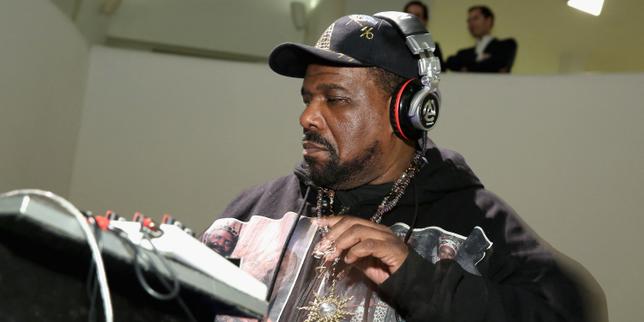
The death of Afrika Bambaataa at age 68 marks the physical conclusion of a systematic reorganization of urban social capital that began in the South Bronx during the early 1970s. While common narratives categorize Bambaataa through the lens of musical performance, a structural analysis reveals his primary contribution as the architect of a socio-technical system designed to redirect gang-affiliated kinetic energy into a structured cultural economy. The Universal Zulu Nation was not merely a fan club or a social collective; it was an organizational framework that established the governing protocols for what is now a multi-billion dollar global industry.
The Tri-Pillar Architecture of the Zulu Nation
Bambaataa’s methodology relied on a three-pronged intervention strategy to stabilize volatile urban environments. This model replaced the decentralized, high-risk competition of gang warfare with a centralized, symbolic competition based on artistic technicality.
- Territorial De-escalation through Symbolic Competition: By codifying the four elements—DJing, MCing, Breaking, and Graffiti—Bambaataa created a meritocratic hierarchy. Territorial disputes were no longer settled via physical attrition but through "battles" where the victory condition was technical superiority. This shifted the risk-reward ratio for participants, offering social status without the legal or physical liabilities of street combat.
- The Fifth Element as Intellectual Capital: Bambaataa’s insistence on "Knowledge" as the fifth element served as the system’s regulatory layer. This was the mechanism for historical preservation and ideological alignment. It ensured that the cultural output remained tethered to a specific social objective: "Peace, Love, Unity, and Having Fun." In economic terms, this functioned as a brand guideline that allowed the movement to scale across geographic boundaries while maintaining its core identity.
- Global Franchise Logic: The Universal Zulu Nation operated on a proto-franchise model. Chapters were established internationally, each adhering to the central tenets while adapting to local cultural contexts. This distribution network was the primary driver behind Hip Hop’s transition from a New York subculture to a global dominant paradigm.
Sonic Engineering and the Electrification of the Breakbeat
The 1982 release of "Planet Rock" represents a critical inflection point in the technological evolution of popular music. Bambaataa, alongside producer Arthur Baker, executed a high-stakes synthesis of disparate musical traditions: the rhythmic discipline of James Brown’s funk and the synthetic minimalism of Kraftwerk’s European electronic music.
This synthesis solved a specific technical bottleneck in early Hip Hop. Until this point, DJs relied on "finding the break"—manually looping drum segments from vinyl records. "Planet Rock" utilized the Roland TR-808 rhythm composer to create a bespoke, infinitely repeatable, and highly synthesized drum pattern.
The Mechanical Shift:
- Analog Dependence: Before 1982, the sound was limited by the physical availability of "break" records.
- Digital Autonomy: The TR-808 allowed for the construction of a drum sound that did not exist in nature. The "808 kick" became the fundamental unit of low-frequency energy in modern production.
The track also integrated the Fairlight CMI synthesizer, marking one of the earliest uses of high-end sampling and digital sequencing in a street-level cultural product. This was not an aesthetic choice alone; it was a move toward industrializing the Hip Hop sound, making it compatible with the requirements of FM radio and global club circuits.
The Social Cost Function and Internal System Failures
A rigorous analysis of Bambaataa’s legacy requires an examination of the structural vulnerabilities within the Zulu Nation’s hierarchy. While the organization excelled at external expansion and cultural export, it lacked the internal auditing mechanisms necessary to manage centralized power.
The allegations of sexual abuse that emerged against Bambaataa in his later years highlight a "blind spot" in the organization’s design. The same hierarchical authority that allowed Bambaataa to move thousands of young men out of gang life also created an environment where power could be exercised without transparency.
In corporate strategy terms, this is a failure of governance and oversight. The Zulu Nation was built on the charisma of a singular founder, creating a "Key Person Risk" that extended beyond financial viability into moral and legal domains. When the founder’s reputation was compromised, the entire organizational framework faced an existential crisis. The lack of a formal, independent reporting structure meant that the organization could not self-correct or purge internal bad actors without threatening the structural integrity of the movement itself.
The Globalization of the Bronx Protocol
The rapid scaling of Hip Hop into international markets—France, Japan, and Brazil—followed a predictable adoption curve facilitated by the Zulu Nation’s infrastructure. In France, for example, the "H.I.P. H.O.P." television show in the mid-1980s served as a mass-market delivery vehicle for Bambaataa's Bronx Protocol.
The success of this export was due to the Modularity of the System. Because the four elements were performance-based and required minimal capital investment (especially Breaking and MCing), the barrier to entry was low. The "Knowledge" element provided the necessary context for local populations to adapt the aesthetic to their own struggles.
However, the transition from a social movement to a commercial product introduced a new variable: the Commoditization of the Narrative. As major record labels began to mediate the culture, the "Fifth Element" (Knowledge) was often de-emphasized in favor of more marketable, hyper-individualistic themes. Bambaataa’s original vision of collective uplift was increasingly sidelined by the economic incentives of the industry.
Technical Specifications of the Bambaataa Aesthetic
Bambaataa’s contribution to the "digging" culture—the obsessive search for obscure records—established the foundational data set for Hip Hop production. He was known as the "Master of Records" not just for his collection, but for his ability to identify "sample-rich" environments across genres that were traditionally siloed.
- Genre Integration: Bambaataa utilized rock, soca, calypso, and classical music.
- Frequency Management: He understood the psychoacoustic impact of the sub-bass, leveraging the 808 to trigger visceral physical responses in large crowds.
- Performance as Ritual: His DJ sets were structured as communal experiences, using the "break" as a point of high-intensity interaction between the DJ and the dancers.
This technical mastery established the DJ as a curator-engineer, a role that remains the blueprint for modern electronic music producers.
Strategic Realignment in the Post-Bambaataa Era
The passing of Afrika Bambaataa necessitates a decoupling of the man from the methodology. The Zulu Nation’s structural innovations—the redirection of conflict, the codification of culture, and the use of technology to democratize music production—remain the bedrock of global urban culture.
The primary challenge for current cultural architects is the implementation of Decentralized Governance. The era of the singular "Godfather" or charismatic patriarch is no longer viable in a high-transparency environment. Future cultural movements must adopt a "Trustless" model, where the values and protocols are encoded into the community’s operations rather than held by a central figurehead.
The technical legacy of Bambaataa is secure in the ubiquitous use of the 808 and the global dominance of the Hip Hop format. However, the social legacy requires a rigorous audit. The transition from the Zulu Nation's centralized authority to a more distributed, accountable model of cultural leadership is the only path forward.
Cultural leaders must now focus on building systems that possess the same viral scalability as the Bronx Protocol but incorporate modern standards of institutional accountability. The goal is to preserve the kinetic energy of the "break" while ensuring the safety and autonomy of all participants within the system. This requires a move away from personality-driven movements toward protocol-driven communities where the "Knowledge" element includes legal literacy and organizational ethics.