The air in the village of Karoli smells of parched earth and diesel. It is a scent that lingers in the throat, thick enough to taste, long before the sun manages to burn through the morning haze. Here, in the rural heart of a state that just became the epicenter of a national upheaval, politics is not a digital notification or a headline on a smartphone. It is a physical presence. It is the sound of heavy trucks carrying flags and the sight of neighbors who have shared salt for generations suddenly refusing to meet each other’s eyes across a narrow dirt path.
A state election in India is often described as a "semi-final" for the national stage, but that clinical term ignores the raw, grinding reality of what happens on the ground. When the Prime Minister’s party, the Bharatiya Janata Party (BJP), secured its latest victory in a contested and bitterly fought regional race, the victory was framed in the capital as a mandate on development. In the villages, however, the mandate felt more like a collision. Don't forget to check out our previous coverage on this related article.
Consider a man like Arjun. He is a hypothetical composite of the dozens of farmers I have spoken to, men whose hands are calloused by the plow and whose minds are weary from the constant recalibration of hope. Arjun spent the weeks leading up to the vote listening to loudspeakers that blared promises of modern infrastructure and digital connectivity. He watched as his local community was carved into demographic blocks, analyzed by strategists in air-conditioned rooms hundreds of miles away who saw his identity not as a soul, but as a data point.
The tension in these elections does not stem from a simple disagreement over policy. It comes from the stakes of belonging. If you want more about the history of this, Al Jazeera offers an excellent summary.
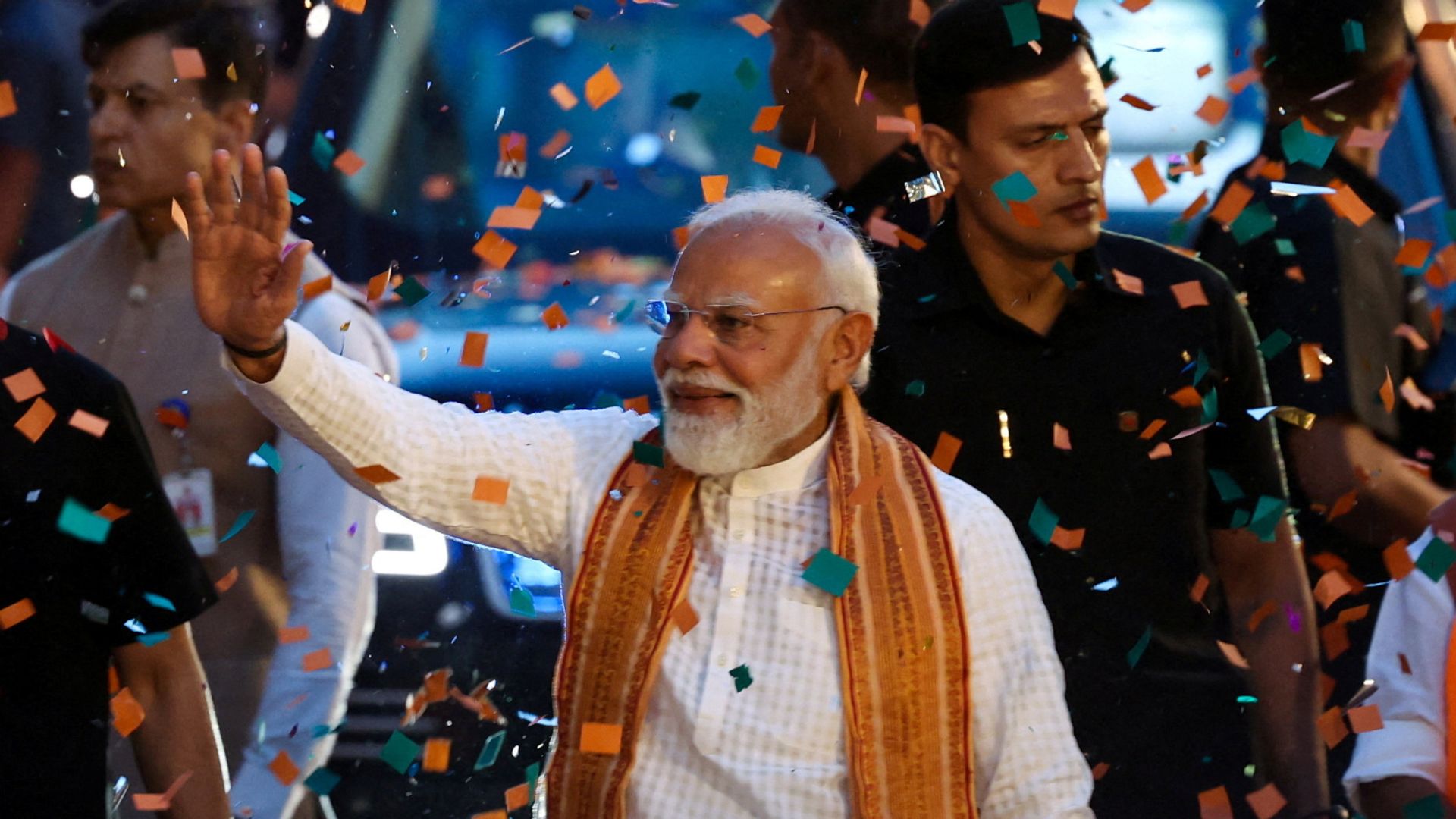
The campaign trail was a masterclass in the theater of power. The ruling party deployed its most formidable asset: the Prime Minister himself. His presence transformed local rallies into national events, his voice echoing through speakers tied to neem trees, promising a future that looked nothing like the dusty, struggling present. To his supporters, he is the architect of a rising nation. To his detractors, the rhetoric used to secure this specific win felt like a razor, slicing through the delicate social fabric that keeps a multi-faith, multi-ethnic state from unraveling.
Controversy followed the ballots like a shadow. Allegations of voter intimidation and the strategic use of state machinery created a cloud of skepticism that no victory margin could entirely disperse. It is one thing to win a seat; it is another to win the trust of the person who didn't vote for you. In the aftermath of the count, the celebrations were loud, filled with saffron-colored powder and the rhythmic beat of drums, but the silence from the losing side was equally heavy.
What does it mean for a democracy when a win is viewed by a significant portion of the population as an existential threat?
The invisible stakes are found in the tea stalls. These are the true forums of Indian life. Under a tin roof, over cups of overly sweetened chai, the conversation has shifted. A decade ago, the talk was of crop prices and marriage alliances. Today, it is about who "belongs" to the soil and who is a guest. The ruling party’s strategy has been effective because it taps into a deep, primal desire for a clear identity. It offers a narrative of strength and historical reclamation. But that narrative requires a protagonist and an antagonist, and in the heat of a state election, the antagonist is often your neighbor.
Statistics tell us the margin of victory. They tell us that the incumbent party's ground game was superior, their booth-level management more precise, and their messaging more resonant with the burgeoning middle class. They do not tell us about the grandmother who hid her grandson's voter ID card because she was afraid of the violence that might erupt at the polling station. They don't capture the exhaustion of the local police officer who hasn't slept in forty-eight hours, trying to keep two rival processions from meeting at a crossroads.
The complexity of this victory lies in its duality. On one hand, there is the undeniable pull of "Viksat Bharat"—a developed India. New roads are being paved, and for many, the arrival of a gas cylinder or a direct cash transfer is a tangible improvement that outweighs concerns about democratic backsliding. For a family that has lived in the dark for generations, the hand that flips the switch is the only hand that matters.
Yet, there is the other side. The side where the rhetoric of the campaign trail leaves wounds that do not heal once the banners are taken down. The contentious nature of this election wasn't just about who would run the state assembly; it was about the definition of the state itself. Was it to be a secular refuge or a bastion of a specific cultural identity? The voters provided an answer, but the question remains etched in the faces of those who feel the walls closing in.
Elections are often treated as an end point. A result is declared, a cabinet is sworn in, and the news cycle moves to the next crisis. But for the people in the dust-choked streets of the interior, the election is just the beginning of a new way of living with one another. The victors walk with a new stride, emboldened by a mandate that suggests their methods were justified by the outcome. The defeated retreat into a defensive crouch, wondering if the system still has a place for them.
The real cost of a contentious election isn't found in the campaign budgets. It’s found in the loss of nuance. In the heat of the fight, everything becomes binary. You are with the movement or you are against the nation. You are a patriot or a traitor. This simplification is the most powerful tool in the modern political arsenal, and it was used with devastating efficiency in this race. It bypasses the brain and goes straight to the gut.
It works.
But as the dust settles on the roads of Karoli and the high-pitched screams of the loudspeakers finally fade, a different kind of reality sets in. The victory is real. The power is absolute. The Prime Minister’s party has once again proven that it understands the pulse of the majority better than its rivals could ever hope to. They have mastered the art of the permanent campaign, turning every local grievance into a grand national struggle.
The sun begins to set over the fields, casting long, distorted shadows across the ground. A group of men stands by the roadside, watching a convoy of black SUVs speed past, carrying the newly elected representatives toward the city. The dust kicked up by the tires hangs in the air for a long time, obscuring the horizon, making it impossible to see exactly where the road leads next.
In the quiet that follows, the only sound is the dry rustle of the wind through the stalks of grain, indifferent to the names written on the ballots buried in the boxes.