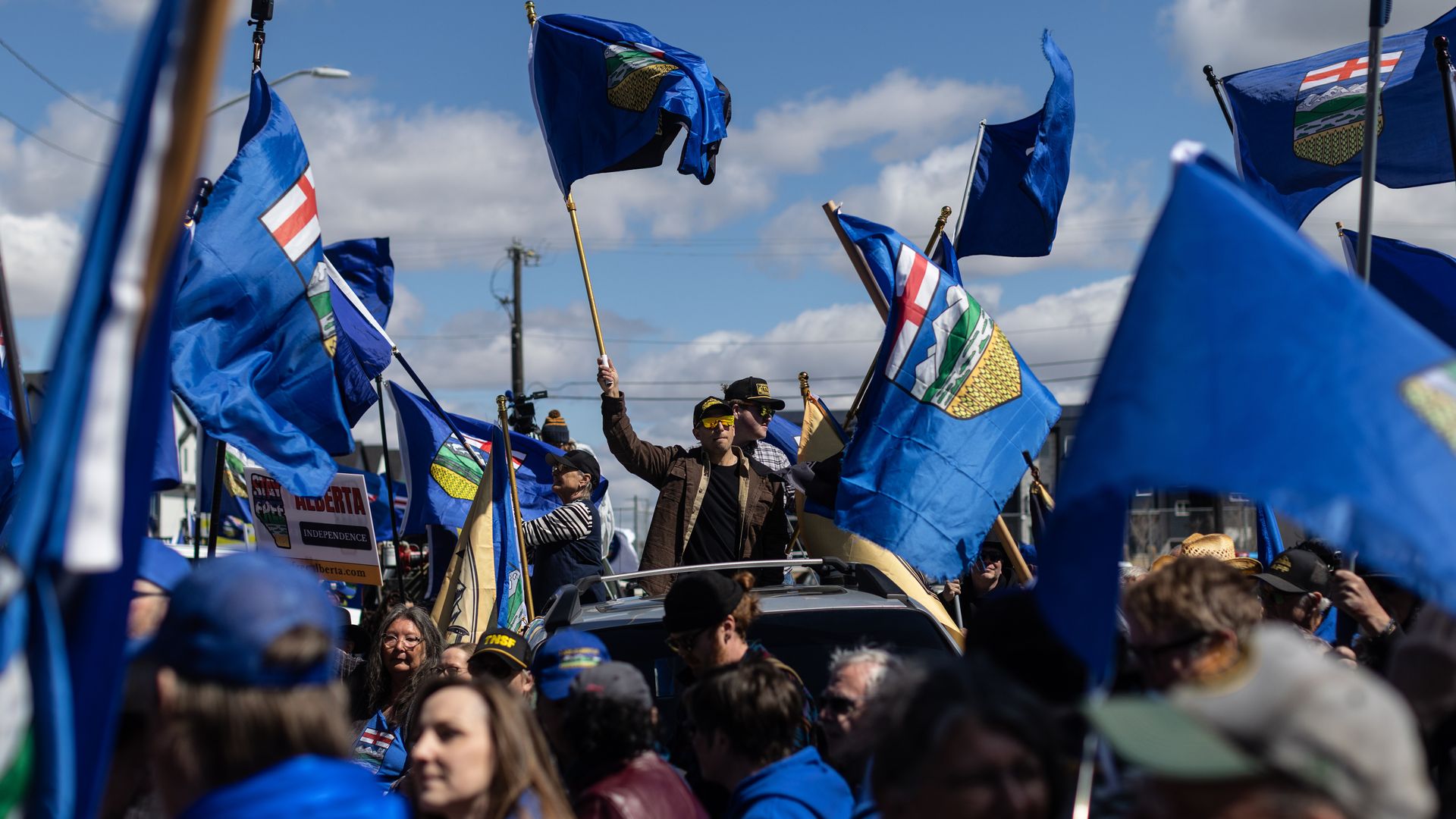
A coordinated effort to trigger a referendum on Alberta’s secession from Canada is no longer a fringe fantasy discussed in rural diners. It has moved into the boardroom and the legislative hallways. Organizers behind the latest separatist push are leveraging a cocktail of economic grievance and constitutional tension to force a vote on provincial independence. Their goal is simple. They want to decouple the province's resource wealth from a federal system they claim is predatory. However, the mechanism for leaving a G7 nation is a legal minefield that threatens to destabilize the Canadian dollar and the North American energy market long before a single ballot is cast.
The movement rests on the "Fair Deal" narrative. This is the belief that the province pays an outsized share into the federal coffers through equalization payments while receiving legislative hostility in return. Proponents argue that a sovereign state would control its own tax base, environmental regulations, and immigration targets. To get there, they are utilizing a specific legislative loophole involving citizen-initiated referenda. If they gather enough signatures, they believe they can force the provincial government to hold a binding vote.
The Financial Architecture of Discontent
Underneath the rhetoric of "freedom" lies a cold, hard spreadsheet. The primary driver of this separatist surge is the perceived imbalance of Canada’s equalization program. This system redistributes wealth from "have" provinces to "have-not" provinces to ensure a baseline of services across the country. Alberta has traditionally been the largest net contributor.
The math is brutal. Since the 1960s, Albertans have contributed hundreds of billions more to the federal government than they have received in return. Separatists argue this is a "wealth tax" on the oil patch. They see a federal government in Ottawa that passes restrictive environmental laws, such as the Impact Assessment Act, while simultaneously collecting the tax revenue generated by the very industry those laws hamper. It is a cycle of funding your own demise.
Critics of the movement point out that equalization is funded through federal income taxes, not a direct check written by the provincial government. Removing the province from Canada wouldn't suddenly put $20 billion back into the provincial budget. It would simply mean Albertans pay taxes to a new, local entity. The risk is that a new, landlocked nation would lose the negotiated trade benefits of being part of Canada. Without a coast, an independent province would be at the mercy of its neighbors to get its products to tide water.
Constitutional Realities and the Clarity Act
The path to the exit is not paved with good intentions. It is blocked by the Clarity Act. Following the 1995 Quebec referendum, the federal government established strict rules for any province seeking to secede. A province cannot just declare independence because 50% plus one of the voters said "yes."
The House of Commons gets to decide if the referendum question was "clear." It also decides if a "clear majority" supported the move. This is a subjective standard. If the federal government deems the process flawed, they simply refuse to negotiate. Even with a successful vote, a province would have to negotiate a constitutional amendment. This requires the consent of other provinces. It is highly unlikely that provinces benefiting from the current status quo would vote to allow their primary benefactor to walk away with the keys to the treasury.
The Landlocked Trap
Geography is the one thing a referendum cannot change. An independent Alberta would be surrounded by Canada to the north, east, and west, and the United States to the south. This creates a massive geopolitical headache.
Currently, federal law and international treaties allow for the movement of goods across provincial borders. Once the province becomes a foreign country, those rules disappear. If British Columbia or the federal government decides to play hardball, the new nation’s oil and gas could be trapped in the ground. Pipelines are the lifeblood of the prairie economy. Without federal protection, those pipelines become bargaining chips for a hostile Ottawa.
Indigenous Land Rights and Sovereignty
A factor often ignored by separatist organizers is the role of Indigenous nations. Much of the land in Western Canada is subject to Treaties 6, 7, and 8. These are agreements between First Nations and the Crown, represented by the federal government.
If the province leaves Canada, those treaties do not automatically transfer to a new provincial government. Indigenous leaders have already signaled that their loyalty remains with the Crown, not a separatist movement. This could lead to a "Swiss cheese" map where large swaths of the province remain part of Canada or become autonomous territories, effectively cutting off the separatist state from its own resources. It is a recipe for decades of litigation and civil unrest.
The Investor Exodus
Capital is cowardly. It flees at the first sign of instability. The mere threat of a referendum is enough to spook the institutional investors who fund multi-billion-dollar energy projects. We are already seeing a "political risk premium" being applied to Western Canadian assets.
When the 1995 Quebec referendum approached, billions of dollars left Montreal overnight. Banks moved their headquarters. Corporate offices shifted to Toronto. The same would happen in Calgary. An independent currency would likely be volatile, tied directly to the price of a single commodity. For a pension fund in London or New York, the uncertainty of a new legal system and a new currency is a dealbreaker. They will take their money to the Permian Basin in Texas or offshore projects in Guyana where the political landscape is predictable.
The Logic of the Brink
Why push for a referendum if the odds of success are so low and the risks so high? For many organizers, the referendum is a blunt force instrument. It is meant to scare Ottawa into concessions. They want a "triple-E" Senate, a reform of the equalization formula, and more control over environmental policy.
This is a high-stakes game of chicken. By drumming up separatist sentiment, provincial leaders gain leverage in federal-provincial negotiations. They can tell the Prime Minister, "Give us what we want, or I won't be able to hold back the fire." The danger is that once you start the fire, you can't always control the direction the wind blows.
The Impact on National Identity
Canada is a fragile experiment in geography and compromise. If one province leaves, the entire project likely collapses. Saskatchewan would be isolated. The Atlantic provinces would be physically cut off from Ontario. The United States would inevitably exert more influence over the remaining fragments, possibly leading to the eventual annexation of the resource-rich north.
The separatist group triggering this referendum isn't just fighting for a province; they are inadvertently or intentionally dismantling a G7 power. The economic fallout would be felt from Vancouver to Halifax. Interest rates would spike as the national credit rating takes a hit. The Canadian dollar would devalue. Every citizen, whether they live in the path of the referendum or not, would pay the price for this divorce.
Strategic Realignment
The movement is currently focused on the "how-to" of the petition. They are organizing door-to-door, using social media to bypass traditional news outlets that they view as biased toward the "Laurentian Elite." They are building a shadow bureaucracy, preparing to argue that they can handle their own policing, pensions, and tax collection.
This isn't a protest movement anymore. It is a sophisticated political operation. They are recruiting former civil servants and legal experts to draft "Independence Acts" that they hope to present to the public. They are betting that the average voter is angry enough about their heating bill and their grocery costs to take a leap into the unknown.
The Federal Response
Ottawa has remained uncharacteristically quiet. The strategy seems to be one of "benign neglect," hoping the movement burns itself out. This is a mistake. Silence is being interpreted as indifference, which only fuels the fire of the "Western Alienation" narrative.
To counter the separatist momentum, the federal government needs to address the structural flaws in the federation. This means serious discussions on the Impact Assessment Act and a transparent review of how federal dollars are distributed. Simply quoting the Clarity Act won't work this time. The anger is too deep.
The Road Ahead
The petition is circulating. The signatures are being tallied. If the threshold is met, the provincial government will be legally bound to address the question. Whether that results in a non-binding plebiscite or a full-scale constitutional crisis depends on the political courage of the leadership in Calgary and Edmonton.
The reality of a landlocked, resource-dependent nation trying to navigate a world obsessed with decarbonization is a grim one. The separatist leaders promise a utopia of low taxes and high sovereignty. The historical precedent suggests a long period of economic contraction, legal chaos, and social division.
Investors are watching. Indigenous leaders are preparing. The rest of Canada is waiting to see if the country’s most productive province is truly willing to burn the house down to prove a point about the mortgage. The cost of leaving is high, but for a growing number of people, the cost of staying has become unbearable.
The next twelve months will determine if Canada remains a unified nation or becomes a cautionary tale of how regional grievances can dismantle a modern state. This is no longer a hypothetical debate for political science students. It is a live-wire issue that threatens the fundamental stability of the Canadian economy. The fuse is lit.
Go to the official provincial registry to track the petition's progress and read the full text of the proposed referendum question.