The Obsession with Scratched Paint and Bent Steel
Most reporting on missile strikes against high-value military installations follows a predictable, mind-numbing script. Journalists count the craters. They tally the destroyed hangars. They speculate on the cost of a radar array or a few fuel depots. If you’ve read the reports on the recent strikes against US-affiliated bases, you’ve seen the "lazy consensus" in action: a focus on tactical hardware loss as if we are still fighting a 20th-century war of attrition.
They are looking at the wrong map.
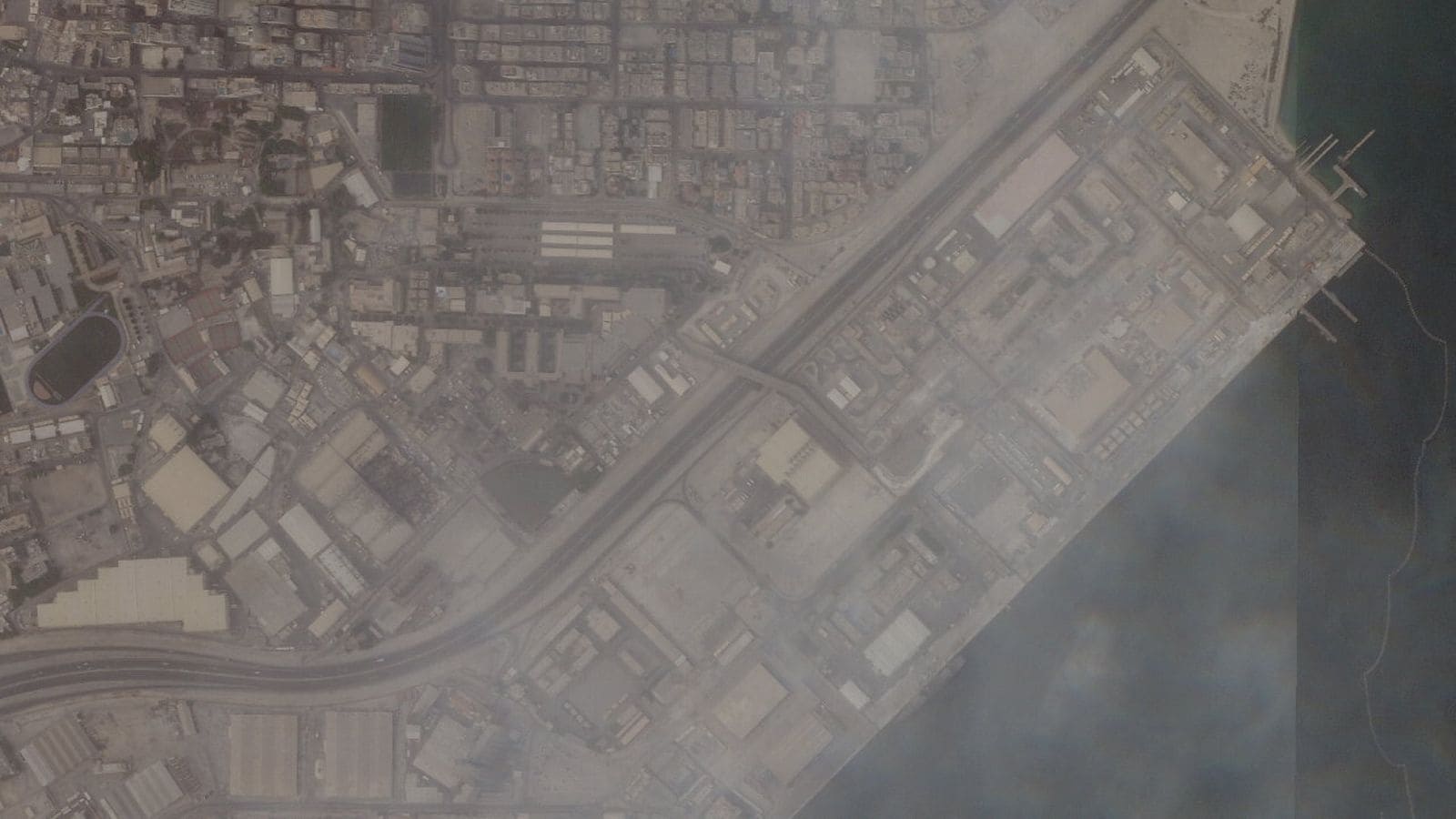
Modern warfare isn't about how many trucks you can blow up. It’s about the psychological and economic viability of maintaining a footprint in a contested zone. The media fixates on "damaged equipment" because it’s easy to photograph from a satellite. It’s visceral. It’s quantifiable. But focusing on the physical wreckage is like worrying about the dent in a car's bumper after the driver has suffered a stroke. The vehicle is fine; the nervous system is shot.
The Myth of the Hardened Base
Military planners love to talk about "hardening" assets. They pour billions into reinforced concrete, interceptor batteries, and rapid-repair kits. The underlying assumption is that if we can withstand the hit, we win.
This is a fundamental misunderstanding of the physics of modern escalation.
Imagine a scenario where a $100,000 drone or a $500,000 ballistic missile forces a $2,000,000 interceptor to fire. Even if the interceptor works—which it often doesn't with 100% efficiency—the defender is losing. This is the Cost-Imposition Curve. When an adversary can damage "key equipment" using tools that cost a fraction of the repair bill, the physical damage is secondary. The real damage is to the strategic budget.
We see reports claiming "minimal damage" because only a few support buildings were hit. This ignores the Operational Tempo (OPTEMPO) Tax. Every time an alarm goes off, every time a base goes into lockdown, the mission stops. The logistical chain kinks. The personnel suffer from high-alert fatigue. You don't need to destroy a fighter jet to make it useless; you just need to make the runway too risky to use for forty-eight hours at a time, repeatedly.
Why Interceptors are a False Security Blanket
The "status quo" experts point to missile defense systems like Patriot or THAAD as the ultimate shield. They argue that as long as the majority of incoming threats are neutralized, the base remains functional.
They are wrong.
Missile defense is a game of perfect numbers. The attacker only needs to be right once. The defender has to be right every single time. In the recent strikes, the fact that any equipment was damaged proves that the saturation point of these "advanced" defenses is lower than the pentagon wants to admit.
The technical reality is that kinetic interceptors are reaching their physical limits against hypersonic maneuvers and mass-drone swarms. We are bringing a sniper rifle to a swarm-of-bees fight. Citing "damaged equipment" is a polite way of saying the defense grid was overwhelmed. If a few missiles got through to hit a warehouse, a few more could have hit the barracks or the command center. The gap between "minor damage" and "catastrophic failure" is often just a few degrees of a guidance fin’s tilt.
The Intelligence Blind Spot
The competitor reports often fail to ask why specific equipment was hit. They frame it as a random spray of fire. It isn't.
Targeting a fuel farm or a maintenance hangar isn't a "miss." It’s a deliberate strike on the Logistical Tail. You can have the most advanced F-35 in the world, but if the specialized diagnostic equipment in the "damaged" hangar is toast, that jet is a very expensive paperweight.
I’ve seen how military bureaucracies handle these losses. They don't just go to a store and buy a new part. The procurement cycle for specialized military hardware is a nightmare of red tape, backorders, and sole-source contracts. A "minor" strike on a technical workshop can sideline an entire squadron for months. The report says "equipment damaged." The reality is "capability deleted."
The Human Cost of "Minor" Strikes
We need to address the "People Also Ask" obsession with casualty counts. "Were there any deaths?" is the standard metric for whether a strike was "successful."
This is a ghoulishly narrow view.
The psychological impact of being under fire in a location that is supposed to be "protected" by the world's most advanced technology is a silent mission-killer. I have spoken with contractors and service members who have sat through these barrages. The damage to morale and the subsequent "brain drain" of experienced personnel who decide the risk isn't worth the paycheck is a loss you can't see on a satellite feed.
When equipment is damaged, it’s a signal to every person on that base: You are reachable. You are vulnerable. Your shield has holes.
Stop Measuring Crates, Start Measuring Credibility
If you want to understand the impact of these strikes, stop looking at the list of destroyed hardware. Start looking at the Credibility Gap.
Every time a report surfaces about damaged equipment in a high-security zone, the "invincibility" of the Western military model takes a hit. We are currently witnessing the democratization of high-precision destruction. Technology that used to be the sole domain of superpowers is now being used by regional actors to poke holes in the most expensive defense networks ever built.
The "contrarian" truth is that the US and its allies are over-leveraged on expensive, static footprints. We build massive, permanent targets and then act surprised when they get hit. We value the hardware over the strategy.
The real takeaway from these reports isn't that a few buildings need new roofs. It’s that the era of the "Untouchable Base" is over. We are pouring money into a defensive paradigm that is fundamentally broken by the math of modern attrition.
If we continue to measure "victory" by how little of our equipment was smashed, we are going to lose the larger war of endurance. You don't win a fight by bragging about how well your face absorbed the other guy's punch.
The equipment can be replaced. The illusion of total security cannot.
Pack up the "minor damage" talking points. The strikes didn't just hit steel; they hit the foundation of 21st-century power projection.
Either evolve the footprint or get used to the smoke.