The foreign policy establishment is addicted to the myth of the "bridge state." It is a romantic, dangerous delusion that paints Pakistan as a uniquely positioned mediator, a diplomatic Swiss Army knife capable of carving out a truce between Washington and Tehran. The narrative is tidy: Pakistan shares a border with Iran, maintains a decades-long security partnership with the United States, and possesses the "Islamic credentials" to bridge the sectarian and ideological divide.
It is total fiction. Expanding on this theme, you can find more in: The Bahraini Statelessness Factory and the Price of Proxy Wars.
Pakistan is not a bridge; it is a bystander struggling to keep its own house from burning down. To suggest that Islamabad has the leverage, the economic stability, or the political capital to shape a grand bargain between a superpower and a regional revolutionary state is to ignore the brutal reality of 21st-century geopolitics. The idea that Pakistan wants to be a "key actor" in this peace process is less about strategic ambition and more about a desperate need for relevance in a world that is rapidly moving past it.
The Leverage Illusion
The primary argument for Pakistani mediation rests on the "privileged relationship" Islamabad supposedly enjoys with both sides. This is a fundamental misunderstanding of how power functions in the Middle East. Experts at TIME have provided expertise on this matter.
True mediation requires the ability to offer either a massive carrot or a credible stick. Pakistan possesses neither. Its economy is currently on life support, tethered to IMF bailouts and rolling debt restructures. When your own central bank is counting pennies to keep the lights on, you don't dictate terms to the world's largest economy or a defiant regional power that has mastered the art of survival under sanctions.
To the U.S., Pakistan is a legacy problem—a South Asian headache that was once a necessary evil for the war in Afghanistan but is now a secondary concern compared to the Indo-Pacific. To Iran, Pakistan is a nervous neighbor that frequently fails to secure its own borders against militant groups like Jaish al-Adl. Tehran does not look to Islamabad for diplomatic guidance; it looks to Islamabad to see if the Balochistan border is going to leak more insurgents today.
The Myth of the "Islamic Brotherhood"
Pundits love to cite shared religious identity as a tool for Pakistani influence. This ignores the cold, hard fact that state interests always devour ideology for breakfast. Iran’s "Pivot to the East" is focused on Beijing and Moscow, not a cash-strapped Islamabad.
Furthermore, Pakistan’s deep-seated financial and military ties to Saudi Arabia create a structural bias that Tehran cannot ignore. You cannot be an honest broker when your biggest benefactor is the primary rival of the party you are trying to "mediate." The Iranians are many things, but they are not naive. They know that in any real crunch, the Pakistani state cannot afford to alienate the Gulf monarchies.
The Real Power Centers Have No Interest in a Pakistani Proxy
If a US-Iran breakthrough ever happens, it will occur in a backroom in Muscat, Doha, or through a direct back-channel in Geneva. These are the venues with "skin in the game" and the discretionary wealth to facilitate complex financial workarounds.
Pakistan’s involvement actually complicates the process for three reasons:
- Security Leakage: The Pakistani security apparatus is not a monolith. Information shared with Islamabad has a historical tendency to find its way into the hands of non-state actors or rival intelligence agencies. Neither the CIA nor the IRGC trusts Pakistani channels with sensitive, high-stakes negotiations.
- The India Factor: Every move Pakistan makes is viewed through the lens of its rivalry with India. If Pakistan were to play a role in US-Iran peace, it would immediately try to use that leverage to extract concessions regarding New Delhi. This "linkage" strategy is a non-starter for Washington.
- Domestic Volatility: Mediation requires a stable, predictable government. With Pakistan’s internal political landscape resembling a game of musical chairs played with live grenades, no foreign power is going to bet a multi-year diplomatic roadmap on a leadership that might be ousted by a court order or a "long march" by next Tuesday.
Stop Asking "How Can Pakistan Help?"
The question itself is flawed. It assumes that more cooks in the kitchen lead to a better meal. In the case of US-Iran relations, more cooks just lead to more spilled secrets and conflicting agendas.
Instead of trying to "shape" peace, Pakistan should be focused on the "Security of the Immediate." This means:
- Hardening the Border: Preventing cross-border skirmishes that could spark a localized conflict neither side wants.
- Energy Realism: Admitting that the Iran-Pakistan gas pipeline is a ghost project that will never materialize as long as U.S. sanctions exist, rather than using it as a perennial diplomatic carrot.
- Economic De-risking: Finding ways to trade with Iran that don't trigger a collapse of the relationship with the U.S. Treasury.
The High Cost of Pretending
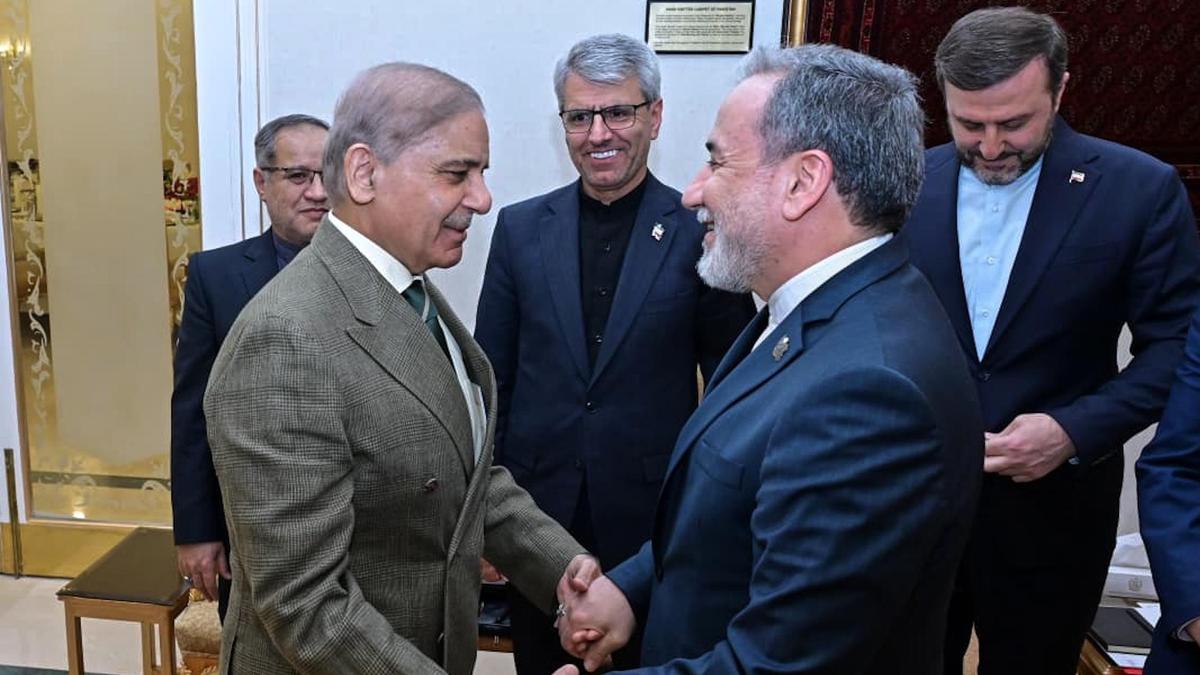
I have seen this movie before. A regional power tries to punch above its weight class to distract from internal decay. It yields a few high-profile photo ops, a couple of vague communiqués, and absolutely zero structural change. The danger is that by pretending to be a mediator, Pakistan risks overpromising to both sides.
If Islamabad tells Washington it can "reign in" Iranian influence in certain sectors, and then fails to deliver, it burns what little remains of its credibility. If it tells Tehran it can provide a "sanction-proof" gateway to the East and then folds under U.S. pressure, it earns a permanent enemy on its western flank.
The "balance" the competitor article speaks of isn't a strategy; it's a tightrope walk over an empty pool.
The CPEC Complication
Let’s talk about the elephant in the room: China.
Pakistan is essentially a subsidiary of the Belt and Road Initiative. Any Pakistani "peace" initiative is, by extension, a Chinese-vetted initiative. The U.S. is currently engaged in a generational struggle to contain Chinese influence. Why would Washington allow a Chinese client state to facilitate the most sensitive diplomatic realignment of the decade? They wouldn't.
China will play its own hand with Iran. It doesn't need a middleman in Islamabad to do its dirty work. By inserting itself into the mix, Pakistan is merely positioning itself to be crushed between the tectonic plates of the U.S. and China.
The Strategy of Silence
The most "pro" move Pakistan could make right now is to stop trying to be a "key actor."
True strategic depth comes from being so stable that you don't need to be the center of attention. Switzerland isn't influential because it talks a lot; it’s influential because it’s a vault. Pakistan is currently an open book with several chapters missing and the spine falling apart.
Focus on the IMF. Focus on the electricity grid. Focus on the fact that your youth are fleeing the country in record numbers. The road to peace between Washington and Tehran does not run through Islamabad, and pretending it does is a vanity project that Pakistan simply cannot afford.
The world doesn't need another "peace broker." It needs a South Asia that isn't on the brink of an economic meltdown every eighteen months. That would be a far greater contribution to regional stability than any half-baked diplomatic mission to Tehran.
If you want to shape the world, first prove you can shape your own budget. Until then, stay out of the grown-ups' room.