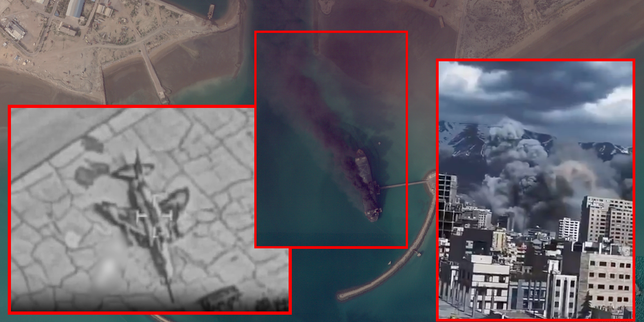
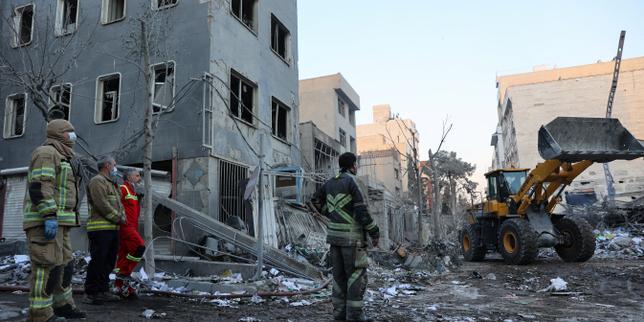
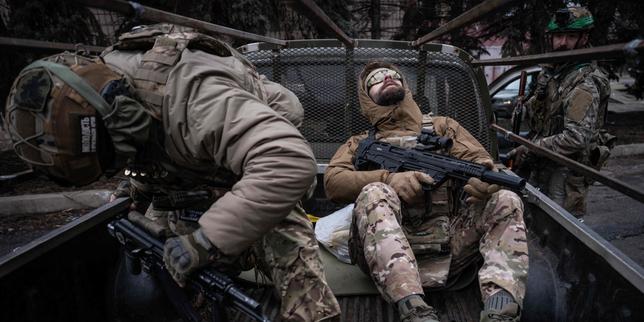
The headlines are screaming again. Iran vows to set the Persian Gulf ablaze. The Strait of Hormuz is "closed." Global oil prices are supposed to moon any second now.
It is a tired, predictable script that the media follows every time tensions spike in the Middle East. It is also fundamentally wrong.
If you are waiting for a literal physical blockade of the world’s most important chokepoint, you are fundamentally misunderstanding how modern geopolitical leverage works. Iran doesn't need to close the Strait of Hormuz. In fact, closing it would be the quickest way for the regime to commit economic suicide.
The "closure" isn't a military event. It is a psychological tax.
The Mathematical Impossibility of a Total Blockade
Let’s look at the geography. The Strait of Hormuz is roughly 21 miles wide at its narrowest point. However, the actual shipping lanes—the deep-water channels capable of carrying VLCCs (Very Large Crude Carriers)—are only two miles wide in each direction, separated by a two-mile buffer zone.
The "lazy consensus" suggests that Iran could simply sink a few tankers and plug the hole. This isn't a bathtub.
- Depth and Displacement: Even if you sank a 300,000-ton tanker in the middle of the channel, you wouldn't "block" it. You’d create a navigation hazard. Modern sonar and salvage capabilities mean the lane would be cleared or bypassed in days.
- The Suicide Clause: Iran’s own economy is on life support. They rely on the export of petroleum products and the import of refined goods. Blocking the Strait means blocking their own bloodline. China, Iran’s primary customer, would not sit idly by while their energy security is gutted by an ally’s theatrical tantrum.
- The Fifth Fleet Reality: The U.S. Navy’s Bahrain-based Fifth Fleet exists for one primary reason. The moment a physical mine is dropped or a torpedo is fired at a commercial vessel, the Rules of Engagement shift from "observation" to "obliteration." Iran knows this. Their military strategy is built on "gray zone" warfare—staying just below the threshold of a full-scale conventional response.
The Fragility of the Oil Market is an Illusion
The media loves the "Oil at $200" narrative. It sells clicks. But the global energy map has shifted.
When people ask, "Will gas prices double if Hormuz closes?" they are operating on 1970s logic. We live in an era of the Strategic Petroleum Reserve (SPR) and massive non-OPEC production. The U.S. is the world’s largest producer of oil and gas. Brazil and Guyana are ramping up.
If Hormuz were truly restricted, the initial spike would be driven by algorithmic trading and panic, not a physical shortage. Within weeks, the "Hormuz Premium" would collapse as alternative routes and inventories stabilized the floor.
The real threat isn't a closed gate; it's an expensive gate.
The Kinetic Reality: Asymmetric Nuisance vs. Total War
I’ve watched analysts armchair-command carrier groups for decades. They always miss the "swarm."
Iran’s true power in the Strait isn't their aging navy or their questionable "stealth" boats. It is their ability to make insurance premiums so high that shipping companies refuse to enter the Gulf.
- Anti-Ship Cruise Missiles (ASCMs): Hidden in the rugged coastline of the Makran, these are mobile and difficult to target.
- Loitering Munitions: Cheap drones that can target the bridge or engine room of a tanker.
- Limpet Mines: The 2019 attacks showed how easy it is to poke holes in hulls without claiming responsibility.
This is the "Contrarian Trap." The media thinks the U.S. wins by keeping the water clear. Iran wins by making the water expensive. They don't need to win a naval battle; they just need to make a Lloyd’s of London underwriter nervous.
When a shipping company sees its insurance rates jump 500% overnight, that is a "closure" in every way that matters to your wallet.
Why the US "Open" Narrative is Equally Flawed
The Pentagon loves to issue statements saying the route "remains open." This is technically true and strategically empty.
If a ship can sail through but chooses not to because of the risk of being seized or struck, the route is effectively closed. The U.S. Navy can escort a few tankers, but it cannot escort the thousands of merchant vessels that transit the region annually.
The "Open" narrative is a PR exercise designed to calm the markets. It ignores the reality that modern conflict is fought on the balance sheets of multinational corporations, not just on the high seas.
Stop Asking if it Will Close
The question isn't "Will they close it?" The question is "How much will we pay them to keep it open?"
Every time Iran threatens the Strait, they are negotiating. They are looking for sanctions relief, frozen asset releases, or political concessions. They are using the world's most vital artery as a tourniquet on the global economy.
If you want to understand the Strait of Hormuz, stop looking at satellite imagery of Iranian gunboats. Look at the spread between Brent and WTI crude. Look at the insurance premiums for tankers departing from Fujairah.
The "Closure" is a ghost. It’s a bogeyman used by a cornered regime to remind the West that while we may have the watches, they have the time—and the ability to make our "seamless" global trade very, very bumpy.
The Actionable Truth for the Energy Skeptic
If you are betting on a permanent disruption, you will lose your shirt.
The volatility is the point. The "threat" is the product. Iran’s bravado is a symptom of their inability to win a conventional fight. They are playing a high-stakes game of "chicken" where they know exactly where the cliff is.
They won't jump. They'll just keep driving toward the edge until you pay them to turn the wheel.
Sell the panic. Buy the dip. And stop believing the map shows you where the real war is being fought.
The Strait is open, but the price of entry just went up.
Go look at the 2011, 2012, 2016, and 2019 "closures" and tell me which one actually stopped the flow of oil for more than 48 hours. I'll wait.