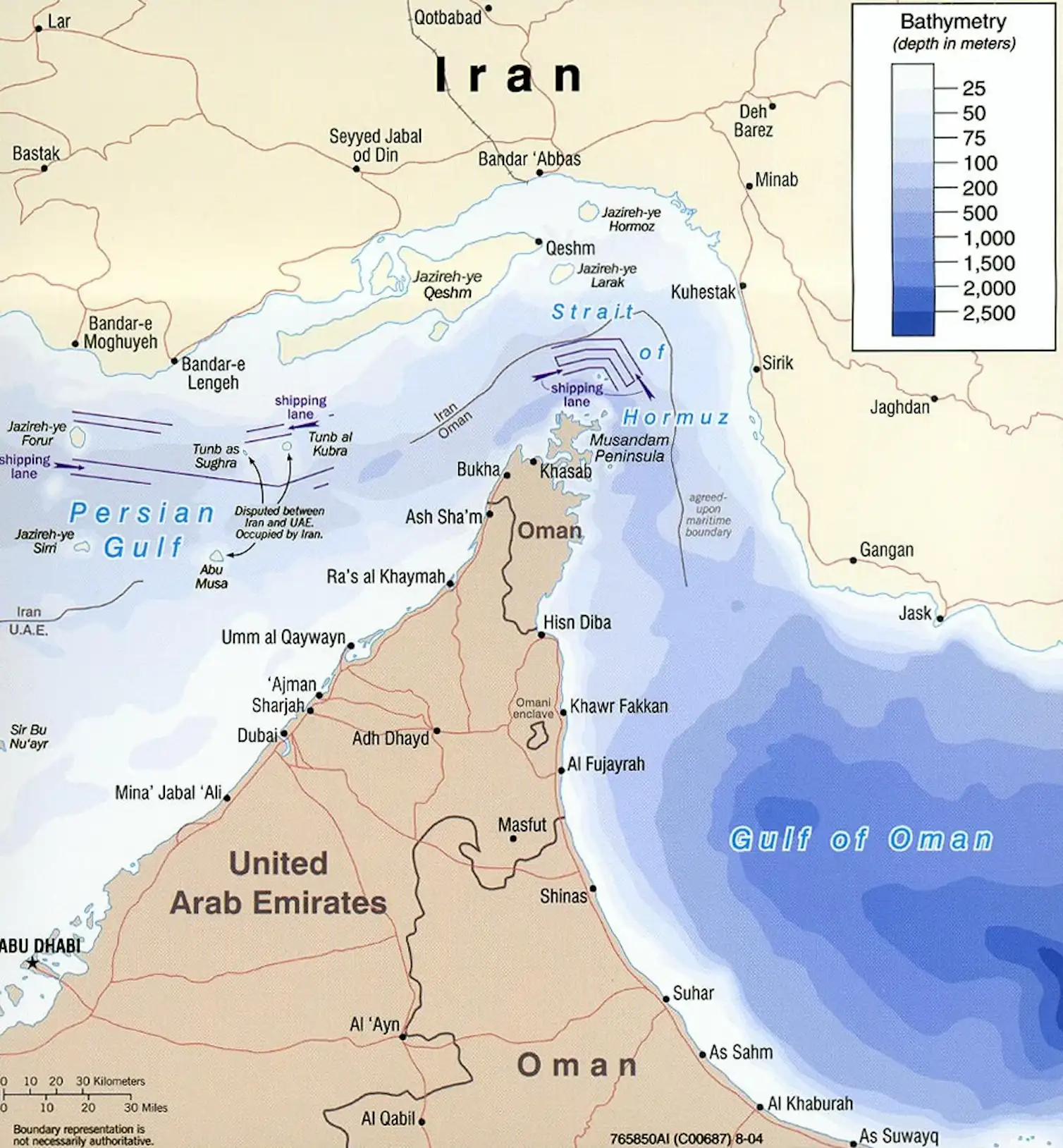
Supply chains don't just break; they shatter when the world’s most sensitive chokepoint closes. If you’re running a construction project right now, the Strait of Hormuz isn't some distant geopolitical trivia. It’s the reason your steel costs just jumped 15% and why your cement delivery is three weeks late. When the water stops moving through that narrow gap between Oman and Iran, your job site stops moving too. It’s that simple.
The Strait of Hormuz handles about 21 million barrels of oil a day. That’s roughly 21% of global petroleum liquid consumption. But for the building industry, the oil isn't the only story. It’s the sheer volume of raw materials, heavy machinery, and specialized components that flow through those waters. A closure doesn't just "stall" projects. It creates a vacuum in the global supply chain that sucks the profit right out of your margins. Meanwhile, you can explore similar developments here: Why Trump had to call Jensen Huang at the last minute.
You’re likely feeling the squeeze because shipping companies have already started rerouting vessels around the Cape of Good Hope. That adds 10 to 14 days to a trip. It adds fuel surcharges. It adds insurance premiums that look like phone numbers. I’ve seen projects in the Gulf and East Africa literally grind to a halt because the cost of importing structural timber and rebar became higher than the projected value of the finished building.
Why Material Costs Explode Overnight
When the Strait closes or even threatens to close, the market reacts with panic. Speculators drive up the price of oil, which immediately inflates the "energy-intensive" part of construction. Think about what it takes to make glass. Think about the heat required for cement kilns or the electricity needed for aluminum smelting. When energy prices spike, the factory gate price of every single one of those materials follows. To understand the complete picture, check out the detailed analysis by The Economist.
We aren't just talking about a few cents here and there. In past periods of regional instability, we've seen bitumen prices—essential for road surfacing and roofing—climb by 30% in a single month. If you’re working on a fixed-price contract, that’s your profit gone. You're basically paying the client to let you build their house. It’s a nightmare scenario that many mid-sized firms simply don't survive.
The logistics of "just-in-time" delivery have betrayed us. Most construction firms don't keep massive stockpiles of rebar or copper wiring. They order it to arrive exactly when the crew needs it. When the Strait of Hormuz becomes a no-go zone, those "just-in-time" shipments become "maybe-next-month" headaches. The bottleneck creates a ripple effect. If the steel doesn't arrive, the floor doesn't get poured. If the floor doesn't get poured, the electricians can't start. The schedule collapses like a house of cards.
The Hidden Cost of Insurance and Risk
Most people forget about the underwriters. As soon as a maritime zone is declared "high risk" by organizations like the Lloyd’s Market Association’s Joint War Committee, insurance rates for cargo ships skyrocket. These costs aren't absorbed by the shipping lines. They’re passed directly to the buyer. You.
I've talked to procurement officers who saw their "War Risk" premiums jump from 0.01% to 0.5% of the hull value in a week. While that sounds small, on a ship carrying $50 million worth of heavy earth-moving equipment, that’s an extra $250,000 per voyage. Someone has to pay for that. It usually ends up being the contractor who didn't read the force majeure clause in their supply contract carefully enough.
There's also the issue of "vessel bunching." When the Strait reopens or when ships find alternative routes, they all arrive at the destination ports at the same time. This creates massive congestion. Your materials might be sitting on a ship 500 yards from the dock, but if there are 40 ships ahead of it, you’re still waiting two weeks. It’s frustrating. It’s expensive. And it’s entirely predictable if you’re watching the right signals.
Managing the Fallout Without Going Broke
You can't control Middle Eastern geopolitics. You can control your contracts. The biggest mistake I see is firms signing contracts that don't account for extreme price volatility. If your contract doesn't have a robust price adjustment clause for raw materials, you're gambling with your company's life.
Smart developers are moving toward "early procurement." They’re buying the MEP (mechanical, electrical, and plumbing) components six months early and paying for local warehousing. Yes, warehousing costs money. But it’s cheaper than a $10,000-a-day liquidated damages penalty because your HVAC units are stuck on a slow boat around Africa.
Diversify Your Sources Right Now
If all your specialized materials come from suppliers who rely on the Persian Gulf routes, you’re vulnerable. You need to look at land-based supply chains or different maritime corridors.
- Look for regional steel mills that don't depend on imported billets from across the Strait.
- Explore timber sources from North America or Northern Europe that use Atlantic routes.
- Build relationships with local recyclers who can provide secondary aggregates or reclaimed steel.
It might cost more upfront to buy local or buy "safe," but it’s an insurance policy against total project failure. Honestly, the era of cheap, easy global shipping is hitting a massive speed bump. You either adapt or you get stuck in the mud.
Re-evaluating Your Force Majeure Clauses
You need to sit down with your legal team and look at your "Act of God" and "Force Majeure" definitions. Does a blockaded Strait count? Some contracts are surprisingly vague. If a closure is considered a "foreseeable risk" because of the ongoing regional tension, some courts might rule that it doesn't trigger the force majeure protections. That would leave you on the hook for all delays.
Check for "Price Fluctuation" clauses. These allow for the contract sum to be adjusted if the price of specific materials—like fuel or steel—exceeds a certain percentage. If you don't have these, you’re essentially an insurance company for your client, taking on all the market risk for free. Stop doing that.
Concrete Steps for Your Next Project
Don't wait for the next headline about a tanker being seized. Start changing how you bid and how you build today.
- Audit your current supply chain. Map out exactly where your tier-1 and tier-2 suppliers get their raw materials. If it passes through Hormuz, it's a risk.
- Switch to performance-based specs. Instead of a specific brand of tile or fixture that only comes from one region, use specifications that allow for multiple equivalent options. This gives you the flexibility to pivot if one route closes.
- Negotiate storage space. Talk to your clients about using the site or nearby facilities to stockpile materials as soon as they’re purchased.
- Shorten your bid validity. Don't keep your quotes open for 90 days. In this environment, 15 to 30 days is more realistic. Prices are moving too fast for anything else.
The Strait of Hormuz is a geographic reality that won't go away. The construction industry has been spoiled by decades of relatively stable shipping. Those days are over. The firms that will thrive in the next decade are the ones that treat logistics as a core competency, not an afterthought. Take your procurement out of the back office and put it at the center of your strategy. If you don't, you're just waiting for the next bottleneck to put you out of business.