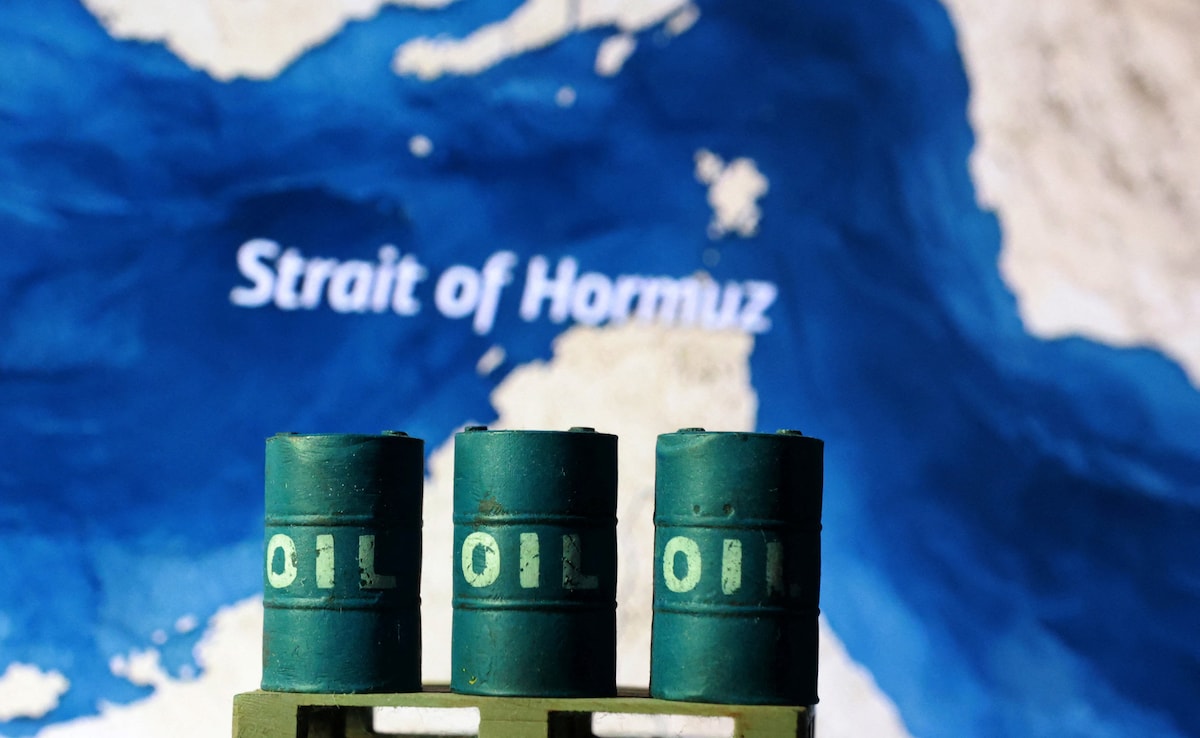
Iran is currently on a collision course with its own geological limits. As of late April 2026, the country’s primary export hub at Kharg Island is holding a ticking clock, with only 13 million barrels of onshore capacity remaining. At current production levels of roughly 3.1 million barrels per day, the mathematical reality is inescapable. Within less than two weeks, the tanks will be full. The U.S. naval blockade has effectively choked the Strait of Hormuz, turning a regional conflict into a localized storage catastrophe that threatens to permanently damage Iran’s oil fields.
The math of an oil blockade is brutal. While Iran consumes approximately 1.7 to 1.8 million barrels per day domestically, it continues to pump at rates that assume a global market. With exports through the Strait plummeting from 2.5 million barrels to a mere trickle of "dark fleet" movements, the surplus has nowhere to go. Tehran is now scrambling to reactivate the Nasha, a 30-year-old supertanker that has sat idle for years, effectively using it as a floating metal lung to keep its oil fields breathing for a few more days.
The Physics of the Pressure Trap
The crisis isn't just about full tanks; it is about the physical integrity of the reservoirs. You cannot simply "turn off" an oil well like a kitchen faucet. Iranian fields, particularly the mature water-injection sites, rely on delicate pressure balances. If production is halted abruptly, the geological equilibrium shifts. Water can seep into the oil-bearing rock formations, a phenomenon known as "water-coning," which can permanently trap remaining reserves.
For an economy that relies on these fields for over 40% of its budget, a permanent 10% loss in field productivity is a generational disaster. This is why we are seeing the desperate revival of the "shadow fleet." Satellite imagery from mid-April confirms at least three sanctioned supertankers loitering near Kharg Island, not for transport, but for storage. This is a stop-gap measure designed to delay the inevitable: the moment the pressure in the pipes has nowhere else to go.
The Shadow Fleet at Capacity
For years, Iran has mastered the art of "ghost" shipping, using flag-hopping and AIS manipulation to bypass sanctions. However, a naval blockade is a different beast than a paper sanction. The current U.S. posture has made the Eastern Outer Port Limits off Malaysia—once a safe haven for Iranian ship-to-ship transfers—a high-risk zone.
Evidence suggests that the "dark fleet" of roughly 400 vessels is no longer a viable escape valve. Many of these ships are themselves being used for long-term storage because they cannot find buyers willing to risk a kinetic or legal confrontation with the blockade. When the storage ships are full, and the onshore tanks are at the rim, the only remaining option is to shut in the wells.
Natural Gas and the Secondary Shock
While the world watches the crude oil numbers, the real threat to Iranian internal stability may be natural gas. Most of Iran's gas production is "associated," meaning it comes out of the ground alongside oil. If Iran is forced to shut in oil production to prevent storage overflows, it will inadvertently choke its natural gas supply.
The implications for the Iranian populace are severe.
- Power Generation: Over 80% of Iran’s electricity comes from gas-fired plants.
- Industrial Collapse: Steel and petrochemical plants are already facing rationing.
- Domestic Heating: While the peak winter demand has passed, any long-term disruption to the South Pars gas field would leave the grid in a state of permanent instability.
Tehran is currently choosing between damaging its oil fields and letting its cities go dark. It is a strategic checkmate.
The Myth of the Quick Restart
The prevailing theory in some energy circles is that Iran can simply weather a three-month shutdown and bounce back. History says otherwise. During the 1979 revolution and the subsequent Iran-Iraq war, production took nearly a decade to recover to pre-conflict levels. The technical expertise required to revive a "dead" well—often involving nitrogen injection or complex acid washes—is in short supply due to the exodus of Western service companies.
Furthermore, the infrastructure itself is aging. Pipelines that sit stagnant are prone to internal corrosion and "waxy" buildup. If the current blockade persists through May, the cost to "reboot" the Iranian oil industry will likely exceed the revenue generated in its first year of resumed operations.
Strategic Desperation
The reactivation of the Nasha is the ultimate signal of a regime with its back against the wall. This isn't a "business as usual" maneuver; it is an act of engineering desperation. The vessel is old, its maintenance record is opaque, and using it for long-term floating storage in a high-tension war zone creates a massive environmental and security liability.
If a single storage tanker is compromised, either by mechanical failure or military action, the resulting spill would effectively close the Persian Gulf to all traffic, including the very tankers Iran hopes will eventually carry its oil to China. Tehran is gambling that the global fear of an oil price spike—which has already pushed Brent crude toward $150—will force the international community to break the blockade before their tanks hit the 100% mark.
The clock is not ticking in months or years. It is ticking in the inches of space left in the tanks at Kharg. When those 13 million barrels of capacity vanish, the Iranian energy sector will enter a phase of involuntary contraction from which it may never fully recover.