The sirens in Tehran didn't just signal another exchange of fire. They marked a structural shift in how war is fought in the 21st century. For decades, the "shadow war" between Israel and Iran stayed in the dark—sabotage, cyberattacks, and proxy skirmishes. That era is over. When Israeli jets breached Iranian airspace to hit high-value targets near the capital, the old rules of engagement were shredded. You're looking at a direct, overt confrontation that suggests the deterrent power of the past has evaporated.
If you've been following the headlines, you know the basic "what." But the "why" and "what happens next" are where the real story lives. This wasn't just a retaliatory jab. It was a calculated demonstration of aerial supremacy designed to show that no corner of the Islamic Republic is out of reach.
The Myth of the Invulnerable Capital
For years, the Iranian leadership banked on the idea that Tehran was a "red line" no one would dare cross. They assumed the distance and their layered defense systems provided a permanent shield. They were wrong. The precision of these strikes indicates a massive intelligence failure on one side and a terrifying level of penetration on the other.
It's not just about the bombs. It's about the message. When you can fly sophisticated aircraft through supposedly "denied" airspace and hit specific buildings without losing a single pilot, you've won the psychological war before the physical one even starts. This creates a crisis of confidence within the Iranian military hierarchy. If they can't protect the seat of government, what can they protect?
Reliable reports from regional monitors and satellite imagery suggest the targets weren't random. They weren't hitting civilian centers. They were hitting the nervous system—missile production facilities, air defense batteries, and logistics hubs. By stripping away these specific assets, Israel is essentially "peeling the onion," leaving the core of the regime exposed for any future escalations.
Why Conventional Defense Failed
Standard military doctrine says a nation with a sophisticated S-300 or S-400 surface-to-air missile system should be a "hard" target. Yet, the Israeli Air Force (IAF) seems to have bypassed these with relative ease. This suggests a few things that military analysts are currently obsessed with.
First, electronic warfare has reached a point where physical missiles are often secondary to the digital ones. If you can blind the radar, the most expensive missile in the world is just a very heavy lawn ornament. Second, the use of F-35 "Adir" stealth fighters has changed the math. These planes don't just drop bombs; they act as flying data centers, coordinating the entire strike package and jamming communications in real-time.
The technical gap here is widening. While Iran has invested heavily in asymmetric drone technology and ballistic missiles, their conventional air defense and air force are aging relics. You can't fight 5th-generation stealth tech with 1970s-era airframes and updated Soviet sensors. It’s a mismatch of historic proportions.
The Proxy Problem and the New Reality
We've reached the limit of the "Ring of Fire" strategy. For years, Tehran used its proxies—Hezbollah in Lebanon, the Houthis in Yemen, and various militias in Iraq—to keep the fighting away from its own borders. That buffer is crumbling. With Hezbollah significantly weakened by recent operations and the direct path between Tel Aviv and Tehran now wide open, the "proxy shield" has holes in it.
This leaves the Iranian leadership in a brutal bind. If they don't respond, they look weak to their own hardliners and regional allies. If they do respond with another massive ballistic missile barrage, they risk an even more devastating Israeli strike that could target oil infrastructure or even nuclear sites. It's a game of high-stakes poker where Israel just showed they have a much better hand than anyone realized.
Honestly, the regional players are terrified. Jordan, Saudi Arabia, and the UAE are watching this with bated breath. They don't want a total regional war, but they also aren't exactly sad to see Iran's military wings clipped. The silence from some of these capitals speaks louder than any official press release could.
What the Intelligence Community is Actually Watching
Forget the political speeches for a second. The real indicators of what happens next are found in the logistics. Watch the movement of Iranian tanker fleets and the alert status of the Revolutionary Guard’s naval assets in the Strait of Hormuz. That’s where they have the most leverage to hurt the global economy.
If Iran feels backed into a corner, they might try to choke the world's energy supply. This is the "Samson Option" for the global economy. Even a temporary disruption in the Strait would send oil prices soaring, hitting every pocketbook from London to Tokyo.
Meanwhile, Israel is likely preparing for a "multi-wave" scenario. They didn't just plan for one night of strikes. Military planners in Tel Aviv have surely mapped out the next five moves. They're betting that the Iranian regime is more fragile than it appears and that a series of precise, overwhelming blows will force a change in behavior—or a change in leadership.
Breaking Down the Strike Logistics
- Refueling Operations: Executing a strike over a thousand miles away requires complex mid-air refueling. This confirms Israel’s ability to sustain long-range operations without relying on local bases.
- Target Selection: By focusing on "dual-use" facilities—those that serve both military and research purposes—Israel minimizes international condemnation while maximizing strategic damage.
- Cyber Integration: Almost every physical explosion was likely preceded by a "soft" hit on the power grid or communication lines to sow chaos during the critical minutes of the approach.
This Isn't Just a Regional Scuffle
You have to look at the global players here. Russia and China are watching. Russia, heavily reliant on Iranian drones for its war in Ukraine, can't afford to see its primary supplier decimated. China, which buys a huge chunk of Iranian oil, wants stability above all else.
The U.S. is in a precarious spot. They want to support Israel’s right to defend itself but are desperate to prevent a full-scale war that would drag American troops back into a Middle Eastern quagmire. The diplomatic cables must be on fire right now.
It’s clear that the "Status Quo" is a ghost. We're in a period of violent transition where the old maps and old alliances are being tested by fire. The strikes on Tehran aren't the end of a chapter; they're the start of a much more dangerous book.
Reality Check on the Nuclear Angle
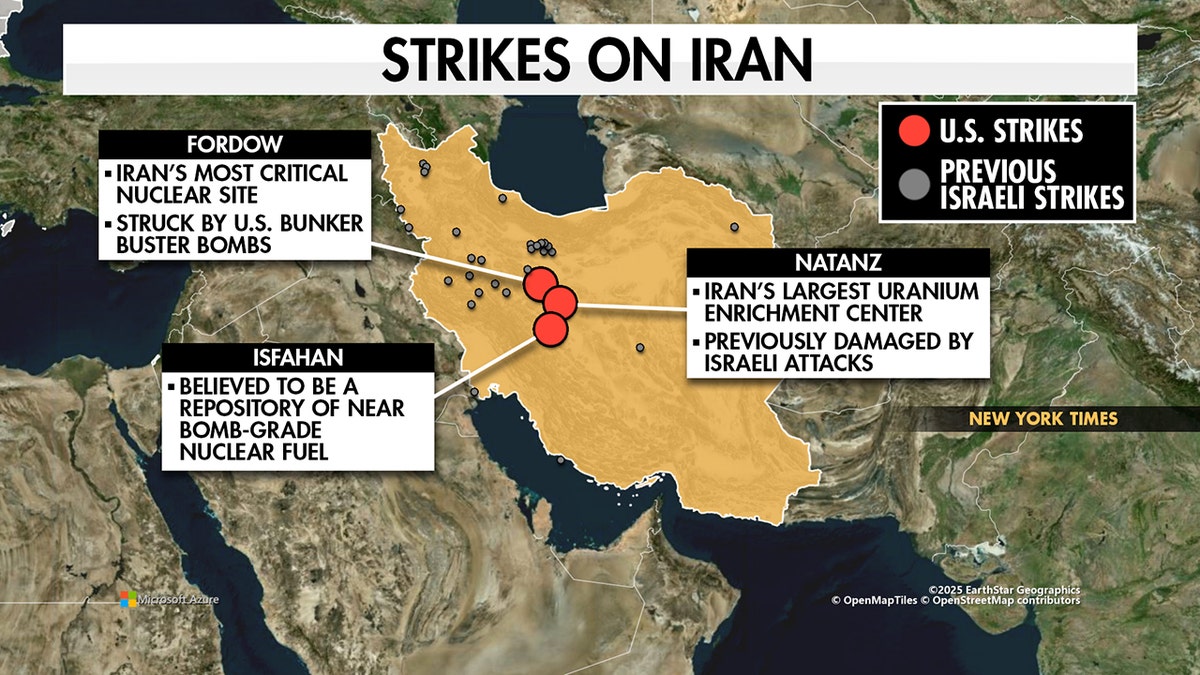
Everyone is asking if this leads to a strike on Iran's nuclear facilities. It's the "elephant in the room." While the recent strikes avoided those sites, the message was: "We could have."
Hitting Natanz or Fordow is a massive escalation that would almost certainly trigger a regional conflagration. But by taking out the air defenses around those sites now, Israel has made a future strike much easier to execute. It's a classic chess move—setting up the board for a checkmate several turns down the line.
Actionable Insights for Global Observers
If you're trying to make sense of the chaos, don't get distracted by the fiery rhetoric on social media. Pay attention to three specific areas:
- Commercial Aviation Routes: When major airlines stop flying over the region entirely, the risk of an immediate, massive escalation is at its peak.
- Energy Markets: Watch the "risk premium" in Brent Crude. If it stays stable, the markets think this is contained. If it spikes, the "big one" is coming.
- Domestic Iranian Reports: Look for signs of internal unrest. Economic pressure combined with military humiliation is a volatile mix for any regime.
The world just got a lot smaller for the leaders in Tehran. The distance that once protected them is gone. For the rest of us, it means the margin for error in Middle Eastern diplomacy has effectively vanished.
Stay informed by monitoring primary sources like the International Atomic Energy Agency (IAEA) for updates on site integrity and maritime tracking services for shifts in the Persian Gulf. The next 72 hours will likely define the security posture of the region for the next decade.