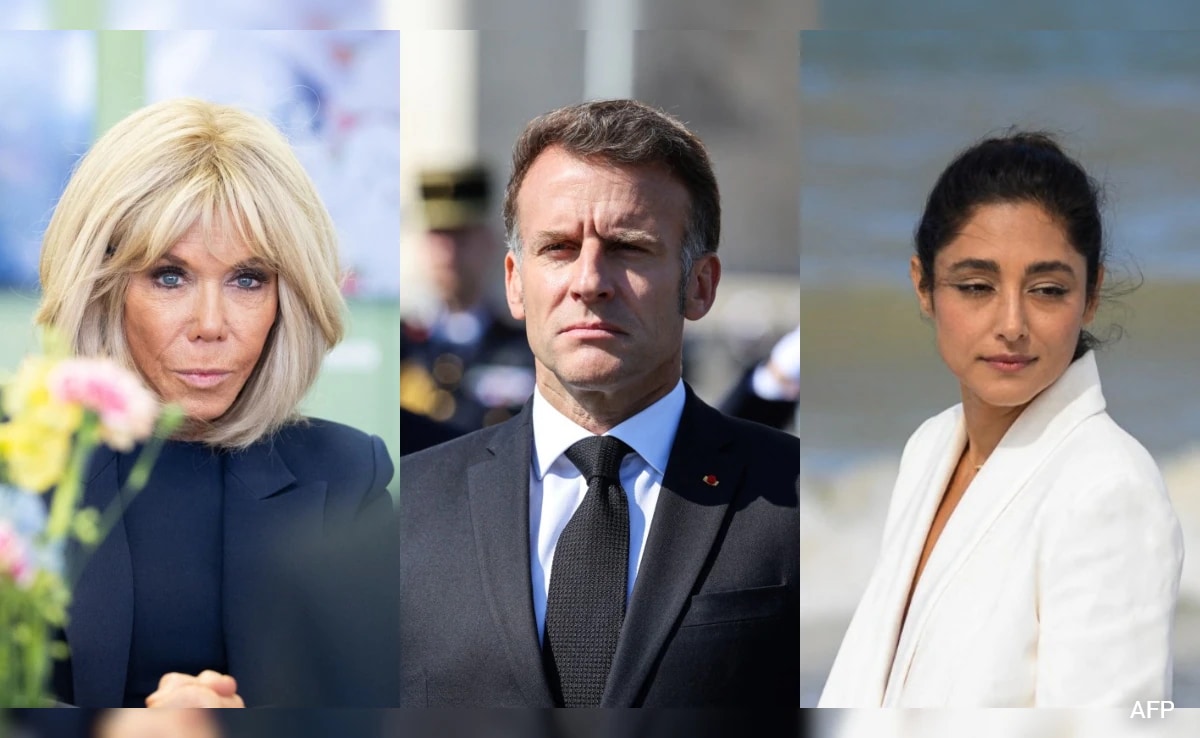
The image remains scorched into the French collective memory: the door of the presidential Airbus A330 swings open in Hanoi, and for a fleeting, jagged second, the world saw the First Lady of France, Brigitte Macron, appear to shove her husband in the face. For a year, the Élysée Palace dismissed the "Hanoi Shove" as a moment of playful horseplay between a weary couple. But this week, a new investigative account has shattered that fragile domestic peace, alleging that the confrontation wasn't about jet lag or nerves—it was about a text message from Iranian-French actress Golshifteh Farahani that Brigitte was never meant to see.
Journalist Florian Tardif’s explosive new book, Un Couple (Presque) Parfait ("An (Almost) Perfect Couple"), strips back the carefully curated lacquer of the Macron marriage. Tardif alleges that the tension aboard that flight to Vietnam was the culmination of a months-long "platonic love affair" between President Emmanuel Macron and Farahani. The spark that allegedly led to the physical altercation was a message on the President’s phone that read: "I find you very pretty."
The Myth of the Untouchable Union
For nearly a decade, the Macrons have marketed their relationship as a fortress. It is the bedrock of Emmanuel’s political identity—the unconventional romance that defied social norms and stood firm against the brutal machinery of French politics. By presenting themselves as an inseparable unit, they neutralized the usual Parisian gossip.
However, the Hanoi incident—and the subsequent revelations in Tardif’s book—suggests the fortress has developed structural cracks. According to Tardif’s sources within the Élysée, the disagreement on the aircraft was "longer and harsher than usual." While Brigitte Macron has issued a categorical denial through her entourage, stating she "never looks at her husband’s mobile phone," the sheer persistence of the Farahani rumor suggests a deeper anxiety within the French presidency.
The Farahani Connection
Golshifteh Farahani is no stranger to political firestorms. Having been effectively exiled from Iran for her refusal to adhere to the regime’s strict codes of conduct for women, she has become a symbol of defiance in the West. She is a powerhouse in French cinema, and her proximity to the President has long been a subject of hushed conversations in the 8th Arrondissement.
Farahani has dismissed the claims with weary contempt, telling Le Point that such stories are created by people "filling a void of love" in their own lives. This is the classic Parisian defense: dismiss the scandal as the product of small-mindedness. Yet, Tardif insists his reporting is grounded in "facts and only facts," claiming that presidential aides were the ones who leaked the "intense" nature of the exchanges between the politician and the actress.
The Optics of a Public Break
The real crisis for Macron isn't just the alleged flirtation; it’s the loss of control over his own narrative. In France, the private lives of presidents are traditionally shielded by a "don't ask, don't tell" policy among the press corps. From Mitterrand’s secret family to Hollande’s midnight moped rides, the French public is historically forgiving of infidelity—but they are allergic to appearing weak.
A president being "shoved" or "slapped" by his wife on the international stage subverts the image of the strong, Jupiterian leader Macron has spent years cultivating. When a professional lip reader analyzed the video for The Express, the findings were even more damaging than the physical push. Brigitte was allegedly caught muttering, "Stay away, you loser," while the President softly pleaded, "Let's try, please."
The Power Shift at the Élysée
This isn't just a tabloid story; it is a story about the power dynamics within the heart of the French state. Brigitte Macron is widely considered the President’s most influential advisor, his "only truth." If she is feeling "pushed aside," as Tardif’s book suggests, the implications for the administration are significant.
The Élysée’s initial attempt to label the video "fake news," followed by the pivot to calling it "horseplay," reveals a communications team in total disarray. By failing to acknowledge the human reality of a marital argument, they allowed the vacuum to be filled by increasingly damaging speculation.
The French presidency is an institution built on symbols. When the First Lady rejects the President's arm on a foreign tarmac, the symbol is one of rejection, not just of a husband, but of the persona he projects to the world. Whether the slap was a literal strike or a metaphorical one, the damage to the "Perfect Couple" brand is likely permanent.