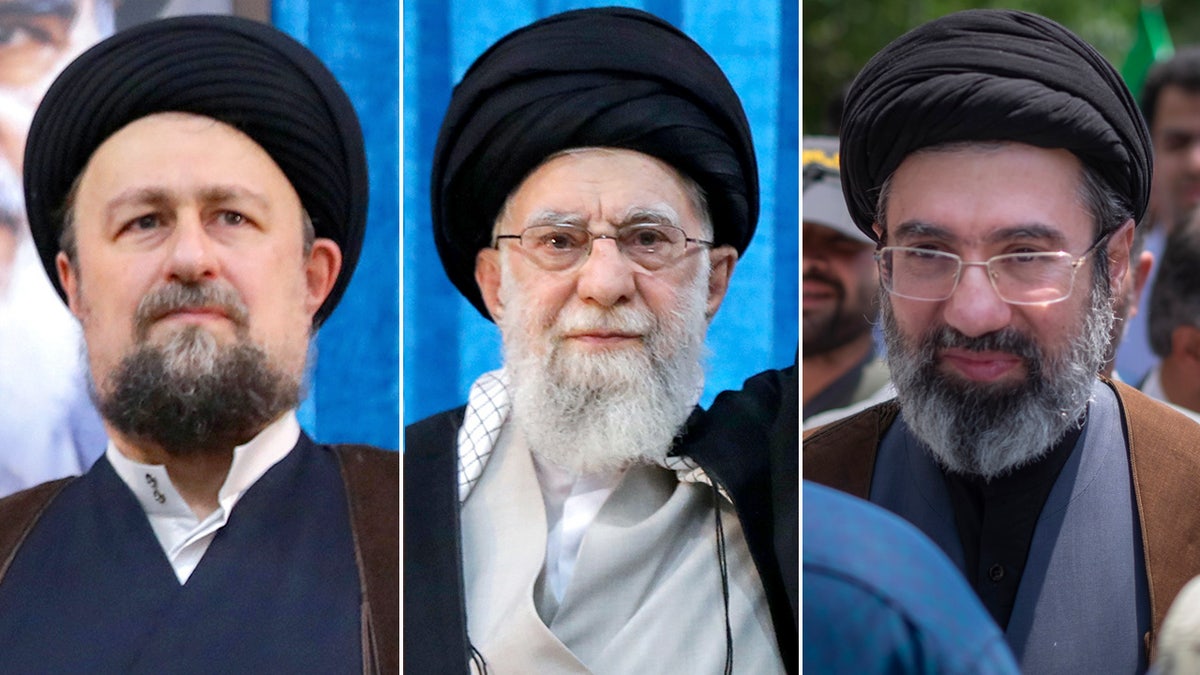
The headlines are vibrating with the kind of breathless intensity usually reserved for alien sightings or lottery wins. "Mojtaba Khamenei Gravely Wounded," they scream, citing shadowy reports and the echo chamber of social media. It is the perfect narrative for a Western audience raised on Tom Clancy novels: the mysterious heir-apparent, the "shadow" power broker, caught in the crosshairs of a surgical strike.
It is also almost certainly a fantasy.
Western media has a pathological need to project its own desired outcomes onto the internal mechanics of the Islamic Republic. We treat the Iranian succession like a game of Clue, guessing which cleric got hit with the lead pipe in the conservatory. In doing so, we ignore the boring, bureaucratic reality of how power actually functions in Tehran. This isn't a Bond movie. It’s a geriatric committee meeting with guns.
The Succession Delusion
The obsession with Mojtaba Khamenei being "gravely wounded" or "assassinated" stems from a fundamental misunderstanding of his role. For years, analysts have dubbed him the "heir-apparent." This is a lazy shorthand. Iran is not a monarchy, despite the Supreme Leader’s sweeping powers. The Assembly of Experts—the body responsible for choosing the next leader—is a collection of eighty-eight conservative clerics who view "hereditary succession" as a stain on the revolutionary ideals of 1979.
If you want to understand the internal friction in Tehran, stop looking for explosions and start looking at the math.
The rumors of Mojtaba’s demise serve a specific purpose: they create a sense of imminent collapse that justifies foreign policy stagnation. If the regime is one heartbeat away from a bloody succession crisis, why negotiate? Why pivot? This logic has failed for forty years. I have watched Washington think tanks bet the house on the "imminent fall" of the mullahs since the Clinton administration. They are still waiting.
Logic vs. The Telegram Feed
Let’s apply some basic skepticism to the "gravely wounded" claim. If the son of the Supreme Leader, a man protected by a security apparatus that makes the Secret Service look like a mall patrol, was hit in a strike, the Iranian response would not be silence. It would be total mobilization.
When Qasem Soleimani was killed, the regime didn't hide it. They turned it into a state-sponsored cult of martyrdom. If Mojtaba were actually hit, Tehran would be milking the propaganda value for every drop of "Zionist aggression" it could find. Silence in the face of a specific, high-profile injury usually means the event never happened. It’s the sound of a vacuum.
The "insider reports" usually come from the same handful of expatriate groups who have been wrong about every major internal Iranian development for a decade. These groups aren't sources; they are wish-fulfillment engines.
The Assembly of Experts is the Real Story
While the world chases ghosts of Mojtaba in a hospital bed, the actual power struggle is happening in the mundane corridors of the Assembly of Experts. The real threat to the status quo isn't a missile; it’s a vote.
The Supreme Leader, Ali Khamenei, is ninety-something. The bench of potential successors is thin.
- Ebrahim Raisi was the clear frontrunner until his helicopter met a mountain in 2024.
- Mojtaba Khamenei has the name but lacks the clerical credentials (the "Marja" status) to satisfy the old guard.
- Alireza A'afi and others are the dark horses the West refuses to study because they don't have "celebrity" status.
The internal pushback against Mojtaba is fierce. The clerics know that turning the Islamic Republic into a Khamenei dynasty would strip away the last veneer of religious legitimacy. They aren't worried about him being wounded; they are worried about him being nominated.
Stop Asking if He’s Dead and Start Asking Why You Care
The "People Also Ask" sections are filled with queries like "Who will replace Khamenei?" and "Is there a coup in Iran?" These questions are built on a flawed premise: that the death or injury of one man changes the trajectory of a four-decade-old revolutionary state.
The Islamic Revolutionary Guard Corps (IRGC) is the true stakeholder. They aren't loyal to a person; they are loyal to their own economic and military hegemony. Whether the figurehead is Mojtaba, a quiet academic cleric, or a rotating committee, the IRGC’s grip on the Strait of Hormuz and the regional proxy network remains unchanged.
Imagine a scenario where Mojtaba Khamenei actually was eliminated. What changes? Does the IRGC pack up and go home? Does the nuclear program freeze? No. In fact, history suggests that external pressure and perceived "martyrdoms" only serve to consolidate the hardest of the hardliners.
The Cost of Bad Intelligence
I’ve seen intelligence agencies and newsrooms sink millions of man-hours into chasing "health rumors" of dictators. From Castro to Kim Jong Un, the West has a voyeuristic obsession with the hospital charts of its enemies. It’s a distraction.
Every hour spent debating whether Mojtaba is in a coma is an hour not spent analyzing the IRGC’s new procurement contracts or the shifting loyalties of the Iranian merchant class. We are looking at the flashy distraction while the house is being rewired.
The downside of this contrarian view is that it’s boring. It doesn't sell papers. It suggests that the status quo is more durable than we want to admit. It acknowledges that there is no "silver bullet" or "lucky strike" that solves the Iran problem.
The Cult of the "Shadowy Figure"
Calling Mojtaba a "shadowy figure" is the ultimate journalistic cop-out. It allows writers to attribute any power, any move, and any conspiracy to him without the need for evidence. "He controls the intelligence apparatus," they say. "He runs the business empires," they claim.
If he is that powerful, he is also the most protected man in Western Asia. The idea that he was "gravely wounded" in a way that remains unconfirmed for days in the era of smartphone ubiquity is a statistical impossibility. Someone would have a photo. Someone would have a leaked medical report from a nurse. In modern Iran, secrets leak like a sieve—unless there is no secret to leak.
The Actionable Reality
Stop waiting for the regime to decapitate itself. If you are an investor, a policy analyst, or a curious citizen, base your worldview on the institutional strength of the Iranian state, not the health of its heirs.
- Discount "Exile" Intelligence: If the news is coming from a group with "National" or "Council" in its name based in Paris or DC, it’s 90% hope and 10% hearsay.
- Watch the Assembly, Not the Hospital: Succession is a legalistic process in Iran. Watch for changes in the Assembly of Experts' bylaws.
- Follow the IRGC Money: The next leader will be whoever the military-industrial complex in Tehran can most easily control.
The Western media wants a climax. They want the dramatic fall of the prince. But history isn't a movie. It’s a slow, grinding process of institutional decay and adaptation. Mojtaba Khamenei might be the next leader, or he might be a footnote. But he isn't a ghost, and he isn't a shortcut to a different Middle East.
Stop looking for smoke and start looking at the structure. The building isn't burning just because you want it to be.