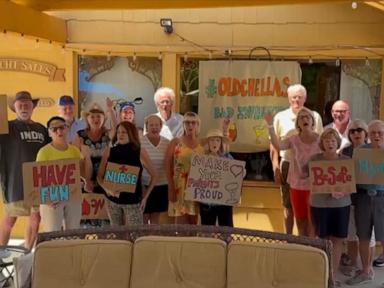
Youth isn't a requirement for having a blast. If you think music festivals and themed parties belong only to the twenty-somethings wearing glitter and neon, you haven't met the "Oldchellas." This isn't just a group of retirees playing dress-up. It's a genuine movement of seniors reclaiming their right to be loud, colorful, and active. They’re trading the quiet rocking chair for a front-row seat to life, and frankly, they’re doing it better than the kids.
The name "Oldchella" started as a tongue-cheek-reference to the Desert Trip festival in 2016, which featured legends like Paul McCartney and The Rolling Stones. But the term has evolved. Now, it describes senior-led events, dance troupes, and social gatherings that mimic the high-energy vibe of Coachella. It’s about energy. It’s about community. Most importantly, it’s about proving that the "golden years" don't have to be silent.
Why the Oldchella spirit is catching fire
We’ve spent decades telling seniors to "take it easy." That's terrible advice. Medical experts and sociologists have long noted that social isolation is one of the biggest killers of the elderly. When you stop engaging with the world, your health takes a hit. Oldchella events flip the script by centering on music, which is a powerful tool for memory and emotional health.
When seniors gather to dance to the hits of their youth—or even today's pop tracks—they aren’t just moving their bodies. They’re firing up neural pathways. Research from the Global Council on Brain Health suggests that music stimulates nearly every part of the brain. It reduces anxiety. It improves mood. It builds a sense of belonging that you just can't get from a solo walk around the block.
I’ve seen how these groups operate. They don't care about looking cool. They care about feeling alive. They wear the flower crowns. They put on the bright colors. They laugh at themselves. That lack of pretension is something younger festival-goers could actually learn from.
Breaking the stereotypes of senior living
The typical image of a senior center involves bingo and lukewarm tea. While there’s nothing wrong with bingo, it doesn't exactly get the heart racing. The Oldchella movement introduces a level of "planned spontaneity" that challenges what a retirement community can look like.
Take the "Oldchella" dance groups that have popped up in places like California and Florida. These aren't professional dancers. They’re neighbors. They practice routines, coordinate outfits, and perform at local events. The goal isn't perfection. It's participation. This shift in lifestyle focus is vital because it addresses the "invisible" status many seniors feel as they age. They want to be seen. They want to be heard.
The power of rhythmic movement
Dancing is a unique form of exercise. It combines cardiovascular work with balance and coordination. For a senior, maintaining balance is the difference between independence and a life-altering fall. By participating in these high-energy "festival style" gatherings, seniors are essentially doing physical therapy without the clinical boredom.
The social aspect is just as heavy. You’re not just lifting a weight; you’re high-fiving a friend. You’re sharing a memory of a song. You’re part of a tribe. That’s the "cheer" that people see in those viral videos. It’s not a performance for the camera. It’s a genuine release of endorphins.
Bringing the festival vibe to your own community
You don't need a multi-million dollar stage or a desert location to start an Oldchella movement. In fact, the best versions of this happen in backyards, community centers, and local parks. It’s about the mindset, not the production value. If you’re looking to spark this kind of joy for yourself or the seniors in your life, you have to start with the right ingredients.
Music selection is the backbone. It shouldn't just be "oldies." Mix it up. Use the songs that meant something to people in their twenties—whether that was the 1950s or the 1970s. The goal is to trigger that visceral, emotional connection to a time of high energy and possibility.
Then, there’s the "uniform." Encouraging people to wear something they’d never wear to the grocery store is liberating. It’s a costume, sure, but it’s also a permission slip to act differently. When you put on a bright lei or a pair of oversized sunglasses, you’re signaling to your brain that it’s time to play.
Overcoming the fear of looking silly
The biggest hurdle for most seniors isn't physical—it's mental. We’ve been conditioned to believe that aging requires a certain "dignity" that often looks like stiffness. I say forget that. The most dignified thing you can do is enjoy the life you have left.
If you're worried about what people think, look at the reactions to these Oldchella groups. People love them. They aren't laughing at the seniors; they’re cheering for them. They’re inspired by them. There is something deeply moving about seeing someone in their 80s refuse to be sidelined.
The logistics of a safe celebration
While the spirit of Oldchella is wild, the execution needs to be smart. You can't just throw a bunch of people into a mosh pit and hope for the best. Safety is what allows the fun to happen.
- Hydration is non-negotiable. Even if you’re indoors, the combination of movement and excitement can lead to dehydration quickly.
- Seating must be accessible. The "festival" vibe should include plenty of "chill zones" where people can sit and still feel part of the action.
- Volume control matters. You want the energy of loud music, but you have to be mindful of hearing aids and sensory overload. High-quality sound at a moderate volume beats a distorted, ear-piercing mess every time.
Creating a lasting impact beyond the dance floor
The real magic of the Oldchella movement isn't just the one-day event. It’s the "afterglow." Participants often report feeling more energetic for days after a gathering. They have something to talk about. They have photos to show their grandkids. They have a reason to look forward to the next month.
This is a blueprint for modern aging. We need more than just medical care; we need a reason to stay healthy. We need joy as a clinical outcome. If a flower crown and a Fleetwood Mac song can do that, then we should be putting them in every community center in the country.
Start by looking at your local senior programming. If it feels stale, suggest a theme. Bring a playlist. Show them a video of an Oldchella group in action. You’ll be surprised how many people are just waiting for someone to give them the green light to have fun again.
Don't wait for a special occasion. Grab some bright clothes, find a playlist that makes you want to move, and start your own version of the celebration right now. The music is already playing; you just have to decide to join in.