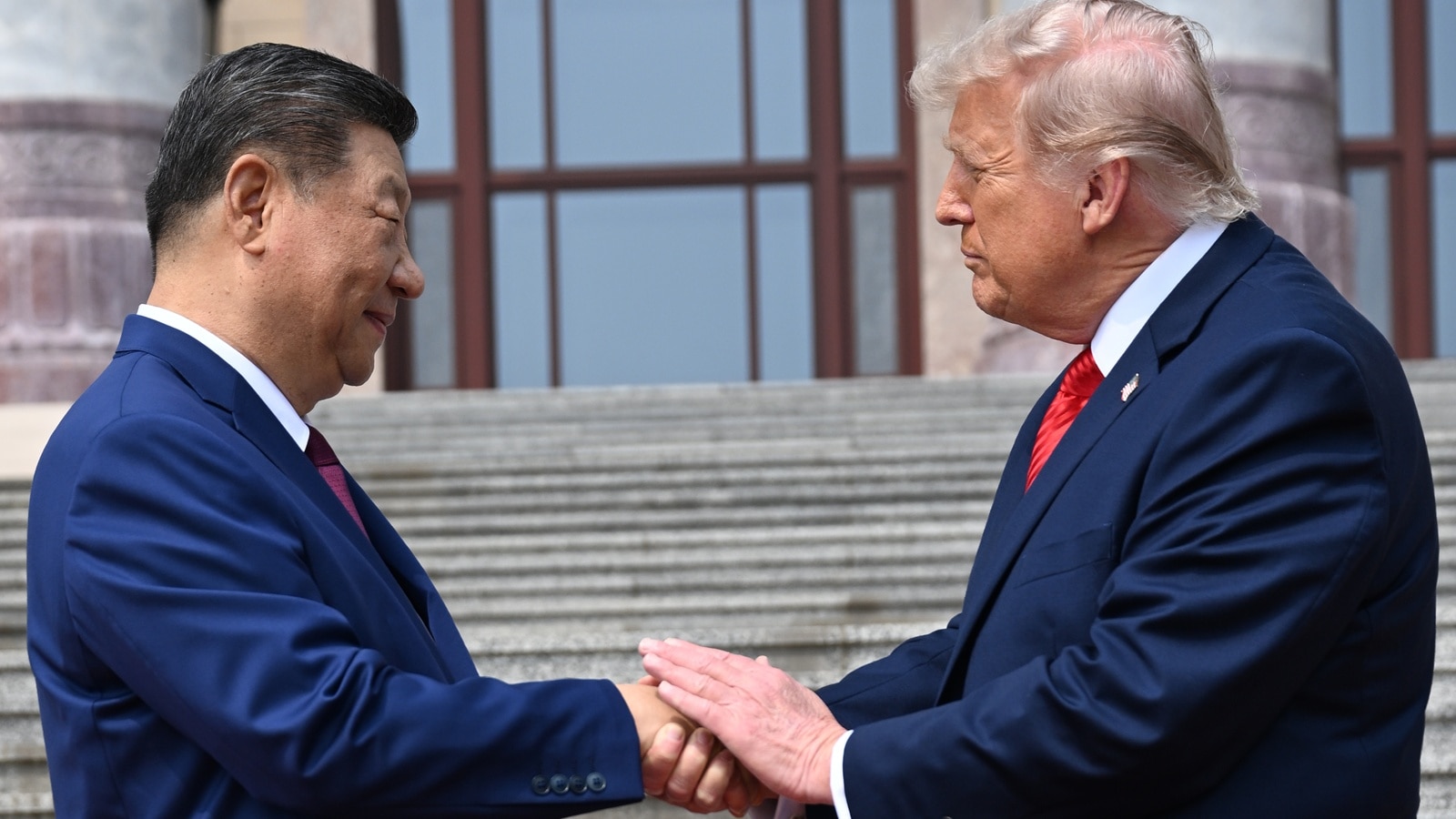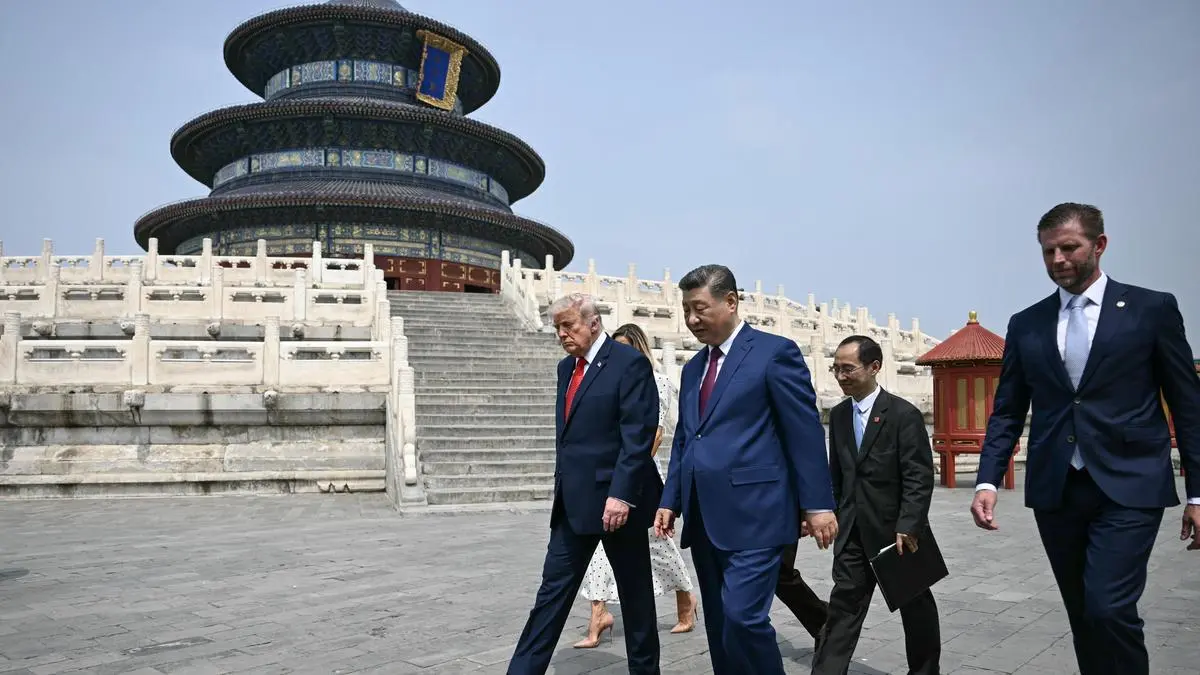
The congratulatory message from Beijing regarding the 250th anniversary of United States independence serves as a formal signaling mechanism within a high-stakes geopolitical equilibrium. While surface-level reporting treats such diplomatic gestures as mere etiquette, a structural analysis reveals them as calculated moves within a framework of Strategic Ambiguity and Managed Competition. These communications are designed to stabilize trade corridors and provide a predictable floor for bilateral volatility. The 250th anniversary (Semiquincentennial) offers a rare temporal anchor for China to pivot from immediate tactical friction to a long-view historical narrative, positioning itself as an equal peer in a multi-century trajectory.
The Tripartite Framework of Modern Sino-US Signaling
Diplomatic communication between the world’s two largest economies functions across three distinct layers of intent. To understand the impact of a milestone greeting, one must decouple the performance from the policy.
- The Sovereignty Signaling Layer: By acknowledging the historical longevity of the United States, Beijing implicitly asserts its own status as a civilization-state. This is a rejection of the "unipolar moment" in favor of a "bipolar stability" model.
- The Market Reassurance Layer: Global capital markets react to the delta between "hot war" rhetoric and "cold peace" formalities. A milestone greeting acts as a volatility dampener, signaling to multinational corporations that the supply chain decoupling remains a managed, gradual process rather than an abrupt severance.
- The Domestic Legitimacy Layer: For the Chinese Communist Party (CCP), engaging in high-level protocol with the U.S. validates its standing as a global arbiter to a domestic audience. It frames the relationship as one of mutual respect between equals, a core pillar of the "Great Rejuvenation" narrative.
The Economic Cost Function of Diplomatic Silence
In the calculus of international relations, the absence of a greeting is often more expensive than the presence of one. The cost of diplomatic silence can be quantified through the Risk Premium of Uncertainty. When formal channels or traditional milestones are ignored, market actors price in a higher probability of sudden regulatory shifts, tariff hikes, or kinetic friction.
China’s decision to formally recognize the 250th anniversary reduces this risk premium. The mechanism is simple:
- Predictability: Formal greetings suggest that the baseline rules of engagement (The Three Communiqués and the Taiwan Relations Act) remain the operative, albeit strained, manual.
- De-escalation Space: These messages provide a "safe harbor" for diplomats to meet without appearing to cave on core national interests. It is the diplomatic equivalent of a ceasefire in information warfare.
Structural Divergence vs. Procedural Convergence
A common analytical error is conflating procedural friendliness with structural alignment. The Semiquincentennial greeting does nothing to resolve the fundamental "Thucydides Trap" dynamics—the tension between a rising power and an established one. Instead, it highlights a Procedural Convergence: both nations recognize that the cost of total systemic collapse outweighs the benefits of unrestricted aggression.
The divergence remains anchored in three non-negotiable vectors:
- Technological Supremacy: The race for 2nm semiconductor dominance and AGI sovereignty.
- Currency Hegemony: The gradual testing of the BRICS+ expansion and the digital yuan (eCNY) against the SWIFT-dominated dollar system.
- Maritime Access: The friction points in the South China Sea and the First Island Chain.
A celebratory message is a lubricant for these friction points, not a solvent. It allows for the continued exchange of goods—which reached nearly $700 billion in annual trade recently—while the underlying strategic competition continues unabated in the "gray zones" of cyber warfare and intellectual property acquisition.
Historical Anchoring as a Diplomatic Lever
China’s use of the 250-year milestone is a deliberate choice of framing. By focusing on the "Quarter-Millennium," Beijing invokes a timeline that dwarfs the standard four-year US election cycle. This is a classic application of Chronopolitical Strategy.
The United States operates on a high-frequency, reactive political loop. In contrast, the Chinese leadership utilizes low-frequency, long-duration planning. Congratulating the U.S. on 250 years is a subtle reminder that China views itself as a 5,000-year-old entity dealing with a relatively young actor. This creates a psychological leverage point where the US is encouraged to act with "historical responsibility," a phrase often used by Chinese state media to imply that the US should not disrupt the long-term status quo for short-term political gains.
The Feedback Loop of Transpacific Trade
The material reality underlying this greeting is the Interdependency Constraint. Neither nation can currently afford the "hard landing" of a total economic break.
- The Debt-Export Cycle: China remains a significant holder of US Treasuries, though it has been diversifying into gold and other assets. This creates a "mutually assured economic destruction" scenario where a collapse in the dollar or a freeze of Chinese assets would be catastrophic for both.
- The Inflation Buffer: Chinese manufacturing remains a primary deflationary force for the US consumer market. In an era of persistent inflationary pressure, maintaining a functional diplomatic rapport is a tool for domestic price stability in the West.
- Resource Bottlenecks: The green energy transition—specifically lithium-ion battery production and rare earth element processing—runs through Chinese-controlled supply chains.
Measuring Success in the New Cold Peace
The success of such diplomatic overtures should not be measured by "friendship," which is a non-existent variable in realist geopolitics. Instead, success is measured by the Maintenance of Open Channels (MOC).
The greeting serves as a "ping" in a network—a verification that the line is still active. If the US responds with a reciprocal emphasis on "responsible competition," the cycle of the Cold Peace continues. If the response is dismissive or overly aggressive, it signals a shift toward Systemic Decoupling, where the probability of a black swan event (such as a blockade or a total tech embargo) increases by orders of magnitude.
The Limits of Protocol
One must recognize the inherent fragility of this stability. Diplomatic greetings are "soft power" tools that are easily overridden by "hard power" actions. The primary limitations include:
- Legislative Volatility: The US Congress often acts independently of the Executive Branch’s diplomatic tone, passing bills that can neutralize the goodwill of a formal message within hours.
- Accidental Escalation: Cyber-intrusions or near-misses in the Taiwan Strait can render celebratory rhetoric moot.
- The Zero-Sum Perception: As long as both nations view the other’s gain as their own existential loss, "congratulations" remain a tactical veneer rather than a strategic shift.
Strategic Forecasting: The 2026-2030 Window
The 250th anniversary occurs at a critical juncture. Based on the current rate of technological divergence and military modernization, the five years following 2026 will likely represent the "Peak Tension" period.
The Semiquincentennial provides a rare, non-political excuse for a high-level summit. The strategic play for both nations is to use this anniversary as a "Grand Reset" opportunity—not to become allies, but to codify the rules of their competition. This requires moving beyond the "Phase One Trade Deal" style of incrementalism toward a Comprehensive Stability Pact that defines red lines in cyberspace and space-based assets.
The greeting from Xi is the opening gambit in a 24-month play to secure Chinese interests before the potential volatility of the next US election cycle. It is a request for a "strategic pause." The US response will determine whether 2026 is remembered as a milestone of enduring power or the last celebration before a systemic fracture.
Western firms operating in the APAC region must treat this signal as a green light for short-term CAPEX (Capital Expenditure) but should maintain their long-term "China Plus One" diversification strategies. The diplomatic weather is currently clear, but the structural climate remains unchanged. Organizations should leverage this period of relative calm to harden their supply chains against the inevitable return of high-frequency geopolitical friction.
Strategic positioning necessitates a bifurcated approach: utilize the current diplomatic opening to optimize existing trade routes while simultaneously accelerating the development of redundant, non-aligned infrastructure in Southeast Asia and Mexico. This is not a contradiction; it is a rational response to a managed equilibrium.