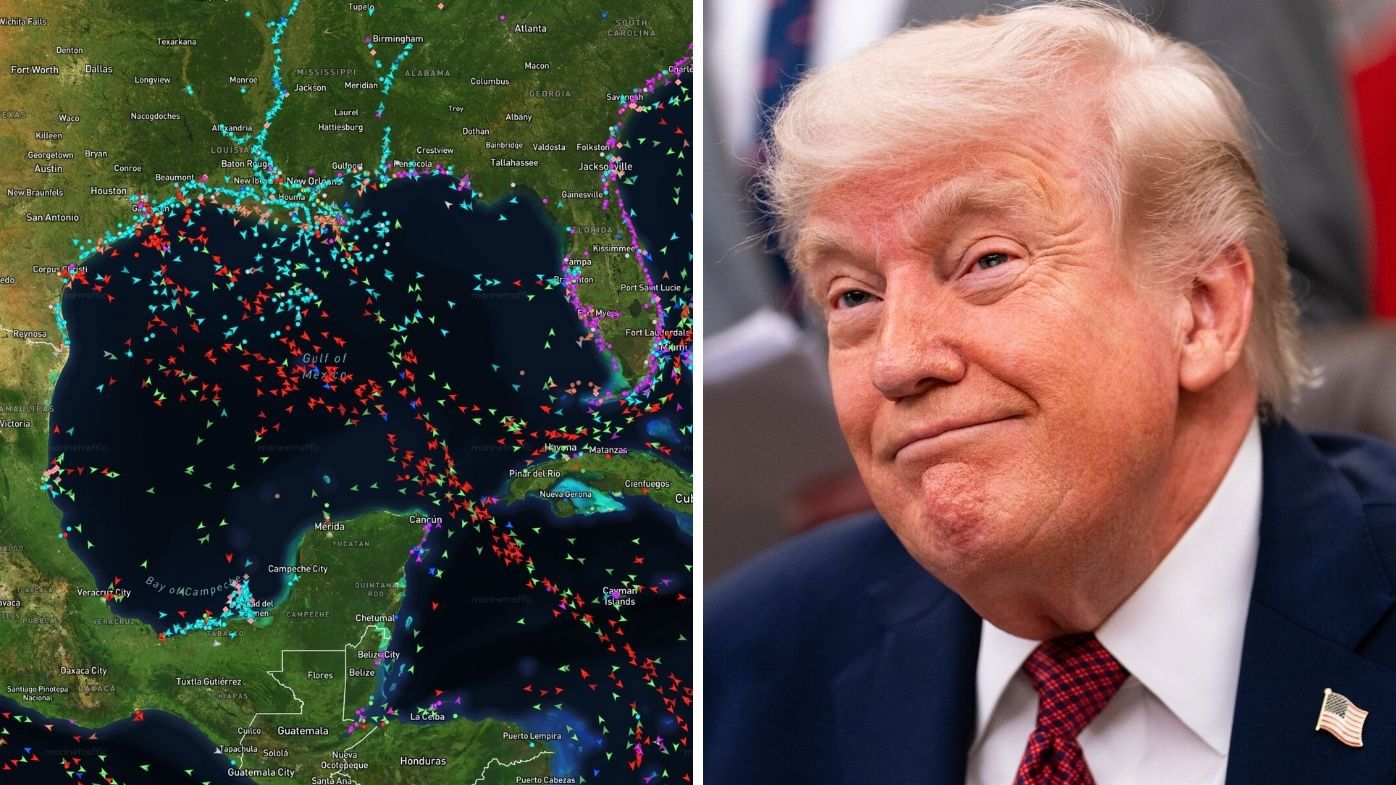
The room was filled with the usual hum of a high-stakes campaign stop, the air thick with the scent of floor wax and anticipation. Donald Trump stood behind the podium, a familiar silhouette against a backdrop of flags, weaving through a speech that felt like a living thing—expanding, contracting, and occasionally veering into the tall grass of unplanned honesty. Then, it happened. A single sentence escaped, a fragment of a thought that didn't fit the standard script of national security or diplomatic posturing. It was a slip of the tongue, the kind that reporters usually bury in the middle of a transcript, but for those watching the pulse of global power, it was a flare launched into a dark sky.
He mentioned the resources. He mentioned the wealth hidden beneath the soil of a nation halfway across the globe. In that brief moment, the narrative of "defending democracy" or "protecting allies" flickered and died, replaced by something much older and far more primal.
War is rarely about the things we see on the evening news. We see the smoke, the steel, and the weary eyes of soldiers, but we seldom see the ledgers. We don't see the spreadsheets where the value of a mountain range is calculated in tons of lithium or barrels of crude. To understand the gravity of what was let slip, we have to look past the podium and into the quiet offices where the maps of the world are drawn not by linguists or historians, but by geologists and CEOs.
The Ledger Beneath the Boots
Consider a hypothetical family in a small, resource-rich province. Let’s call them the Alievs. They don't care about geopolitical grandstanding or the specific phrasing of a former president's speech. They care about the fact that their backyard sits atop a mineral vein worth more than the GDP of a small European nation. When a world leader speaks, the Alievs feel the vibration in the ground. When that leader hints that the "war" might actually be a long-term play for those minerals, the Alievs realize they aren't citizens of a sovereign nation anymore. They are obstacles sitting on top of an asset.
The core facts of modern conflict are often dressed in the fine silks of morality. We talk about "liberation" because it is a concept that fits comfortably in a heart. "Mineral extraction rights" is a phrase that rots on the tongue. Yet, the data suggests a cold reality. According to historical patterns of intervention, the presence of high-value natural resources significantly increases the likelihood of external "interest" in domestic civil unrest.
This isn't a conspiracy theory; it’s a business model.
When Trump suggested that the involvement in certain regions was tied to the potential for "repayment" via natural resources, he wasn't just being blunt. He was pulling back the curtain on the transactional nature of 21st-century statecraft. The slip was a reminder that in the halls of power, empathy is often a secondary consideration to ROI—Return on Investment.
The Invisible Weight of Words
Words have mass. In the diplomatic world, a sentence can weigh as much as an aircraft carrier. When a candidate for the highest office in the world suggests that a war is essentially a collection agency operation, the ripples move outward in every direction.
Allies begin to wonder if their friendship is valued, or if they are simply being appraised. Enemies see a confirmation of their worst propaganda. But the most profound impact is felt by the public—the people who are asked to foot the bill and, in some cases, provide the bodies for these endeavors.
If the mission is to save lives, the sacrifice feels noble. If the mission is to secure a supply chain for electric vehicle batteries, the sacrifice feels like a line item on a corporate balance sheet.
The disconnect between the rhetoric of the state and the reality of the stakes creates a peculiar kind of vertigo. It’s the feeling of being told you’re watching a Shakespearean tragedy while catching a glimpse of the price tags on the costumes. Trump’s rhetoric stripped away the theater. He spoke to the base instinct of the voter who feels cheated, the one who wants to know "what's in it for us." In doing so, he accidentally exposed the most cynical engine of foreign policy.
The Architecture of the Deal
To the master of the "deal," everything is a negotiation. A border is a fence. A treaty is a contract. A war? A war is just a high-cost acquisition.
This perspective ignores the human cost, the shattered windows, the interrupted educations, and the ghosts that haunt the streets long after the "resources" have been extracted. It views the world as a game of Risk played on a board made of flesh and bone.
Think about the way we discuss "rebuilding." In the dry language of a policy brief, rebuilding is an opportunity for infrastructure contracts. In the reality of the survivor, rebuilding is trying to find enough original bricks to make a home feel like it didn't belong to a stranger. When the underlying motivation for a conflict is the wealth of the land rather than the welfare of its people, the "rebuilding" phase is rarely about the people. It’s about the roads that lead to the mines. It’s about the ports that ship the ore.
The slip of the tongue wasn't a mistake of fact; it was a mistake of timing. It revealed a truth that was supposed to stay in the boardroom, whispered over expensive scotch and secure lines.
The Cost of Honesty
There is a strange, dark utility in this kind of bluntness. For decades, the public has been fed a steady diet of sanitized reasons for intervention. We have grown cynical, sensing the lie but unable to name it. When someone finally says the quiet part out loud, there is a momentary sense of relief. At last, the cards are on the table.
But that relief is quickly followed by a chilling realization. If the war is for the "stuff," then the people living on the "stuff" are irrelevant. They are merely a variable in an equation that has already been solved by someone thousands of miles away.
The stakes are higher than a single election or a single conflict. We are witnessing the total commodification of global stability. We are moving toward a world where the "why" of a war is no longer a question of right and wrong, but a question of supply and demand.
The slip of the tongue was a glimpse into that future. It showed us a world where the commander-in-chief is also the chief procurement officer. It’s a world that is efficient, profitable, and utterly devoid of soul.
The silence that followed the remark in that room wasn't just a pause for breath. It was the sound of a mask slipping. For a few seconds, the lights stayed on in the wings of the stage, and we saw the stagehands, the pulleys, and the cold, hard cash changing hands behind the curtain.
We are left to wonder if the truth is better than the lie, or if knowing the price of everything simply confirms that we have forgotten the value of anything.
The wind outside the venue picked up, rattling the doors, but the man at the podium had already moved on to the next grievance, the next promise, the next deal. The slip was gone, floating away into the digital ether, recorded but unacknowledged by the machinery of the campaign. Yet, for those who heard it, the air felt different. The map of the world had shifted slightly, revealing the veins of gold and oil running like nerves beneath the skin of the earth, waiting for the next person with a loud voice and a sharp shovel to come and claim them.
The story isn't in the speech itself, but in the shivering reality of what happens when the people we lead become nothing more than the ground we walk on.


:strip_icc()/pic2513216.jpg)