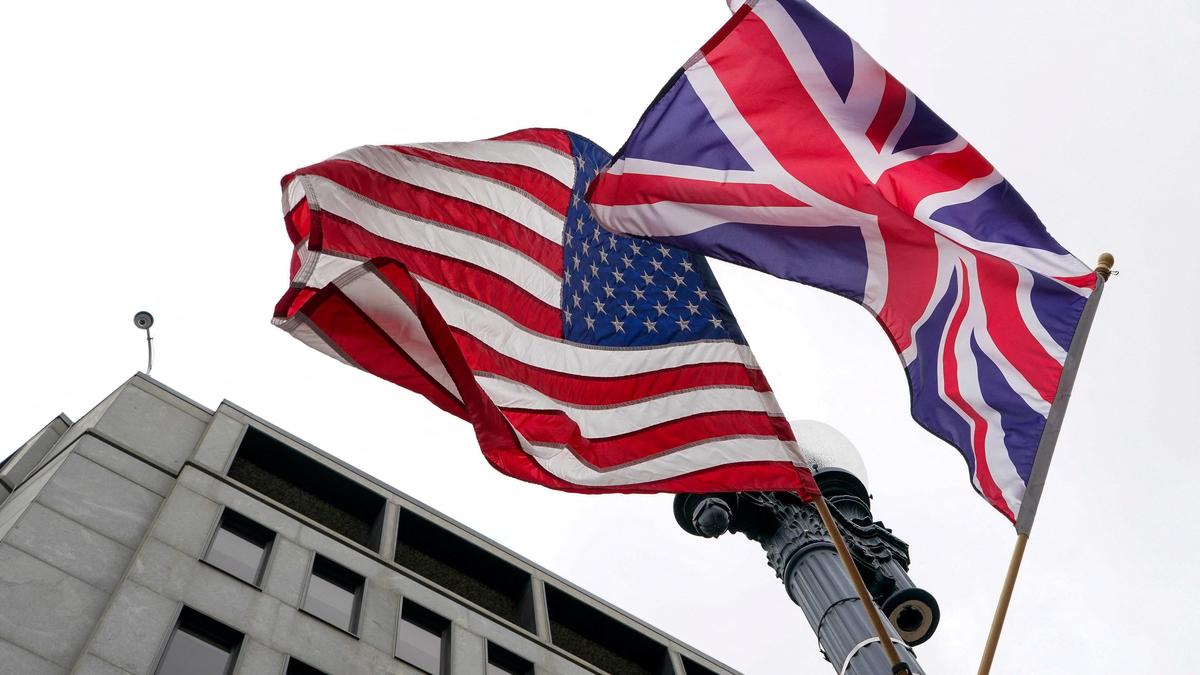
The media is currently vibrating with the frantic energy of a debutante ball. Pundits are dusting off their "Special Relationship" templates, painting King Charles III’s visit to Washington as a high-stakes diplomatic tightrope walk. They call it a "delicate mission." They claim the U.K.-U.S. bond is fraying and needs the royal touch to mend the seams.
They are wrong. If you liked this post, you should check out: this related article.
The premise that a 77-year-old monarch can "restore" a geopolitical alliance via soft power and state dinners is a quaint delusion leftover from the mid-20th century. The "Special Relationship" isn't fraying; it has evolved into a cold, transactional data exchange where sentiment carries the weight of a wet paper towel. To view this visit through the lens of restorative diplomacy is to ignore the brutal reality of modern statecraft. Washington doesn't need a charm offensive. It needs a reason to care.
The Sentimentality Trap
Mainstream reporting treats the U.K.-U.S. alliance like a long-term marriage going through a rough patch. If we just get the couple in a room together—maybe some nice china, a few speeches about shared history—the spark will return. For another look on this development, see the latest coverage from The New York Times.
This is the "Lazy Consensus" of the diplomatic press. It assumes that personal rapport between heads of state or figureheads dictates the flow of capital and military cooperation. In reality, the U.S. State Department and the Pentagon operate on a logic of cold utility.
Since the 1940s, the U.K. has played the role of the "bridge" between Europe and America. Post-Brexit, that bridge leads to a cul-de-sac. Washington views London not as a primary partner, but as a useful, if increasingly isolated, intelligence hub. Charles isn't there to fix a relationship; he’s there to audition for relevance in a Pacific-centric world.
The Sovereignty Illusion
People often ask: "Can the King influence trade deals?"
The brutal answer is no. The British monarch has no constitutional power to negotiate trade, and even if he did, the U.S. has shown zero appetite for a comprehensive Free Trade Agreement (FTA) with the U.K. under any recent administration.
When observers track Charles’s movements through D.C., they look for "signals of intent." This is a waste of time. The U.S. trade policy is currently dictated by protectionism and the "Buy American" ethos. A thousand royal banquets won't change the calculus of a Congressman in Ohio whose constituents fear British lamb imports or financial services deregulation.
To understand why this mission is structurally doomed to be "ceremony-only," you have to look at the divergence in strategic priorities. The U.K. is desperate for a win to justify its "Global Britain" slogan. The U.S. is focused on the AUKUS security pact and countering Chinese influence in the South China Sea. If the U.K. wants to be "special," it has to stop acting like a museum and start acting like a shipyard.
The Climate Change Red Herring
Charles will undoubtedly lean into his lifelong advocacy for environmental issues. The press will eat it up. They’ll call it "Green Diplomacy."
I have sat in rooms where these "high-level exchanges" happen. Everyone nods. Everyone agrees that the planet is warming. Then, the Americans go back to subsidizing their own green tech through the Inflation Reduction Act (IRA), which actively pulls investment away from British firms.
Advocacy is not an export. Unless Charles can convince the U.S. to stop its aggressive green protectionism—which he cannot—the climate talk is merely decorative. It’s a way for both sides to feel virtuous while they continue to compete ruthlessly for the same venture capital.
The Intelligence Ledger: The Only Real Bond
If there is any "special" remaining in the relationship, it isn't found in the halls of Buckingham Palace or the West Wing. It’s in the windowless rooms of Cheltenham and Fort Meade.
The Five Eyes alliance is the bedrock. It is functional, gritty, and entirely indifferent to who is wearing the crown. The mistake the competitor article makes is conflating State with Government. The State (the permanent bureaucracy of intelligence and defense) is doing fine. The Government (the politicians and royals) is what’s struggling for optics.
Charles is a distraction from the fact that the U.K. has becoming a junior partner in a way that is increasingly uncomfortable. We are no longer the "Lieutenant" to the U.S. "General." We are the specialized subcontractor.
Dismantling the "Bridge" Theory
For decades, the U.K. sold itself to D.C. as the "Gateway to Europe."
Imagine a scenario where you are a CEO. You have a consultant who claims they can get you into any meeting in the building. Then, that consultant quits the building's board of directors and gets into a public shouting match with the security guards. Do you still hire that consultant to get you into the meeting?
Of course not. You go straight to the board.
Washington now deals directly with Brussels, Paris, and Berlin. The U.K.’s self-appointed role as the "translator" of American interests to Europe is dead. By pretending Charles can revive this, the U.K. government is clinging to a 1990s playbook in a 2020s reality.
The Soft Power Fallacy
"But what about soft power?" the critics cry. "The Royals are the ultimate brand!"
Soft power is a supplement, not a substitute. You use soft power to smooth over a difficult trade negotiation or to make a military alliance more palatable to the public. You cannot use soft power to create an interest where none exists.
The U.S. fascination with the British Royal Family is a consumer phenomenon, not a political one. People in Kansas like the hats and the history. People in the D.C. policy world like results. The "Crown" is a luxury export, like Scotch whisky or Burberry trench coats. It’s nice to have, but it doesn’t influence the price of steel or the deployment of carrier strike groups.
The Reality of the "Delicate Mission"
The mission isn't delicate because the relationship is fragile. The mission is delicate because the U.K. is trying to hide its diminishing returns.
If Charles arrives and receives a 21-gun salute and a warm handshake from the President, the U.K. press will declare it a triumph. They will miss the fact that while the King is at the White House, the real decisions about the future of the global economy are being made in meetings where the U.K. isn't even on the CC list.
How to Actually Fix the Relationship
If the U.K. wants to be indispensable to the U.S., it needs to stop sending the King to talk about the past and start sending engineers to talk about the future.
- Drop the Sentiment: Stop using the phrase "Special Relationship." It sounds needy. It’s the geopolitical equivalent of "Are we still best friends?"
- Focus on Niche Dominance: The U.S. values the U.K. for its special forces, its high-end cyber capabilities, and its financial clearinghouses. Lean into the "subcontractor" role with pride rather than trying to be a mini-superpower.
- Accept the Junior Status: You can’t negotiate as equals when there is a $25 trillion GDP gap. Negotiate as a critical, specialized component of the American security architecture.
The competitor's narrative suggests that this visit is a turning point. It isn't. It’s a maintenance check on a vintage car that we keep in the garage for Sunday drives. It looks beautiful, the engine purrs, and it reminds us of better days. But we don't use it to get to work anymore.
The King is visiting a Washington that has moved on. The sooner London realizes that his presence is a courtesy, not a catalyst, the sooner it can begin the hard work of building a relationship based on 21st-century utility instead of 20th-century nostalgia.
Stop looking at the throne. Look at the ledger. That’s where the real relationship lives, and it doesn't care about a royal visit.
The era of the "Bridge" is over. Welcome to the era of the "Hub." If the U.K. can’t find a way to be a vital hub for technology or defense, no amount of royal stardust will save it from becoming a theme park with a very expensive military.
Charles is doing his job. The problem is that the job itself has become an anachronism. Washington will be polite, the photos will be stunning, and by the time the King’s plane clears the Atlantic, the U.S. will have forgotten why he was there in the first place.