The ink on a family letter usually carries the weight of the mundane. It’s a record of birthdays, grocery lists, or the soft complaints of a life being lived in the slow lane. But sometimes, the ink turns acidic. It stops being a bridge and starts becoming a manifesto, a jagged map of a mind drifting away from the shore of shared reality.
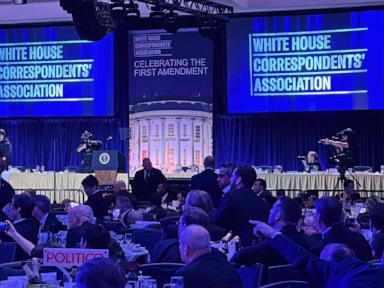
In the wake of the gunfire that shattered the Washington DC gala, we are left staring at a trail of paper that smells of grievance and grandiosity. Parveen Sharifi, the man now standing at the center of a federal investigation, didn’t just wake up one morning and decide to change the trajectory of his life with a weapon. He had been telegraphing his departure from the world of the rational for quite some time.
The tragedy of the DC shooting isn't found just in the chaos of the ballroom. It lives in the quiet rooms where his family sat, reading letters that must have felt like holding a live wire.
The Language of the Lost
When investigators began pulling apart the life of the suspect, they found a recurring theme: Donald Trump. For Sharifi, the former president wasn’t just a political figure; he was a focal point for a deep-seated, boiling resentment. In writings sent to his own kin, Sharifi didn’t just disagree with policy. He aired grievances that felt more like a spiritual haunting.
He was obsessed.
Politics, for the stable mind, is a series of trade-offs and debates. For a mind on the brink, it becomes a cosmic battleground. Imagine sitting at your kitchen table, opening an envelope from a brother or a son, expecting news of a new job or a health update, only to find pages of vitriol directed at a man on a television screen.
The letters detailed a perceived persecution. They spoke of a world that had wronged him, led by a figurehead he blamed for his personal stagnation. This is the invisible stake of our modern era: the way political rhetoric can be processed through the filter of individual instability until it becomes a lethal chemical compound.
The Gala and the Glass
The event was supposed to be a celebration of Afghan culture, a moment of unity in the heart of the nation’s capital. It was a room filled with the scent of saffron and the sound of heritage. Then came the disruption.
Witnesses describe a man who didn’t belong, a presence that felt discordant even before the first shot was fired. When the violence erupted, it wasn't a tactical strike; it was a desperate, messy lashing out. It was the physical manifestation of those letters—a chaotic attempt to be heard by a world he felt had silenced him.
Consider the perspective of a guest at that gala. One moment, you are discussing the future of your community. The next, you are diving under a table because a man’s internal monologue has finally spilled out into the physical world.
The facts tell us that Sharifi was stopped. They tell us that the injuries, while terrifying, could have been much worse. But the facts don't capture the sound of the glass breaking, or the way the air in the room changed from celebratory to survivalist in three seconds flat.
The Warning Signs We Filter Out
We often talk about "red flags" as if they are neon signs. In reality, they are usually subtle shifts in tone. They are the letters that get put in a drawer because they’re "just Parveen being Parveen."
There is a specific kind of exhaustion that comes with loving someone who is radicalizing themselves in their own basement. You want to believe it’s just a phase. You want to believe the anger is a shield for sadness. So, you read the grievances against the government, against Trump, against the system, and you hope that the act of writing them is enough of a catharsis to prevent the act of doing something.
In this case, the writing wasn't a release valve. It was a dress rehearsal.
The suspect’s writings revealed a man who felt the gears of the world grinding against him personally. When he wrote to his family about Trump, he wasn't looking for a political debate. He was looking for an antagonist to justify his own sense of failure. It is a dangerous, seductive loop: if the leader of the free world is your personal enemy, then your personal struggles are no longer your fault. They are part of a grand conspiracy.
The Echo in the Evidence
Federal prosecutors have a mountain of digital and physical evidence to climb, but the emotional evidence is already clear. This wasn't a crime of passion in the traditional sense. It was a crime of prolonged, nurtured resentment.
The suspect had been carrying these grievances like stones in his pockets for years. Each letter sent to his family was another stone added, until the weight became unbearable. He went to that gala not just with a gun, but with a narrative that he was the protagonist in a story of righteous vengeance.
We see this pattern repeating across the country. The names change, the political targets swap sides, but the mechanics of the descent remain the same. The isolation. The obsession. The letters home that sound less like family updates and more like dispatches from a war zone that only one person is fighting.
The Weight of the Aftermath
Now, the legal system will do its work. There will be hearings, psychiatric evaluations, and eventually, a sentence. The news cycle will move on to the next flashpoint.
But for the family who received those letters, the story doesn't end. They have to live with the knowledge that the warnings were right there, tucked into envelopes and delivered by the postman. They have to reconcile the person they knew with the man who stood in a DC ballroom with a weapon in his hand.
The static between the lines of those letters has become a deafening roar. We are left to wonder how many other letters are currently sitting on kitchen tables, filled with the same acidic ink, waiting for the moment they turn into action.
The ballroom is quiet now. The glass has been swept up. But the words remain, etched into the record of a man who decided that his grievances were worth more than the lives of the people around him. He wanted to be heard. Now, the whole world is listening to the silence he left behind.